
By Brima Sannoh
Is Edmond Sylvester Alpha the Only Man for the Job? Sierra Leone’s Electoral Integrity at a Crossroads
Or
Electoral Leadership or Political Liability? Growing Questions Over Edmond Sylvester Alpha’s Tenure
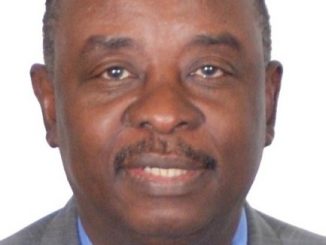
The insistence by the ruling Sierra Leone People’s Party of maintaining Edmond Sylvester Alpha as the Chief Electoral Commissioner by President Julius Maada Bio has continued to generate intense national debate, deepen political divisions and raise critical questions about the future of electoral integrity in Sierra Leone. At the core of this growing discourse lies a fundamental concern: is Edmond Sylvester Alpha truly the only Sierra Leonean competent to preside over the country’s electoral processes?
While Edmond Sylvester Alpha’s long-standing service within the Electoral Commission for Sierra Leone cannot be dismissed, it is equally important to recognize that experience alone does not equate to exclusivity. Sierra Leone boasts a wealth of capable professionals with the technical expertise, administrative acumen and moral standing necessary to oversee credible elections. To suggest, either directly or indirectly, that the country’s democratic stability rests on the shoulders of a single individual risks undermining institutional strength and public confidence.
The circumstances surrounding his nomination and parliamentary approval further illuminate the current impasse. Though the President acted within constitutional bounds in appointing Edmond Sylvester Alpha, the process was met with immediate and sustained resistance from the opposition All People’s Congress. Their objections, centered on issues of neutrality and credibility, have since evolved into a broader political standoff that has significantly affected governance, including the boycott of Parliament and local councils.
On its part, the SLPP has maintained that the appointment is both lawful and irreversible, emphasizing constitutional propriety. However, governance in a democracy extends beyond legality; it is anchored in legitimacy, inclusiveness and trust. The widening gap between what is legally permissible and what is politically acceptable has created a climate of uncertainty, one that threatens to stall national progress.
This controversy cannot be divorced from the lingering aftermath of the 2023 presidential election. That election, rejected by the APC and questioned by several international observer missions, continues to cast a shadow over the ECSL’s credibility. Allegations that Edmond Sylvester Alpha, as a senior official at the time, was linked to irregularities, including claims that an electoral figure was altered from 49 to 149 in a bye-election to favour the ruling party, have further compounded public scepticism. Whether substantiated or not, such allegations have taken root in the national consciousness and cannot be ignored.
In this context, the APC’s stance, though disruptive, begins to appear grounded in a deeper mistrust of the electoral system. Their boycott may be controversial, but it reflects a broader demand for accountability and transparency. In fragile democracies, perception often carries equal weight as reality and rebuilding trust requires deliberate and confidence-building measures.
Presently, Edmond Sylvester Alpha stands as a controversial figure whose continued tenure appears to loom large over the peace and tranquillity of the nation. Sierra Leone’s democracy, though resilient, remains delicate. It cannot afford prolonged disputes over the credibility of its electoral leadership. He is not an indispensable figure and the persistent insistence by the SLPP that he must remain in office inevitably fuels suspicion of ulterior political considerations, particularly in relation to the 2028 presidential election.
The Tripartite Committee’s recommendations provide a constructive way forward. Resolution 36 clearly states: “A Search and Nomination Committee should be established to identify suitably qualified and apolitical candidates for appointment by the President.”
According to a Harvard University trained Political Scientist, “There is nothing wrong in establishing a Search and Nomination Committee to identify and recommend suitably qualified and apolitical candidates from whom the President may appoint the Chief Electoral Commissioner and other Commissioners.” It must be noted that the provision offers a balanced approach, preserving presidential authority while promoting transparency and public trust.
Reconsidering Edmond Sylvester Alpha’s appointment should not be viewed as a constitutional retreat but rather as a pragmatic and statesmanlike step toward national cohesion. No individual should be seen as indispensable in a democratic system; institutions must be allowed to function independently and credibly.
As tensions continue to rise, the Moral Guarantors of the Agreement of National Unity must urgently step in. Drawing lessons from countries such as Kenya and Ghana, where neutral interventions have helped ease electoral tensions and restore confidence; Sierra Leone stands to benefit from a similar approach. These guarantors must assess the situation impartially and provide concrete recommendations aimed at safeguarding peace, unity and democratic integrity.
Ultimately, the issue transcends Edmond Sylvester Alpha as an individual. It is about the credibility of Sierra Leone’s electoral system and the preservation of its fragile democracy. If his continued stay in office deepens division and erodes trust, then prudence demands reconsideration. For the sake of national unity and the integrity of the 2028 elections, the country must place its collective democratic future above the tenure of any one individual.
Leave a Reply