
By Folade Adunni
ARE WE RAISING CHILDREN WHO ARE ASHAMED OF THEIR ROOTS?
Have you noticed that some children are becoming uncomfortable with certain things about their family background?
They don’t want their parents speaking their native language in public.
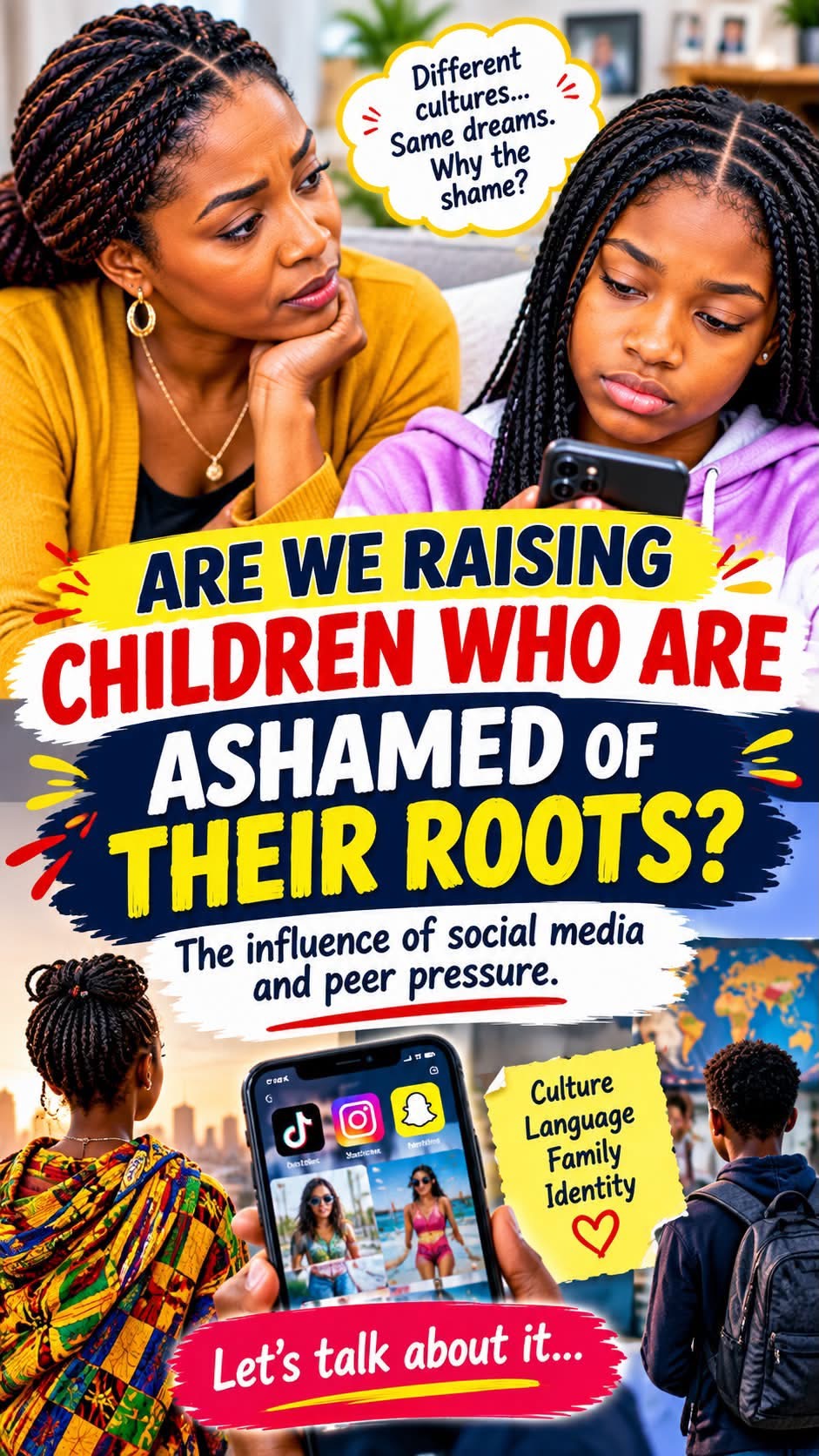
They dislike traditional food being packed for school.
They feel embarrassed by their parents’ accents.
They don’t want to wear traditional clothing or participate in cultural celebrations.
Sometimes, they even distance themselves from anything that makes them appear different from their friends.
But have we stopped to ask why?
Today’s children are growing up in a world where social media constantly exposes them to different lifestyles, beauty standards, fashion trends, cultures and ideas about what is considered acceptable or desirable.
They see influencers living certain lifestyles. They watch celebrities, follow creators and compare their families with what they see online.
And sometimes, the desire to fit in becomes stronger than their appreciation of where they come from.
So, what role do parents play in helping children appreciate their roots?
1. Don’t assume your child is automatically proud of their background.
Being born into a culture doesn’t mean a child automatically understands or appreciates it.
Talk about your family’s history, traditions, language and values. Give them opportunities to understand their heritage.
2. Pay attention to what they consume on social media.
What messages are their favourite influencers communicating about beauty, success, lifestyle and identity?
Are they constantly seeing content that makes them feel their own family background is less desirable?
Have conversations about what they see online.
3. Stop making cultural identity feel like a punishment.
If every attempt to speak a native language comes with criticism, comparison or punishment, children may begin associating their heritage with negative experiences.
Encourage them without making them feel inadequate.
4. Don’t speak negatively about your own background.
Children notice when parents are embarrassed by their accents, traditions or cultural differences.
We cannot expect them to appreciate something we constantly make excuses for.
5. Help them understand that fitting in doesn’t mean losing themselves.
They can enjoy international music, follow global trends, make friends from different backgrounds and embrace the culture of the country where they live.
They don’t have to abandon their roots to belong.
6. Expose them to positive examples from their heritage.
Let them meet people from similar backgrounds who are successful in different fields.
Share stories of individuals who have made meaningful contributions to society.
Help them see that their background does not limit their possibilities.
7. Allow them to ask questions and express their feelings.
Don’t immediately interpret every disagreement about culture as disrespect.
Ask why they feel uncomfortable. Sometimes, they may have experienced teasing, exclusion or pressure from their peers.
Listen before correcting.
❤️ A reminder for parents:
We cannot control everything our children watch, the people they admire or the opinions they encounter.
But we can influence how they interpret those experiences.
Our responsibility is not to force our children to live exactly as previous generations did.
It is to help them understand where they come from, appreciate the values worth carrying forward and develop the confidence to decide who they want to become.
Your child can embrace the world without being ashamed of where they started.
LET’S DISCUSS:
Have you noticed children becoming uncomfortable with their family’s culture, language, accent or traditions because they want to fit in with their friends?
Do you think social media is contributing to this, or is peer pressure a bigger influence?
How do we help children appreciate their roots without forcing them to follow every tradition?
I’d love to hear your perspective.
#Parenting #CulturalIdentity #SocialMediaAndParenting #RaisingConfidentChildren #ParentingAcrossCultures



Leave a Reply