
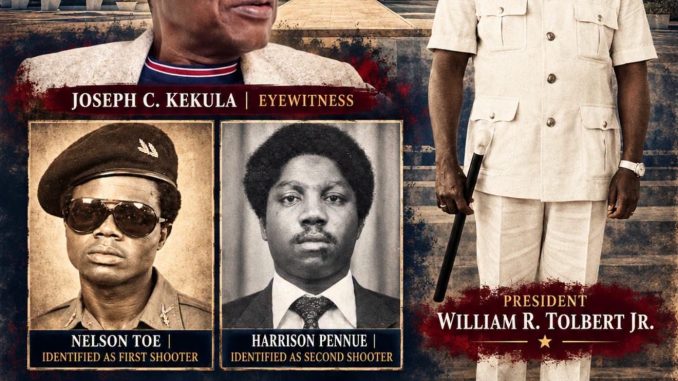
The Morning President Tolbert Was Assassinated: A Firsthand Account
By St Clarence D Avery, MBA | Author | Army Veteran
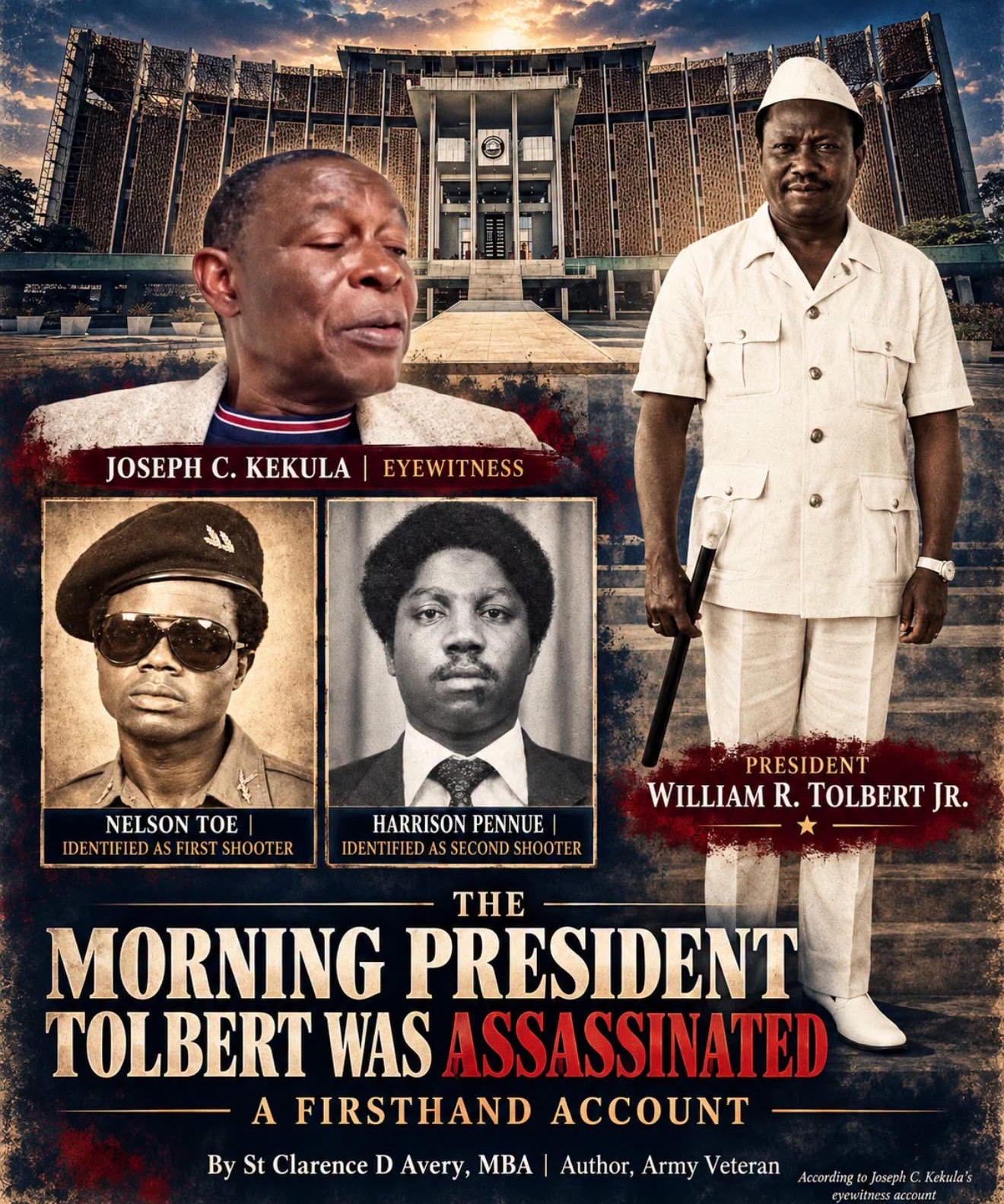
I was browsing YouTube yesterday when I stumbled upon a fascinating interview about the morning of Liberia’s 1980 coup d’état. The man being interviewed was Mr. Joseph C. Kekula, a member of President William R. Tolbert Jr.’s Special Security Service. He was inside the Executive Mansion when the president was assassinated.
Kekula’s account gives a vivid description of what happened inside the mansion. It also challenges the long-circulating claim that “white men” killed Tolbert. Kekula says the armed men he saw were members of the Armed Forces of Liberia. He also says a warning about the coup reached the president before the attack, but Tolbert dismissed it.
The story begins before Kekula reported for his night shift.
His younger brother, who also served in the Special Security Service, warned him that soldiers were planning a coup. He urged Kekula not to go to work. Kekula went anyway. He had sworn an oath to protect the president and felt duty-bound to report what he had heard.
At the mansion, Kekula says, he alerted his shift commander, who brushed off the warning. He then told Major Gabriel Moore, an attendant close to Tolbert. Moore passed the information to the president when he returned from an event. According to Kekula, Tolbert believed his soldiers would never harm him.
Hours later, gunfire erupted.
Kekula was on communications duty. He recalls hearing shots and seeing, through the mansion’s camera system, armed soldiers taking security officers captive. The attackers soon seized Kekula and his commander.
On an upper floor, Kekula watched a longtime presidential bodyguard, known as Railroad, being shot. He says it was the first time he had ever seen someone shot in front of him. Tolbert’s children were brought into a hallway. First Lady Victoria Tolbert was later made to sit with them.
The soldiers found their way into the president’s private quarters through the kitchen and dining area. Kekula recalls hearing them tell Tolbert that he was no longer president and order him out.
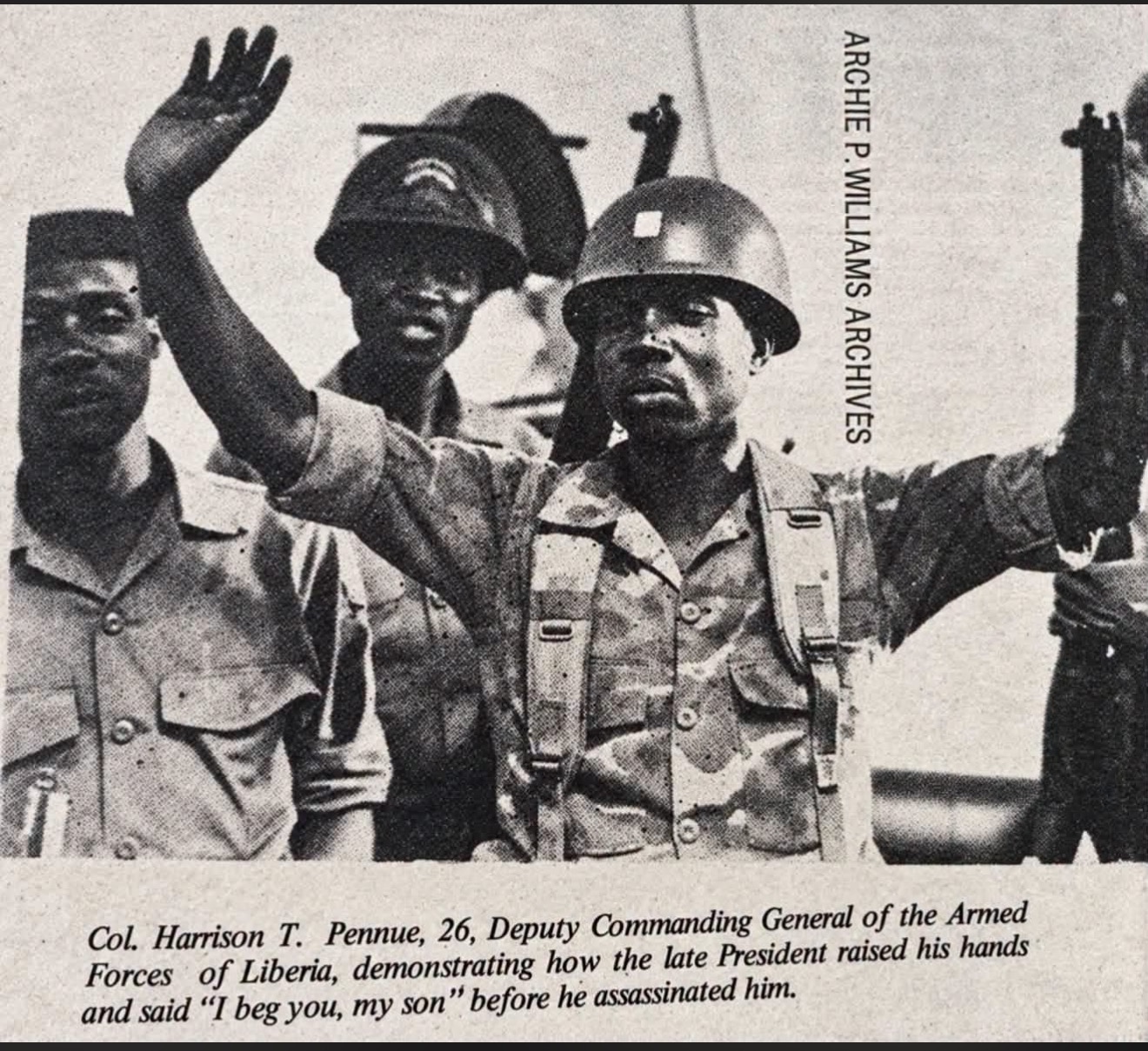
Tolbert appeared dressed in white, wearing a hat and carrying a cane. As he stepped through the doorway, Kekula says Nelson Toe fired first, followed by Harrison Pennue. Another soldier then used a bayonet. The attackers shouted, “Mission accomplished.”
It is a chilling account of the president’s final moments, told by a security officer who was there and had sworn to protect him.
After the killing, the soldiers sought a vehicle to go and free political prisoners. Major Moore had hidden in one of the vehicles, but the coup soldiers found him and made him drive. A soldier Kekula appears to call “Koiboi ” rode in the front passenger seat. Other coup soldiers fired on the approaching security vehicle, apparently mistaking it for a threat. Kekula says Koiboi was shot in the leg and Moore was gravely wounded. Kekula helped remove them from the car and carry the wounded toward the road. That task ultimately allowed him to leave the mansion.
One absence in Kekula’s account struck me. Although Samuel K. Doe emerged from the coup as chairman of the People’s Redemption Council, Kekula does not attribute any action he witnessed inside the mansion to Doe. That does not answer where Doe was or what role he played elsewhere. It tells us whose actions this particular eyewitness describes.
The lives of the men Kekula names took different paths after that morning, but neither Toe nor Pennue escaped Liberia’s violence.
Nelson Toe became the youngest member of the People’s Redemption Council. In August 1981, barely sixteen months after the coup, Doe’s government executed him along with the council’s deputy chairman, Thomas Weh-Syen, and three other members. They were accused of plotting against Doe. Contemporary reporting noted that no evidence of the alleged conspiracy was presented publicly at their brief military trial.
Harrison Pennue remained in Doe’s circle. On September 9, 1990, he followed the president to the Freeport of Monrovia, where Doe was captured by fighters of the Independent National Patriotic Front of Liberia. Testimony before Liberia’s Truth and Reconciliation Commission places Pennue at the port and reports that he, too, was killed there. Doe was taken captive and subsequently killed.
Kekula survived to tell the story. Years later, during Liberia’s postwar transitional period, he became head of the Liberia National Police.
What stays with me is the warning at the beginning. Kekula’s brother told him to stay home. Kekula reported the danger. Major Moore passed it to Tolbert. The president did not believe his soldiers would turn on him.
By morning, Tolbert was dead. In the years that followed, some of the men Kekula identified in his killing would also die violently. More than four decades later, the guard who watched it happen still speaks of that morning with pain.
My thanks to FunTimes Magazine and Mr. Joseph C. Kekula for preserving and sharing this remarkable eyewitness account. His testimony directly challenges the long-standing rumor that “white men” killed President Tolbert: Kekula says the armed men he saw inside the Executive Mansion were Liberian soldiers.
You’ll find the link to his full interview in the comments
#LiberianHistory #PresidentWilliamRTolbert #April12Coup #JosephCKekula #Liberia1980 #LiberianCivilWar #AfricanHistory #EyewitnessAccount #RememberingOurHistory
Leave a Reply