By Solomon Rogers and Kadrie Koroma
In an innovative drive to strengthen health workforce in order to improve on health service delivery in Sierra Leone, the Directorate of Human Resources for Health of the Ministry of Health and Sanitation in collaboration with development partners on Thursday May 4, 2017 launched the Human Resources for Health Strategy for 2017-2021 at the Golden Tulip Hotel, Aberdeen in Freetown.
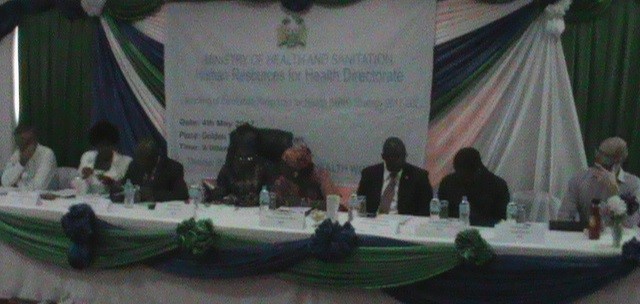
The high table
In her keynote address and launching the document, the Deputy Minister of Health and Sanitation 1 Hon. Madina Rahman said human resources for health are crucial component in delivery high quality, affordable and accessible health care service in every country.
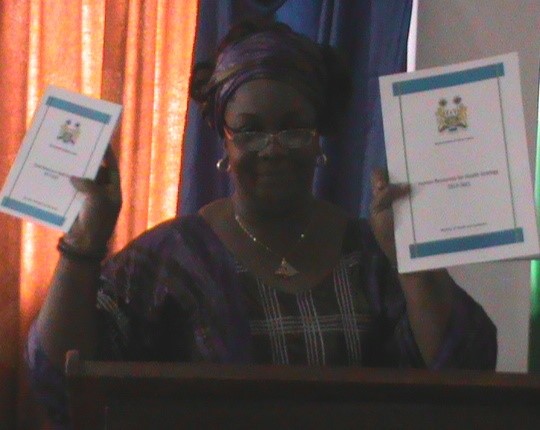
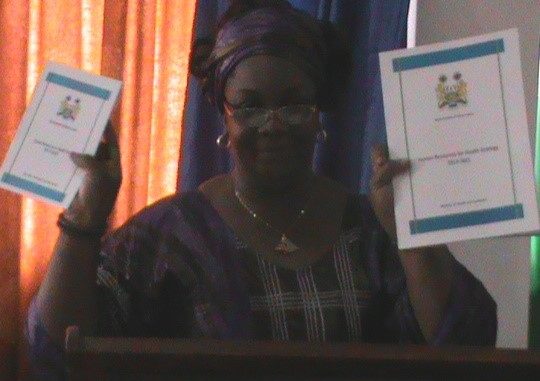
Deputy Minister 1, Madam Madina Rahman launching the Strategy documents
She maintained that human resources for health is an engine for quality and accessible health care in Sierra Leone, stating that her Ministry decided to develop a 5 years Human Resources Strategy to complement efforts of the 10-24 month Post Ebola Recovery Plan and the seven flagship projects.
The Ministry, she said has made substantial progress in the area of: payroll cleaning of inactive workers, removing 427 ghost workers; operationalizing a comprehensive human resources information system; developing training programme for clinical assistants- mid-level cadre that will support the public health sector with clinical services where doctors are limited.
Also, developed a programme to train specialist Medical Doctors in country and working on a comprehensive community health worker policy and strategy to enhance the health workforce’s ability to cover hard to reach population.
With the launching of human resources for health strategy 2017-2021, the Minister noted will continue on the progress by providing roadmap through which the health workforce will be strengthen.
“The plan will address the most critical human resource challenges across multiple interventions areas including: pre-service and in service education, training, regulation, financing and management” she said.
She pleaded with all sector players to use the 2017-2021 strategy as an indispensable tool to rebuild our health system to make it resilient to future shocks, by investing in the core component of our health system.
Talking on the significance of the document, the Chief Nursing and Midwifery Officer, Matron Hossinatu Koroma said the strategic plan has gone through series of process from steering formation to steering committees, consultation with major stakeholders in the health sector and also sought international best practices in other countries.
She confirmed that nursing and midwifery is the largest subset of the human resources for health and the role nurses and midwives play in health, the Directorate of Nursing and Midwifery Services participated and contributed to the development of the plan throughout the process.
Her Directorate, she maintained is not only working on increasing the number of skilled nurses and midwives but also working on improving on standards to improve health outcomes.
With support from development partners she explained that they have develop an abridged midwifery technician curriculum; preceptorship manual; guidelines on standards of nursing and midwifery education; student clinical policy and accreditation tools for nursing and midwifery schools.
She stated that, they have reviewed the State Certified Midwifery curricula for the two Midwifery Schools in the country; reviewed the SECHN Curriculum to nurse midwife technician programme; reviewed the nurses and midwives Act of 1956 that has been approved by Cabinet for transition to a council for public safety.
She said her Directorate has piloted a facility based CPD at the Princess Christian Maternity Hospital in the form of Emergency Obstetric and newborn care and plans to roll out in the regions and Districts.
With support from BMZ and Islamic Development Bank, there are plans to increase the current number of Midwifery Schools in Bo in the South and Kenema in the East.
The Director of Human Resources for Health at the Ministry of Health and Sanitation, Mr. Edward Kwame Yankson observed that although a skilled workforce is critical for rebuilding and strengthening our health system to perform efficiently , there are limitations in other critical aspects of our healthcare delivery , such as : a well distributed health infrastructure, requisite technology; medicines, good policies and regulation which greatly affect health outcomes.
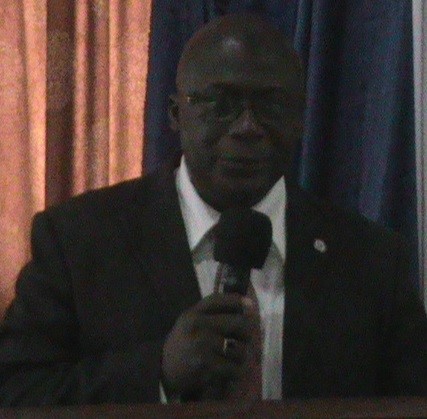
Director of Human Resources for Health, Mr. Edward Kwame Yankson
“However, without a well-motivated and qualified health workforce, even a well-resourced health system cannot deliver the needed services” he said.
Mr. Yankson maintained that the overall goal of the strategy is to plan, deploy and maintain a resilient and highly motivated health workforce to enhance socio-economic development to ensure equitable, affordable and highly- quality health care for over 7 million Sierra Leoneans.
The Chief Medical Officer 1, Dr. Sarian Kamara said the Ministry of Health has invested heavily in the health workforce since the beginning of the Free Health Care Initiative.
She informed her audience that at present the Health Ministry has employed over 10, 000 health workers nationwide across more than 1, 300 work stations including hospitals, District Health Management Teams (DHMTs), peripheral health units and administrative officers.
Dr. Kamara stated that the Ministry’s vision and goal for the Human Resources for Health as defined in the policy sets the long-term overall direction of national health workforce development and serves as the starting point for strategic discussions forming the HRH strategy.
The Permanent Secretary, Mr. David Banya said the Ministry of Health and partners in the health sector have invested enormous resources in terms of finance, material and time to ensure a steady flow of health workforce since the inception in the Free Health Care Initiative.
He said the Health Ministry in partnership with stakeholders in health service delivery in the recent past undertook a highly consultative exercise to develop a national strategy that can stand the test of time.
Other speakers include WHO Representative, Dr. Anders Nordstrom and the Country Director, Clinton Health Access Initiative (CHAI), Jason Houde