
*THE PANDEMIC OF FEAR: When Citizens Learn to Whisper*
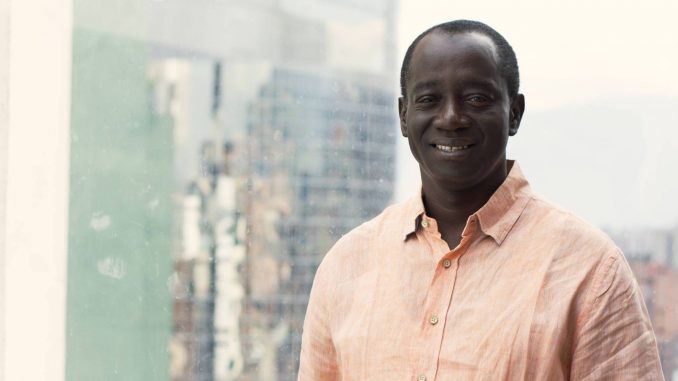
By Oumar Farouk Sesay
Some pandemics don’t strike the body—they slash the tongue. They spread through prosecutions and public warnings, and through the quiet calculations people make before speaking. Sierra Leone is living through that contagion: a pandemic of fear, marked by lowered voices, deleted drafts, and truth rewritten to be safe.
*That reality came into sharp focus when, in response to a question from a journalist with Liberty TV about the sentencing of Zainab Sheriff, Dr. Nemata Majeks-Walker—a prominent voice in civic and advocacy circles—said she is afraid to speak, at least not as freely as she once did. Journalist Dixon Conteh echoed that fear in an interview with Lamrana Bah on Truth Media. If voices that spoke through war, rebellion, and military coups now hesitate in our so-called democratic space, the problem is no longer whether citizens have opinions—it is whether they feel safe enough to express them.*

Some will blame individuals and mock the moment as a sudden lack of “testicular fortitude” and “ovarian audacity.” But fear is rarely just a personal weakness. In politics, fear is often an environment—engineered by signals, reinforced by examples, and sustained by uncertainty. You do not have to jail everyone to silence a society; you only have to punish a few loudly enough that the rest begin to imagine themselves next.
Machiavelli’s old counsel still haunts modern governance: it is safer to be feared than loved. In Sierra Leone, where ethnic and regional loyalties can harden political competition, leaders may be tempted by a perilous double advantage—loved by supporters and feared by opponents. That combination can produce a kind of “calm” in governance. But it is not the calm of consent. It is the calm of containment and, at times, contempt.
*Fear becomes contagious when power responds to criticism not with rebuttal but with consequences. Arrests, detentions, and imprisonment for speech do more than punish an individual; they teach the public a lesson about risk. Enforcement becomes theatre. Theatre becomes a discipline.*
This is why so many Sierra Leoneans celebrated the repeal of the most speech-chilling provision of the Public Order Act. In July 2020, Parliament approved the repeal of Part V—defamatory and seditious libel—and presidential assent followed in November 2020. For many, that moment felt like oxygen: a long-standing muzzle finally loosened. A knee lifted from the nation’s thorax.
Yet the relief proved fragile. A new legal architecture soon took shape for the digital public square. The Cyber Security and Crime framework was passed by Parliament in June 2021 and enacted later that year. Critics—especially of speech-adjacent provisions often discussed under “cyberbullying”—have warned that the framework’s language may sound protective, even therapeutic, while the lived experience can feel punitive.
The greater danger is not merely that laws exist. It is that they can be elastic—broad enough that ordinary citizens cannot tell where criticism ends and criminality begins. When definitions feel malleable, uncertainty becomes a silent prosecutor. People self-censor not because they are persuaded, but because they are unsure. They pre-edit their thoughts, delete drafts, and learn to whisper.
*To be clear, none of this is an argument for lawlessness or a plea to normalize online harassment. A functioning democracy can—and should—distinguish between targeted intimidation, threats, defamation, and coordinated abuse on the one hand, and robust political criticism, satire, and dissent on the other. The dispute is not whether the internet can be weaponized; it is whether the state’s cure is proportionate—or politically convenient. When the net is cast so wide and definitions are expanded so far that ordinary disagreement is dragged in alongside genuine wrongdoing, enforcement ceases to be a remedy and becomes a vector of fear.*
That is how a pandemic spreads: not only through what happens, but also through what people believe could happen.
If anyone doubts how a single prosecution can chill a wider society, consider the Zainab Sheriff case. Multiple reports describe Sheriff—an opposition figure and public personality—being convicted of incitement and threatening language and sentenced to four years and two months’ imprisonment on April 14, 2026, for remarks made at a political rally. The sentence has sparked outcry from lawyers, activists, and opposition voices, not necessarily because everyone agrees with what she said, but because many now fear that the boundaries of permissible speech can shift with the political weather. In moments like these, the citizen’s question shifts from “Is what I’m saying true?” to “Will what I’m saying be tolerated?”
The result is a pandemic of silence. Some stay quiet for their own safety, a rational response in a climate where speech can be costly. Others justify silence as “collective responsibility,” insisting that unity requires fewer questions. Still others stay quiet to curry favor, wagering that compliance today buys access tomorrow. Different motives, same outcome: a public square that begins to sound like a library—orderly, hushed, and haunted by what goes unsaid.
For the strategists who promote and sustain this fear, the current atmosphere may look like a political success story: fewer critics, fewer viral embarrassments, fewer dissenting narratives to manage. But for the nation, it is a slow unmaking. When journalists hesitate, corruption grows louder. When activists whisper, public services decay in silence. When citizens self-censor, bad policy goes unchallenged. A democracy cannot correct itself when people are afraid of the very act of correction.
Sierra Leone has known fear before, often fueled by leaders who draw strength from violent street wisdom: “kill dog befo dog, make dog know say die dae.” The tragedy is not only that such thinking existed, but that after witnessing its consequences, the appetite to relive that era can reappear—incrementally, plausibly, and often cloaked in legal language. In such seasons, souls can be buried in courtrooms while bodies fall in the streets.
History teaches another hard lesson: retaliation is one of the most persistent patterns in the relationship between the two dominant parties. When one party enacts a draconian law—or applies a law in a draconian way—the other is often tempted, upon returning to power, to respond in kind or wield the same instrument with a sharper edge. What begins as a weapon against opponents becomes a template for governance. The law becomes less a shield for citizens than a truncheon for whichever hand holds the state.
So where do we go from here? We start by refusing to confuse silence with stability. A country does not become peaceful when people stop speaking; it becomes brittle. We insist on precision where power prefers vagueness: if the state must regulate online harm, let it do so with narrow definitions, transparent standards, and restrained enforcement—so the law targets real intimidation and threats, not ordinary criticism or inconvenient truths. And we break the addiction to revenge, because every tool built to punish an opponent today becomes a weapon against citizens tomorrow.
*To those who govern, this is not a plea for weakness; it is a call for discipline. Restraint is strength. When a government can tolerate sharp critique, it proves legitimacy. When it cannot, it advertises insecurity. A confident government protects dissent as a democratic asset; a fearful one prosecutes it—and in doing so, weakens the republic it claims to defend.*
,


Leave a Reply