

By Kabs Kanu
Parliament today enacted the Constitution of Sierra Leone (Amendment) Bill, 2025 without the constitutionally mandated 2/3rd majority after only 97 MPs voted in favor as against 46 by the opposition All People’s Congress ( APC ). The Speaker has however referred the question to the Supreme Court for an opinion, which is to be returned to the House no later than three months from today.
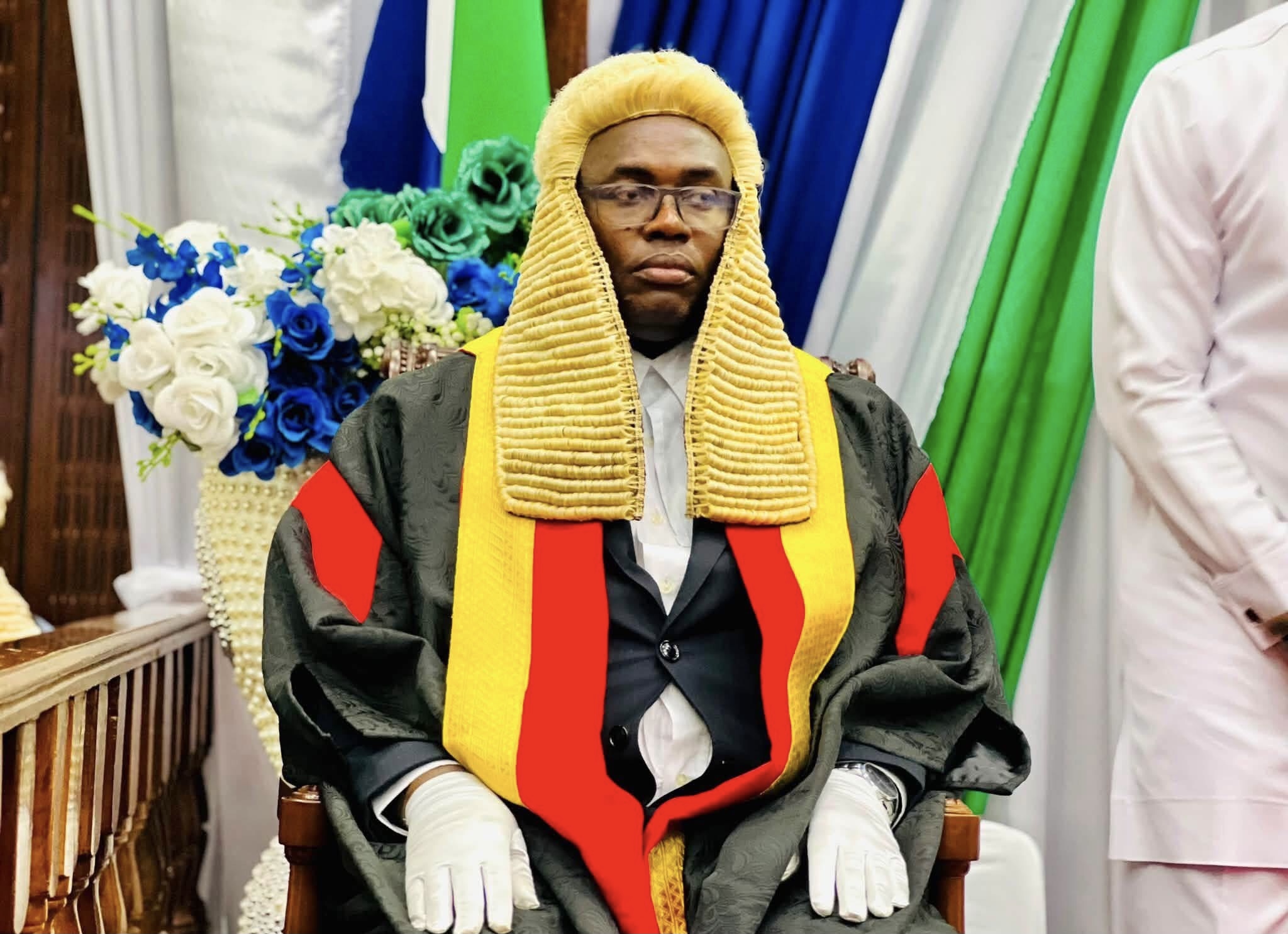
THE SPEAKER OF PARLIAMENT SEGEPOH THOMAS
The passage of the Constitutional Amendment Bill represents another dangerous setback to democracy in Sierra Leone, weakening transparency and accountability in governance and destroying democratic institutions .
The amendments, done without the opposition APC , who had walked out in protest against the voting procedure , lowers the presidential victory threshold from 55% to 50%+1 as well as making proportional representation ( PR ) the permanent system for electing MPs. A 30% minimum quota for women in political nomination is also included in the amendments.
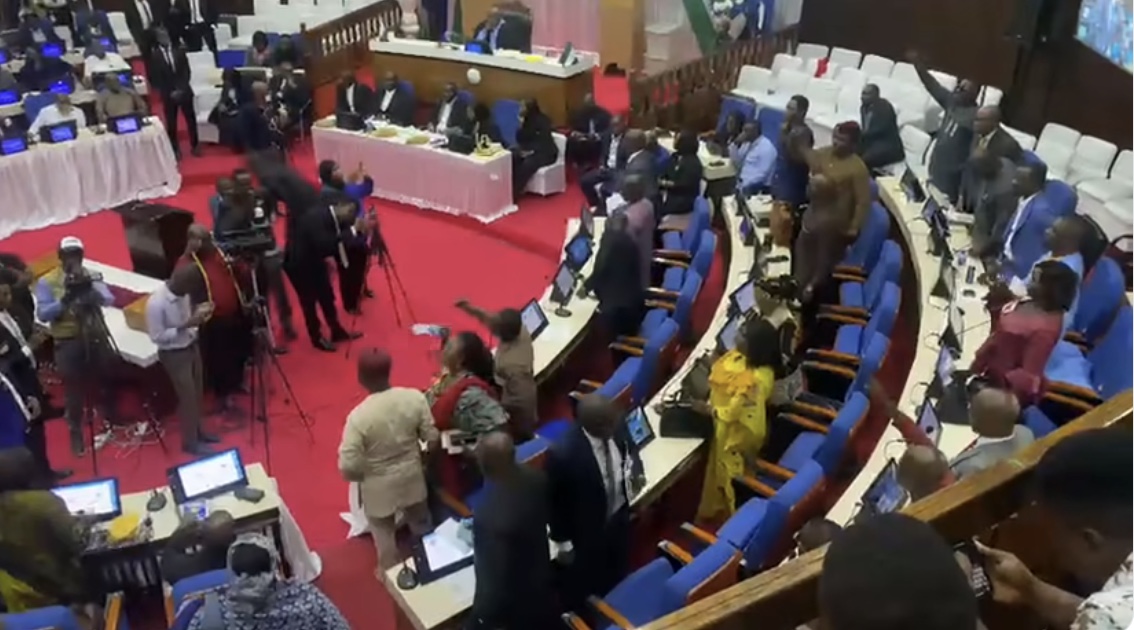
Under Section 108 for constitutional amendments in the Sierra Leone constitution, no amendments should be done to any part of the constitution without a 2/3rd majority of the parliamentary vote. The procedure adopted by the SLPP- controlled Parliament therefore lacks procedural legitimacy. Though the procedure of simple majority done by Parliament needs clarity that only the Supreme Court can provide, there are doubts whether the court will provide any better outcome, given that it is also an SLPP-controlled institution.
ALBERT DAVID, a Sierra Leonean journalist based in Germany, said the decision by Parliament today “threatens the nation’s hard‑won democratic credentials.” He went on : “When leaders bypass constitutional procedures, they betray not parties but the people, opening the door to state capture, where institutions become political tools, citizens become spectators, and the Constitution becomes a prop. This crisis exposes a collapse of integrity, ethics, and civic responsibility. Sierra Leoneans must reawaken, defend constitutional discipline, demand transparency, strengthen institutional independence, and enforce accountability. A nation that tolerates constitutional betrayal is not governed, it is captured.”
HERE IS AN ARTICLE BY SOCIAL MEDIA ACTIVIST HAROUN ZUBAIRU
SIERRA LEONE’S CONSTITUTION IS CLEAR: TWO-THIRDS MEANS TWO-THIRDS OF PARLIAMENT — NOT TWO-THIRDS OF THOSE PRESENT
As the constitutional amendment process unfolds in Sierra Leone’s Parliament, there is one fundamental question every Sierra Leonean should be asking:
When the Constitution requires a two-thirds majority, does it mean two-thirds of MPs present and voting, or two-thirds of the Members of Parliament?
Section 108(2)(b) of the 1991 Constitution states that a constitutional amendment Bill must be supported at its second and third readings by:
“the votes of not less than two-thirds of the Members of Parliament.”
Those words matter.
The Constitution does NOT say “two-thirds of members present and voting.”
Parliament’s own Standing Orders make the distinction even clearer.
For ordinary decisions, Standing Order 44(1) refers to a majority of Members “present and voting.”
But when dealing with constitutional amendments, Standing Order 44(3) requires “not less than two-thirds of all the Members of the House.”
That is a significantly higher threshold.
However, we must also be careful to distinguish between votes taken on individual clauses during the Committee Stage and the constitutional two-thirds requirement expressly imposed on the second and third readings of the Bill.
That distinction is particularly important in understanding the controversy currently unfolding in Parliament.
This should not become an SLPP versus APC argument.
Today one party may control Parliament. Tomorrow another party may control it.
The Constitution must mean the same thing regardless of which political party is in power.
Sierra Leoneans therefore deserve transparency.
How many MPs legally constitute the membership of Parliament for purposes of Section 108?
How many MPs voted YES?
How many voted NO?
How many abstained?
And most importantly, what constitutional provision or Standing Order was used to determine the required majority at each stage?
We are talking about changing the supreme law of our country. These amendments could affect Sierra Leoneans for generations.
The Constitution belongs to the people of Sierra Leone — not SLPP, not APC, not Parliament and not any individual government.
LET THE LAW SPEAK.
Haroun Oluwole Zubairu
Leave a Reply