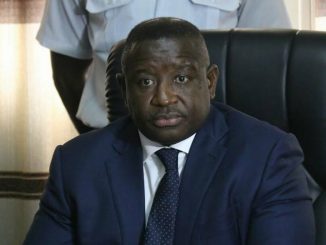
BOOK : MAADA BIO IN POWER : A country mired in agony

Absolutely. With the new title A COUNTRY IN PAIN, I would make the book less like a catalogue of accusations and more like a portrait of a nation experiencing political, economic, institutional and psychological pain. The international community should have a substantial section of its own.

For a serious nonfiction book, allegations about killings, tribalism, drug trafficking, political capture and individual relationships should be presented with documentary evidence, dates, official findings and attributed sources, rather than as established facts where the evidence is disputed.

MAADA BIO IN POWER — A COUNTRY IN PAIN: Revised Chapters
Screenshot

MAADA BIO IN POWER

A COUNTRY IN PAIN

KABS KANU

PROPOSED TABLE OF CONTENTS

INTRODUCTION

A COUNTRY IN PAIN

There are moments in the life of a nation when statistics are no longer enough to describe what people are experiencing.

A falling currency can be measured. Inflation can be calculated. Unemployment can be recorded. Electricity supply can be counted in hours. Hospital beds can be enumerated. Government debt can be expressed in billions. Election results can be written in percentages.

But how does one measure fear?

How does one calculate the pain of a mother who does not know whether she can feed her children tomorrow? How does one measure the anxiety of a young person who has completed school but sees no meaningful employment ahead? How does one quantify the despair of a citizen who believes that speaking too loudly against those in power could bring trouble to his doorstep?

And how does a nation measure the psychological damage that occurs when its citizens begin to believe that justice is not equal, institutions are not independent and powerful people do not face the same consequences as ordinary people?

This book is an attempt to ask those uncomfortable questions.

MAADA BIO IN POWER: A COUNTRY IN PAIN is not simply a book about one president. It is an examination of a country under political, economic and institutional strain during the years of Maada Bio’s presidency, beginning with the hopes that accompanied his arrival in State House in 2018 and extending through the controversies, crises and disappointments that have followed.

It is a book about power—how it is acquired, how it is exercised, how it is protected and, most importantly, what happens when those who exercise it are perceived to be beyond meaningful accountability.

When Maada Bio came to power, many Sierra Leoneans hoped for a new beginning. The country had endured civil war, authoritarianism, corruption, poverty and years of institutional weakness. There was an enormous appetite for change. Citizens wanted better governance. They wanted justice. They wanted jobs. They wanted electricity and water. They wanted functioning hospitals and schools. They wanted an economy that would give their children a future.

Above all, they wanted a government that would respect them.

Years later, the question confronting Sierra Leone is whether those hopes have been fulfilled.

The answer depends partly on whom one asks.

The government points to its achievements and reforms. Supporters defend its record and argue that it inherited enormous problems. Critics, opposition politicians, journalists, activists and many ordinary citizens tell a very different story—one of economic hardship, political polarization, institutional weakness, alleged abuses, fear and growing distrust.

This book enters that contested space.

It does not pretend that politics in Sierra Leone is simple. It is not. Nor does it pretend that every accusation against the government is automatically true. In an era of political propaganda, social-media misinformation and partisan journalism, allegations must be tested against evidence.

That is why this book will repeatedly return to one principle:

What happened? Who says it happened? What evidence exists? Who investigated it? What did the investigation find? And who was held accountable?

Those questions are particularly important when examining allegations of excessive use of force, deaths during political unrest, arbitrary arrests, suppression of dissent, corruption, ethnic favoritism, institutional capture and other serious claims.

The pain of a country is not created by one event.

It accumulates.

It accumulates when citizens lose confidence in elections. It accumulates when political opponents no longer trust the institutions responsible for resolving disputes. It accumulates when journalists fear the consequences of critical reporting. It accumulates when young people see political connections as more valuable than qualifications. It accumulates when citizens believe that ethnicity determines opportunity. It accumulates when security institutions are perceived as instruments of political power rather than servants of the Constitution.

And it accumulates when people repeatedly see controversies without convincing accountability.

That last point is perhaps the most dangerous of all.

A democracy does not survive merely because elections are held. It survives because citizens believe that nobody is above the law.

The police must answer to the law.

The military must answer to the Constitution.

The government must answer to Parliament.

Parliament must answer to the people.

The courts must answer to justice.

And political leaders must ultimately answer to history.

When that chain of accountability becomes weak, democracy may continue to exist on paper while becoming increasingly fragile in practice.

THE PAIN OF FEAR

Perhaps the deepest pain explored in these pages is not hunger or poverty, but fear.

The fear of speaking.

The fear of protesting.

The fear of criticizing government.

The fear of being politically identified.

The fear that a disagreement with power could have consequences.

A citizen should not have to calculate the personal risk of expressing an opinion in a democracy.

A young Sierra Leonean should not have to wonder whether political activism could destroy his future.

A journalist should not have to choose between professional integrity and personal safety.

A peaceful demonstrator should not have to wonder whether exercising a constitutional right could turn into a confrontation with lethal force.

And no government should become so powerful that citizens begin to believe that it can harm them and escape accountability.

These are not merely political questions. They are questions about the character of a republic.

THE PAIN OF EXCLUSION

There is another wound that this book confronts directly: the pain of tribal and regional exclusion.

Sierra Leone is a small country with a remarkable diversity of peoples, languages, traditions and political identities. Yet ethnicity has repeatedly been exploited by politicians across generations.

The question for the Bio era is therefore not whether tribalism began in 2018—it did not.

The question is whether citizens today perceive that political, governmental and economic opportunities are distributed fairly.

Does one’s tribe matter?

Does one’s region matter?

Does one’s political allegiance matter?

Does one’s connection to the powerful matter more than one’s competence?

These questions deserve evidence, not slogans.

If allegations of ethnic favoritism are false, they should be disproved by transparent data. If they are true, they should be confronted honestly.

A nation cannot build unity by pretending that its divisions do not exist.

THE PAIN OF INSTITUTIONAL DISTRUST

The strongest republic is not one in which citizens trust a president blindly.

It is one in which citizens trust the institutions.

They must believe that the police can investigate the government.

That the courts can rule against the government.

That Parliament can challenge the executive.

That the electoral commission can administer elections independently.

That the anti-corruption authorities can investigate powerful people.

That journalists can investigate wrongdoing without intimidation.

That the armed forces belong to the nation rather than to a political party.

When citizens begin to believe that all these institutions have been captured, compromised or politicized, the resulting damage goes far beyond one administration.

It damages the Republic itself.

AND WHERE IS THE WORLD?

This book also asks an uncomfortable question of Sierra Leone’s international partners.

After the civil war, the international community invested enormous political, financial and institutional resources in helping Sierra Leone rebuild. The country became one of Africa’s important stories of post-war recovery.

Yet many Sierra Leoneans today ask whether their country has been forgotten.

Where is the international pressure when serious allegations of human-rights abuses arise?

Where are the consequences when citizens die during political unrest?

Where is the urgency when democratic institutions are perceived to be weakening?

Why do international governments issue statements of concern but sometimes appear reluctant to take stronger measures?

And why, citizens ask, does the international community appear to react more forcefully in some countries than in Sierra Leone?

These questions deserve serious investigation rather than emotional slogans.

Organizations such as Amnesty International and Human Rights Watch have, at various times, documented human-rights concerns in Sierra Leone. Their records—and the records of the United Nations, foreign governments and other international institutions—must therefore be examined carefully.

The issue is not simply whether these organizations have spoken.

The issue is whether their words have been strong enough, timely enough and consequential enough to protect citizens who believe they are vulnerable.

Diplomacy can save lives.

But diplomacy can also become an excuse for delay.

And delay, for a frightened citizen, can feel like abandonment.

THE NARCO-STATE QUESTION

Few issues have generated more disturbing questions about Sierra Leone’s international image than allegations concerning cocaine trafficking and the country’s vulnerability to organized narcotics networks.

This book will examine those allegations carefully.

It will examine major drug seizures, investigations, international concerns and the controversial claims that Sierra Leone has acquired the reputation of a “narco-state.”

It will also examine public controversy surrounding Dutch convicted drug trafficker Bolle Jos and claims concerning his relationship by marriage to the President’s family.

But this book will not confuse association with proof.

A relative’s alleged criminal conduct does not automatically establish criminal conduct by a president or government. Conversely, a politically connected individual should not receive immunity from legitimate scrutiny merely because of those connections.

The proper question is:

What do the facts show?

That is the standard this book must apply.

A JOURNALIST’S RESPONSIBILITY

I write this book as a journalist and as a Sierra Leonean deeply concerned about the direction of my country.

I do not believe journalism should become propaganda.

Journalism must challenge power—but it must also challenge the opposition.

It must question government—but it must also question those seeking to replace government.

It must expose wrongdoing—but it must not manufacture wrongdoing where evidence does not exist.

And when the facts are uncertain, a responsible journalist must say so.

That is particularly important in Sierra Leone, where political narratives are frequently shaped by partisan loyalties. Too often, one side sees a patriot where the other sees a traitor; one side sees a democratic reformer where the other sees an authoritarian; one side sees economic progress where the other sees national decline.

This book attempts to step into that battlefield with documents, testimony, public records, historical context and questions.

Its central concern is not whether President Maada Bio is personally liked or disliked.

Its central concern is what has happened to the Sierra Leonean citizen under the exercise of presidential power since 2018.

Has the citizen become more secure?

More prosperous?

More free?

More equal?

More confident in the institutions of the Republic?

Or has the citizen become poorer, more fearful, more divided and less confident that justice will prevail?

Those are the questions that history will eventually answer.

A COUNTRY IN PAIN—BUT NOT A COUNTRY WITHOUT HOPE

There is, however, one thing this book refuses to accept: that Sierra Leone’s situation is hopeless.

Pain is not destiny.

Poverty is not destiny.

Tribalism is not destiny.

Corruption is not destiny.

Political violence is not destiny.

Institutional weakness is not destiny.

And impunity is not destiny.

Sierra Leone has survived colonialism, coups, dictatorship, civil war, military intervention, corruption scandals, Ebola, natural disasters and profound economic hardship.

It has survived because its people have repeatedly demonstrated resilience.

The country therefore does not need another generation of political vengeance.

It needs institutions.

It needs truth.

It needs accountability.

It needs competent leadership.

It needs an independent judiciary.

It needs a professional police force and military.

It needs credible elections.

It needs a free press.

It needs economic opportunity.

It needs leaders who understand that political power is not personal property.

And above all, it needs a government that remembers a simple democratic truth:

The people are not subjects of government. Government is the servant of the people.

That is why this book is called A Country in Pain.

Not because Sierra Leone is dead.

Not because Sierra Leone has no future.

But because millions of citizens continue to carry burdens that should not be theirs to carry.

Their pain deserves to be heard.

Their questions deserve answers.

Their rights deserve protection.

And their country deserves better.

This book is an attempt to listen to the pain, document the evidence, confront the powerful and ask the questions that too many people are afraid to ask.

For in the end, the history of Maada Bio’s presidency will not be written only by the president, his ministers, his supporters or his opponents.

It will be written by the people who lived through it.

And when history finally asks what it meant to live in Sierra Leone during these years, the most important question may be the simplest:

How did it feel to be a citizen in a country in pain?

PART ONE — THE COUNTRY AND THE PROMISE

Chapter 1 — The Country That Hoped

Sierra Leone in 2018: the expectations, promises and dreams that accompanied the election of Maada Bio.

Chapter 2 — From Hope to Disillusionment

How the optimism of 2018 gradually gave way, according to critics and many citizens, to frustration, disappointment and political polarization.

Chapter 3 — What Does It Mean to Live in a Country in Pain?

The meaning of national pain—not merely poverty, but fear, exclusion, injustice, unemployment, institutional weakness and loss of hope.

Chapter 4 — The President and the Power of the State

An examination of the enormous powers available to the presidency and the debate over how those powers have been exercised since 2018.


PART TWO — THE PAIN OF GOVERNANCE

Chapter 5 — When Government Becomes the Source of Fear

The fear of citizens who believe that the very institutions established to protect them can instead be used against them.

Chapter 6 — The Pain of Impunity

Why citizens lose faith in democracy when they believe that powerful people can violate laws or rights without consequences.

Chapter 7 — The August 10 Trauma

The August 2022 demonstrations, the deaths, competing accounts of what happened, the security response and the unresolved questions that continue to trouble the nation.

Chapter 8 — Who Protects the People from the Protectors?

The army, police and other security institutions, their constitutional responsibilities and allegations of excessive force and political influence.

Chapter 9 — When the Gun Becomes Political

The danger of politicizing security institutions and the consequences when citizens lose confidence in the neutrality of the security forces.

Chapter 10 — The Pain of Knowing You May Not Be Safe

The psychological burden of citizens who fear arrest, intimidation, violence or other consequences for political expression or participation in demonstrations.


PART THREE — THE PAIN OF SILENCE

Chapter 11 — Can a Citizen Still Speak Freely?

Freedom of expression, journalism, political criticism, social media and the fear of speaking openly.

Chapter 12 — The Prison Cell and the Political Voice

Cases involving journalists, activists, opposition figures and other citizens accused or convicted after making controversial political statements.

Chapter 13 — Demonstration: A Democratic Right or a Dangerous Act?

The constitutional place of peaceful protest and the controversy surrounding government responses to demonstrations.

Chapter 14 — The Pain of Self-Censorship

What happens to a society when citizens begin to silence themselves because they are afraid of the consequences of speaking.

Chapter 15 — The Fear That Lives in the Home

How political fear can penetrate families, workplaces, communities, churches, mosques, universities and social networks.


PART FOUR — THE PAIN OF EXCLUSION

Chapter 16 — One Country, Many Suspicions

The historical problem of ethnicity and regional politics in Sierra Leone and how these divisions affect contemporary governance.

Chapter 17 — The Tribalism Question

Allegations of ethnic favoritism, exclusion and unequal access to government opportunities—and the evidence for and against those claims.

Chapter 18 — Does One Tribe Control Everything?

A detailed investigation of appointments, public institutions, security agencies, diplomatic positions and other areas where critics allege disproportionate ethnic representation.

Chapter 19 — The Pain of Being Excluded

The experiences of citizens who believe that their tribe, region or political affiliation determines their chances of obtaining employment, contracts, appointments or justice.

Chapter 20 — Tribal Politics and the Destruction of National Unity

How ethnic competition can undermine the idea of one Sierra Leone and revive wounds that the country has spent decades trying to heal.


PART FIVE — THE PAIN OF INSTITUTIONAL CAPTURE

Chapter 21 — When Institutions Stop Belonging to the People

What institutional independence means and why it matters in a democracy.

Chapter 22 — Parliament: Watchdog or Political Weapon?

The relationship between Parliament and the executive, parliamentary majorities, constitutional amendments and questions about legislative independence.

Chapter 23 — Justice Under Pressure

The judiciary, judicial independence, politically sensitive cases and citizens’ perceptions of equal justice.

Chapter 24 — The Police and the Politics of Power

Police independence, policing of opposition activities, demonstrations, arrests and allegations of selective enforcement.

Chapter 25 — The Army and the Republic

The constitutional role of the military, political neutrality, the relationship between soldiers and civilian government, and public concerns about security-force accountability.

Chapter 26 — The Electoral Commission and the Battle for Trust

Electoral administration, the 2023 election controversy, opposition complaints and the importance of credible elections.

Chapter 27 — The Anti-Corruption Fight

The Anti-Corruption Commission’s achievements, investigations and prosecutions—and the continuing debate over whether anti-corruption enforcement is sufficiently impartial.

Chapter 28 — When Every Institution Is Suspected

The devastating effect of institutional distrust: when citizens no longer believe Parliament, courts, police, army, electoral bodies or watchdog institutions will protect them.


PART SIX — THE PAIN OF CORRUPTION AND POVERTY

Chapter 29 — The Country’s Money and the People’s Misery

Public finances, corruption allegations, government expenditure and the contrast between state resources and citizens’ living conditions.

Chapter 30 — Kleptocracy: The Word That Haunts the Republic

What kleptocracy means, why the term has been applied by critics to Sierra Leone, and what evidence would be necessary to substantiate or reject the accusation.

Chapter 31 — The Richer Government and the Poorer People

The widening perception of inequality between political elites and ordinary Sierra Leoneans.

Chapter 32 — Inflation, Hunger and Survival

The rising cost of food and basic necessities and how economic hardship affects ordinary families.

Chapter 33 — No Light, No Water, No Jobs

Electricity, water, employment, infrastructure and the everyday failures that transform poverty into despair.

Chapter 34 — The Young and the Hopeless

Youth unemployment, migration, frustration and the dangerous consequences of a generation that sees little economic opportunity at home.

Chapter 35 — The Pain of Healthcare and Education

The state of hospitals, maternal and child health, schools, universities and the struggle to provide basic social services.


PART SEVEN — THE PAIN OF DRUGS, CORRUPTION AND REPUTATIONAL DAMAGE

Chapter 36 — Is Sierra Leone Becoming a Narco-State?

The allegations, international reporting and drug-trafficking concerns surrounding Sierra Leone, what has actually been established, and what remains allegation or political rhetoric.

Chapter 37 — The Cocaine Question

Major drug seizures, alleged trafficking networks, investigations and the unanswered questions surrounding the country’s international reputation.

Chapter 38 — Bolle Jos and the Questions That Will Not Go Away

A carefully documented examination of public claims concerning Dutch convicted drug trafficker Bolle Jos, his reported relationship by marriage to the President’s family, and the questions citizens have raised about accountability. The chapter should distinguish rigorously between family association, allegations, convictions and evidence of governmental wrongdoing, rather than treating them as interchangeable.

Chapter 39 — When International Reputation Becomes a National Burden

How allegations of corruption, drug trafficking and weak governance affect Sierra Leone’s reputation, investment prospects and citizens abroad.


PART EIGHT — THE PAIN OF A FORGOTTEN PEOPLE

Chapter 40 — Where Is the International Community?

The central question: why, despite years of political controversy, allegations of abuses and economic hardship, do many Sierra Leoneans believe the international community has not done enough?

Chapter 41 — The Hypocrisy of International Democracy

The apparent contradiction between international declarations about democracy and human rights and what citizens perceive as inadequate action when abuses are alleged.

Chapter 42 — Procrastinators in the Name of Diplomacy

How diplomatic caution, endless statements, consultations and expressions of concern can appear to citizens as indifference or deliberate delay.

Chapter 43 — When Citizens Are Killed and the World Moves On

The international response—or perceived lack of response—to deaths during political unrest and demonstrations. A chapter built around documented casualty figures, investigations, official statements and international reactions.

Chapter 44 — Where Were the Sanctions?

Why sanctions have been imposed on some governments and officials elsewhere in Africa, while Sierra Leone has largely avoided comparable punitive measures despite allegations of serious abuses.

Chapter 45 — Amnesty International, Human Rights Watch and the Question of Silence

An evidence-based examination of what major international human-rights organizations have actually reported about Sierra Leone. Were they silent, insufficiently forceful, or active but largely ignored? The documentary record must answer the question.

Chapter 46 — Britain, America, Europe and the Sierra Leone Question

The roles and interests of the United Kingdom, United States, European Union and other international partners.

Chapter 47 — The UN and the Limits of International Concern

What the United Nations has said and done concerning Sierra Leone, and why international mechanisms sometimes appear powerless or unwilling to go further.

Chapter 48 — Has the World Forgotten Sierra Leone?

The voices of ordinary citizens who believe that the country has been abandoned by the international community after the world once invested heavily in Sierra Leone’s peace and reconstruction.


PART NINE — THE PAIN OF GETTING AWAY WITH IT

Chapter 49 — Can Those in Power Ever Be Held Accountable?

The central question of the book: what happens when political leaders become convinced that domestic and international consequences are unlikely?

Chapter 50 — The Culture of Getting Away With Everything

A study of the psychology and politics of impunity—how repeated failure to impose consequences can encourage increasingly aggressive uses of power.

Chapter 51 — When Justice Depends on Who You Are

The perception that ordinary citizens face punishment while powerful people enjoy protection.

Chapter 52 — The Citizen Versus the State

The unequal relationship between an ordinary Sierra Leonean and the machinery of government.

Chapter 53 — Living Under the Shadow of Retaliation

The emotional and psychological pain of believing that speaking, protesting or organizing politically can put one’s livelihood, freedom or safety at risk.

Chapter 54 — The Country That Learned to Be Afraid

How fear can become normalized and how normalized fear quietly destroys democratic culture.


PART TEN — WHAT KIND OF SIERRA LEONE ARE WE BUILDING?

Chapter 55 — Democracy Without Trust Is Democracy in Danger

Why elections alone cannot sustain democracy without independent institutions, accountability and public confidence.

Chapter 56 — Can Sierra Leone Heal Its Divisions?

Ethnicity, regionalism, political polarization and the possibility of national reconciliation.

Chapter 57 — Restoring the Independence of Institutions

A blueprint for strengthening Parliament, the judiciary, police, army, electoral institutions, anti-corruption bodies and the media.

Chapter 58 — Accountability Without Revenge

How Sierra Leone can pursue justice while avoiding political witch-hunts and cycles of retaliation.

Chapter 59 — What the International Community Must Do

A proposed international agenda: stronger monitoring, credible investigations, human-rights accountability, electoral support, anti-corruption assistance and protection for democratic institutions.

Chapter 60 — What Sierra Leoneans Must Do

The responsibility of citizens, political parties, civil society, journalists, religious leaders, traditional leaders and young people.


EPILOGUE

A Country in Pain — But Not Without Hope

The final chapter should not end with despair.

It should ask whether Sierra Leone can escape the cycle of fear, poverty, tribal division, corruption, impunity and political violence.

The concluding message:

A country may be in pain without being permanently broken.

Sierra Leone’s future must ultimately be built on institutions stronger than individuals, laws stronger than political connections, citizenship stronger than tribalism, truth stronger than propaganda, and accountability stronger than impunity.


SUGGESTED SPECIAL SECTIONS

The Evidence Room

A documentary section containing court judgments, parliamentary records, official reports, electoral documents, government statements and credible investigative reports.

The Citizens Speak

First-person testimonies from ordinary Sierra Leoneans describing economic hardship, political fear, exclusion, unemployment, corruption and their hopes for the country.

The International Record

A chronological record of statements and actions by the UN, US, UK, EU, Commonwealth, ECOWAS and international human-rights organizations concerning Sierra Leone.

The Accountability Ledger

A table comparing major allegations, investigations, findings, prosecutions, official responses and unresolved questions.

Government Response

A dedicated section presenting the SLPP government’s explanations, achievements, rebuttals and responses to the criticisms made throughout the book.

The Final Question

If those who govern can act without fear of consequences, who protects the people?

Related Posts

Be the first to comment

Leave a Reply

Your email address will not be published.


*