

By Historical Africa
On January 17, 1983, Nigeria gave two million West Africans two weeks to leave.
President Shehu Shagari’s government announced that all undocumented migrants had fourteen days to exit or face arrest. The order came after years of economic decline. Oil prices had crashed. Inflation was soaring. Unemployment was rising. The same Nigerian oil boom that had drawn nurses, teachers, traders, and artisans from Ghana, Togo, Benin, and Niger through the 1970s had turned against them.
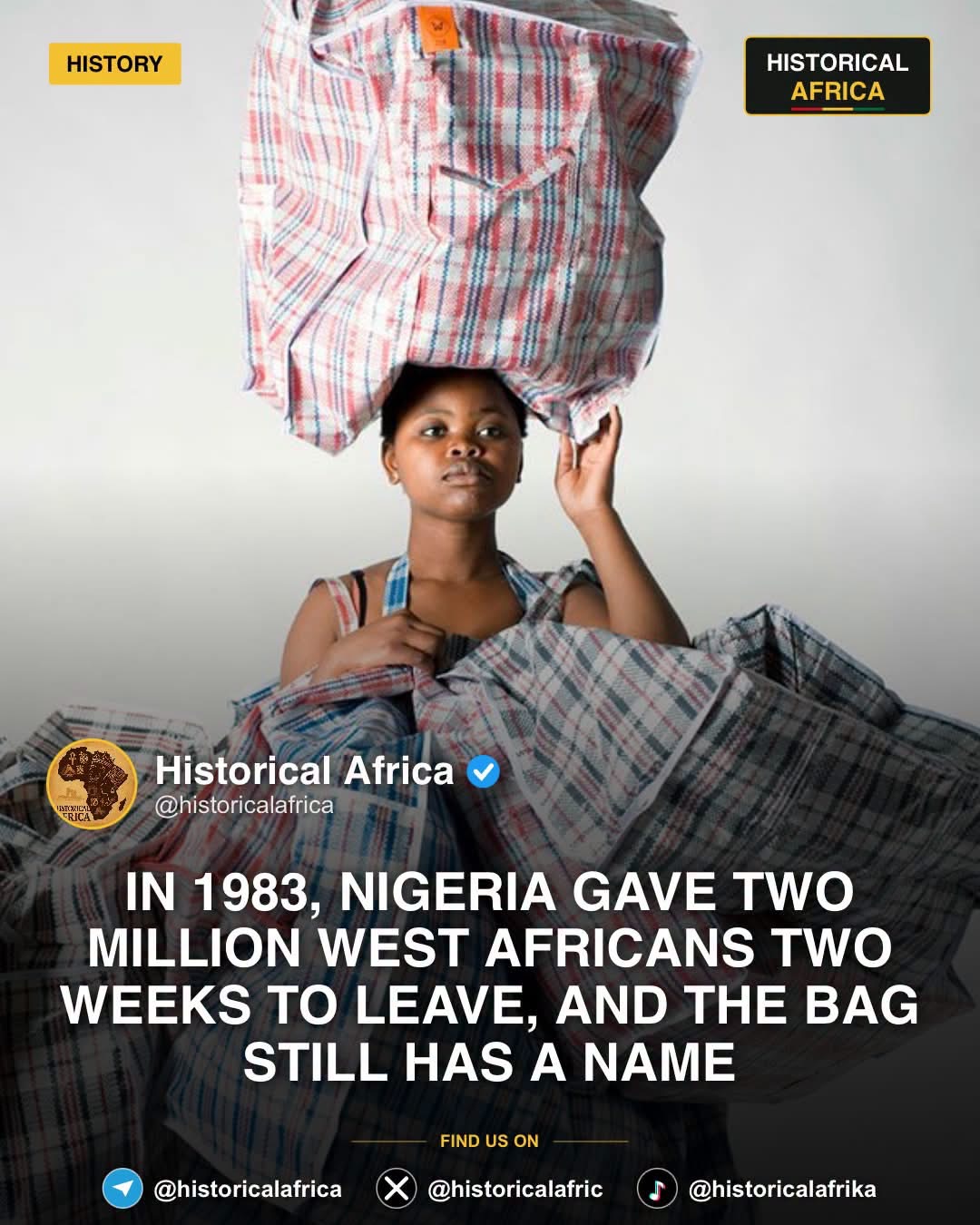
Ghanaians made up the largest group. Estimates range from seven hundred thousand to over one million people. Many had lived in Nigeria for years. They had built careers, paid rent, raised children, and staffed the hospitals and markets that kept Lagos and Kaduna moving. Now they had fourteen days to pack their lives into whatever they could carry. They bought cheap checkered woven nylon bags from local markets. Those bags became their luggage, their identity, and eventually their name. Ghana Must Go.
The exodus was chaotic. Ghana had already closed its border with Togo in September 1982. When the Nigerian expulsion began, Togo closed its border with Benin to prevent a flood of returnees. Thousands of Ghanaians were stranded in Cotonou with nowhere to go. Ghana eventually reopened its borders and sent ships to Benin to ferry people home. Some never made it. They drowned in the crush to board.
Between sixty and one hundred people died directly because of the expulsion. The real toll was likely higher.
The timing was political. Shagari’s National Party of Nigeria faced elections in August 1983. Blaming foreigners for economic pain was an easy way to win votes. Nnamdi Azikiwe, Nigeria’s first president, called the expulsion a mortal blow to African cooperation and unity. It was also a betrayal of ECOWAS, the very economic community Nigeria had led in creating in 1975. The treaty promised free movement of people. Nigeria wrote the rules and then broke them.
There was precedent. Ghana had expelled over two hundred thousand Nigerians in 1969 under Prime Minister Kofi Busia. The cycle of expulsion between neighbors has repeated across the region for decades. But the 1983 Nigerian order was the largest and most brutal. It turned a common travel bag into a symbol of rejection that still exists today in markets across West Africa.
Nigeria and Ghana rebuilt their relationship. Trade resumed. Diplomacy continued. But the bag never lost its meaning. It sits in closets and market stalls from Accra to Lagos, a reminder of how quickly an African government can turn on the people who helped build its prosperity.
The rhetoric that justified 1983 never disappeared. It resurfaces whenever economies fail and politicians need a scapegoat. The lesson is not complicated. If you invite your neighbors to build with you, you cannot throw them out when the price of oil drops.
#HistoricalAfrica #GhanaMustGo #Nigeria #WestAfrica #AfricanUnity

Leave a Reply