
Hello everyone,
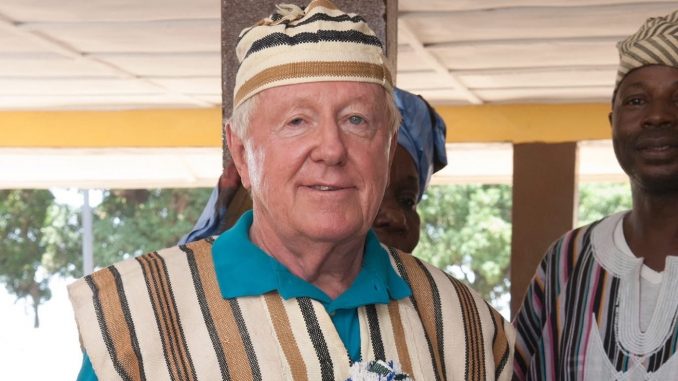
On behalf of the FoSL Board, it’s with heavy hearts that we announce the passing of a FoSL Board Member, Mr. Gary Schulze.
Gary exemplifies the meaning of Servant Leadership. He’ll be missed dearly.
May his precious soul rest in perfect peace.
More information on funeral or memorial services will be communicated soon.
Gary served in the first group of Peace Corps Volunteers to go to Sierra Leone in 1962. Taught Government, Art, and Civics at the Albert Academy in Freetown. Helped establish the Sierra Leone National Museum. Serves as Vice President of The Magic Penny, an NGO which operates a primary school in the Moyamba District. Was installed as Honorary Paramount Chief Pieh Gbabyior Caulker of Kagboro Chiefdom in 2013. Awarded the Order of The Rokel (OOR), Sierra Leone’s highest civilian honor by President Koroma at State House in 2014 in recognition of his tremendous contribution to the development of Education and the History and Culture of Sierra Leone. In 2013, discovered and brought to Sierra Leone the only existing photograph of Bai Bureh, the country’s national hero. In 2019, he became a naturalized citizen of Sierra Leone.
Thank you,
Aiah Fanday
FoSL Co-President
—————
A FRIEND OF SIERRA LEONE PASSES
By Peter Andersen
https://m.facebook.com/story.php?story_fbid=10164591098737629&id=657342628
Today I am saddened, a sadness one can only feel after losing a friend of 30 years. Gary Schulze died yesterday in his native New York City; but he and his legacy will be remembered, especially in his contributions to his beloved Sierra Leone. Gary had experienced increasing health problems in the past two or three years, and was staying in a nursing home for “rehab”, as he explained it to me, until he could walk again. He had fallen at least twice in his apartment and had been unable to get up, possibly for a couple days. The long conversations of years past had become one or two minute affairs before he had to go, and often he didn’t answer his phone at all. In recent months his phone was off completely and news of him was scarce. It slowly became evident that his hoped-for return home was not going to happen.

This is not intended to be an obituary, but as a recollection of Gary’s legacy: especially his legacy to Sierra Leone.
Gary was one of the first contingent of Peace Corps Volunteers to go to Sierra Leone in 1961, the year of Sierra Leone’s independence. He lived with fellow PCV Jim Sheahan, beginning a 65-year friendship. In his first year, he taught at the Albert Academy in Freetown and changed the curriculum from the study of European History to the study of African History. In his second year as a Peace Corps Volunteer, at the recommendation of Dr. John Karefa-Smart, Gary helped Dr. M.C.F. Easman to establish the Sierra Leone Museum. It was Gary who suggested that they commission a statue of Bai Bureh, and Dr. Easman agreed. Gary went to a Creole man who made statutes for gravesites and showed him the (arguably uncomplimentary) watercolour painting of Bai Bureh from the profile. The man asked Gary what he looked like in front, and Gary replied “No one knows, use your imigination.” The completed statue was carried up from the seaside on a litter, and Gary said some women along the way burst out crying, assuming it to be a corpse. Gary wired a machete to the statue’s hand and dug into a box of hats to choose what he subsequently described as “a culturally appropriate cap.” It was a Koranko buffalo hunter’s cap (in my experience), but many believed it to be Bai Bureh’s actual cap. Together with the ditty “Bai Bureh was a warrior,” decades later it appears it was assumed to be a warrior’s cap, and during the civil war (1996-2002) the same cap was worn by RUF leader Foday Sankoh and by many members of the pro-government Kamajor militia – all because Gary chose the wrong cap.





Gary recalled long lines in front of the Museum of people wanting to see the statue after it was announced, and even Prime Minister Milton Margai paid a visit to see it in person. A picture of the statute was featured on Sierra Leone’s Le1,000 bank note.
In a short bio for the Sierra Leone Web, last updated in 2010, Gary also notes that he served as Secretary to the Sierra Leone Monuments & Relics Commission, that he made the model of the DeRuiter Stone displayed at the Museum. He served as an election observer for Sierra Leone’s Presidential and Parliamentary Elections in 1996, and closer to home he was a member of the Metropolitan Transportation Authority’s Interagency Counterterrorism Task Force in New York City. Gary was on a number of boards, including Friends of Sierra Leone (and subsequently the board of the National Peace Corps Association), and the Magic Penny, “devoted to improving the lives of schoolchildren in the Shebro area.” He described himself as “an avid collector of traditional African art.”
Among the things that Gary collected were historic postcards from Sierra Leone, printed presumably for the British colonial market. He would scan Ebay for these, and he scanned many in his collection for the Sierra Leone Web. In 2013 he came across a photo album created by a British military officer who served in Sierra Leone and elsewhere in the late 1800s. The seller stated it included a picture of “Bai Bureh, King of the Temnes.” Gary was able to establish its provenance and bid for the album. Shortly before the bidding ended, at midnight, Gary doubled his bid and then dozed off. When he woke ten minutes later, someone else had outbid him. Gary tracked down the successful bidder and bought the album from him for over $11,000 from his retirement savings.
Gary had always planned that the picture would go to Sierra Leone (where it had never been), but that the lack of climate control at the Museum meant that it could not be preserved there. He told me that it was in a safe-deposit box in New York City.
The photo was taken in 1898 in Ascension Town, where King Prempeh I of Ashanti (now part of present-day Ghana) and Bai Bureh were being held prisoner by the British. He asked King Prempeh if he could photograph him, but he refused. Bai Bureh agreed.
The picture was 4×4 inches, probably a contact print from a camera of that era, the low-resolution print Gary emailed me in Freetown showed it to be an ugly purplish-red. It was also “muddy”, overexposed so that some of the detail was hard to make out. I asked him to have it professionally scanned in black and white, which he did. I used my Photoshop program and plug-ins to restore the picture. Gary kept renaming the versions I set him and then mixing them up. My final version had a tint of yellow-red as a nod to the original, but Gary printed the black and white version and brought a huge poster for the Museum, and framed copies, one of which hangs in our house in Freetown. He invited me to be present at State House when he gave two copies to President Koroma. Gary had just been made an honorary paramount chief in Shenge, Kagboro, but President Koroma told him he deserved more than that. At the Awards and Insignia Ceremony held on Monday, 28 April 2014, Independence Day having fallen on a Sunday, President Koroma made him an Officer of the Order of the Rokel.
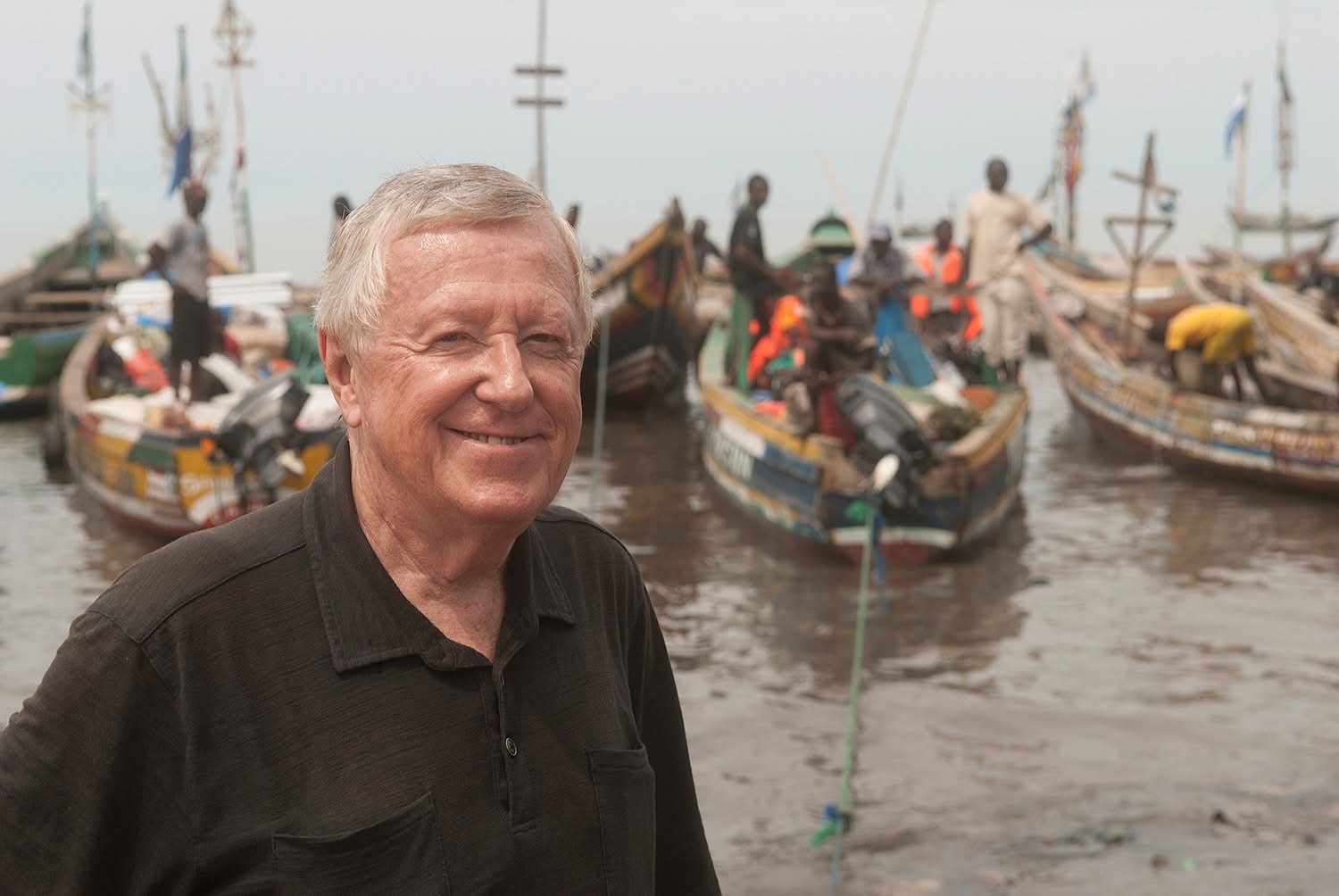
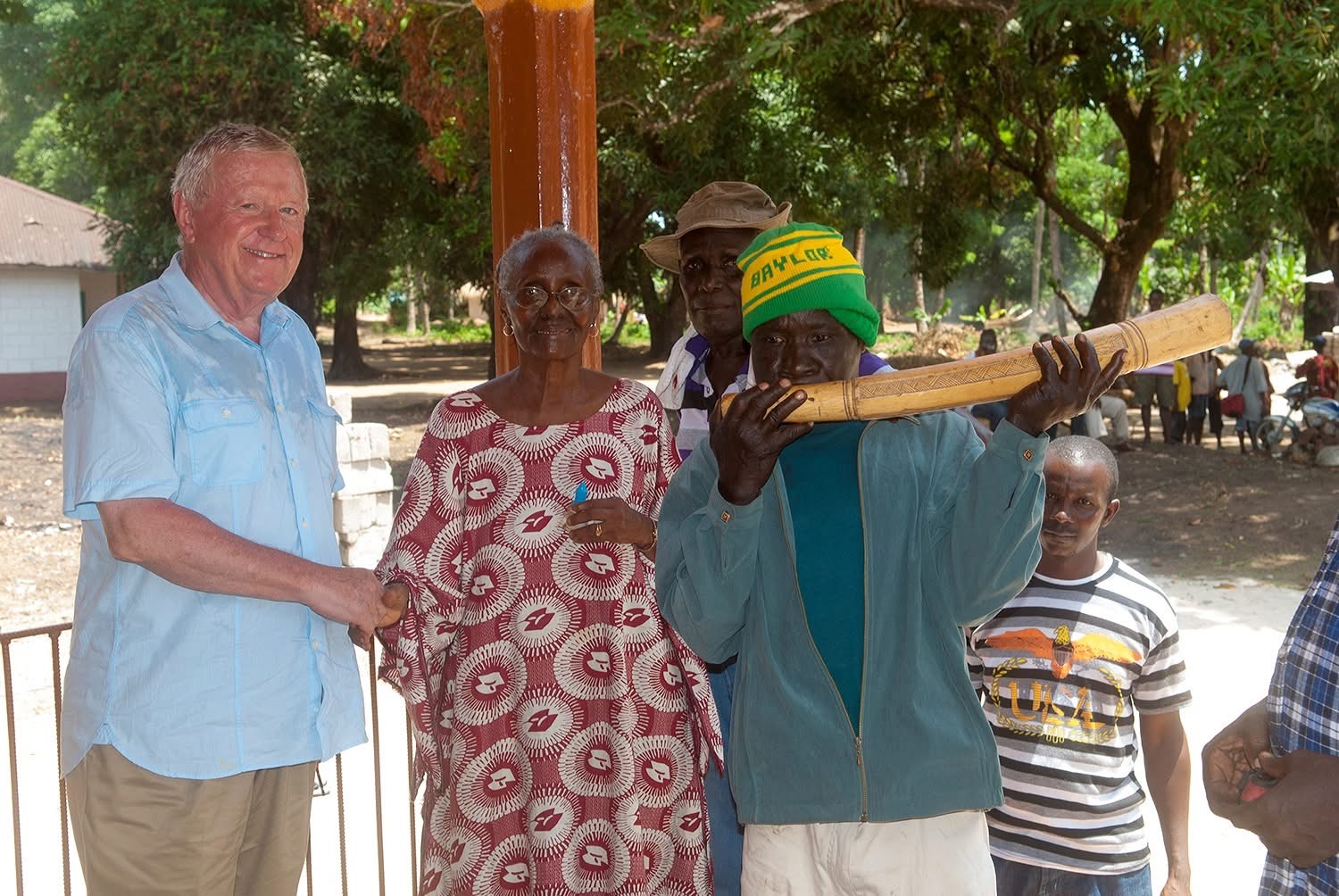
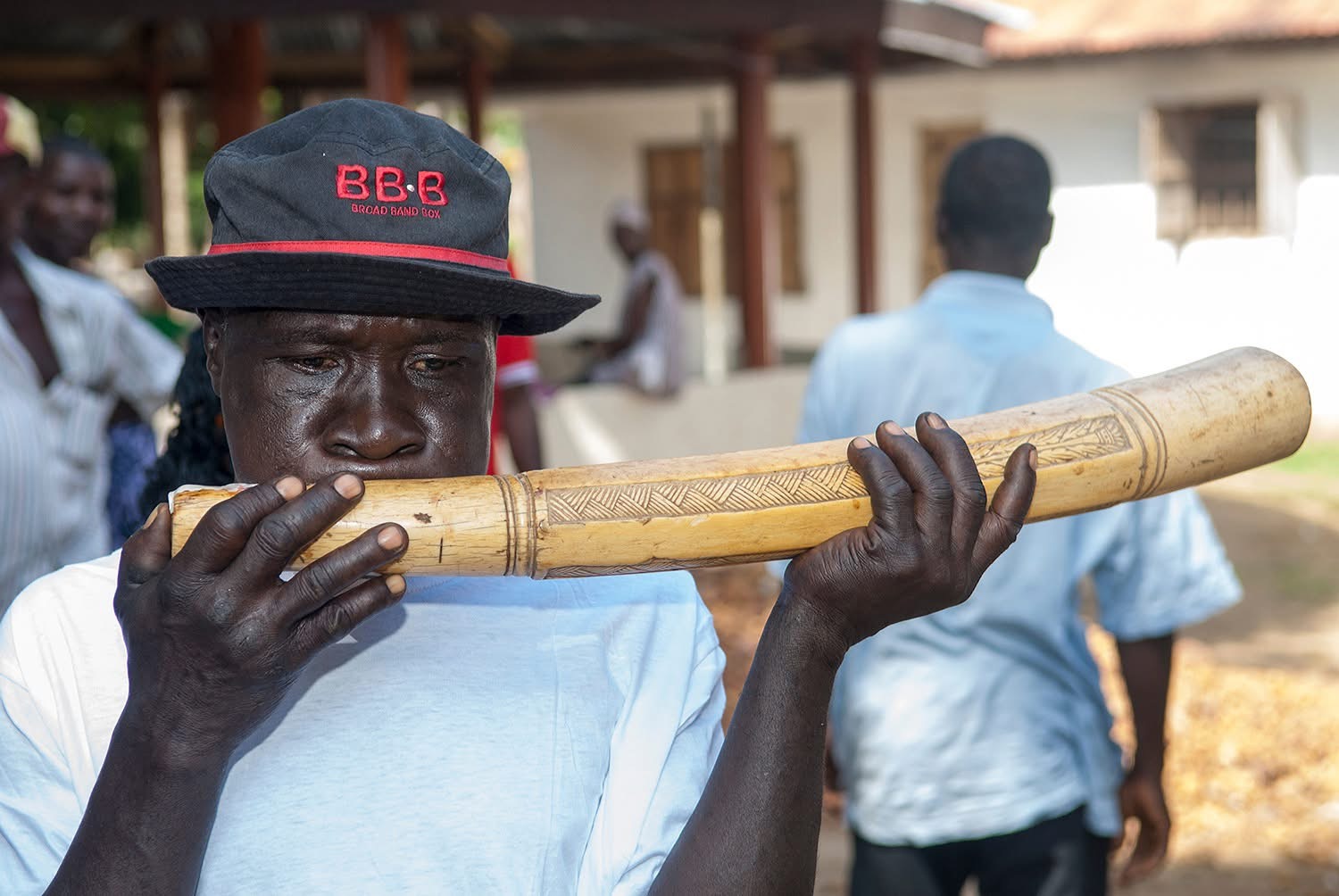
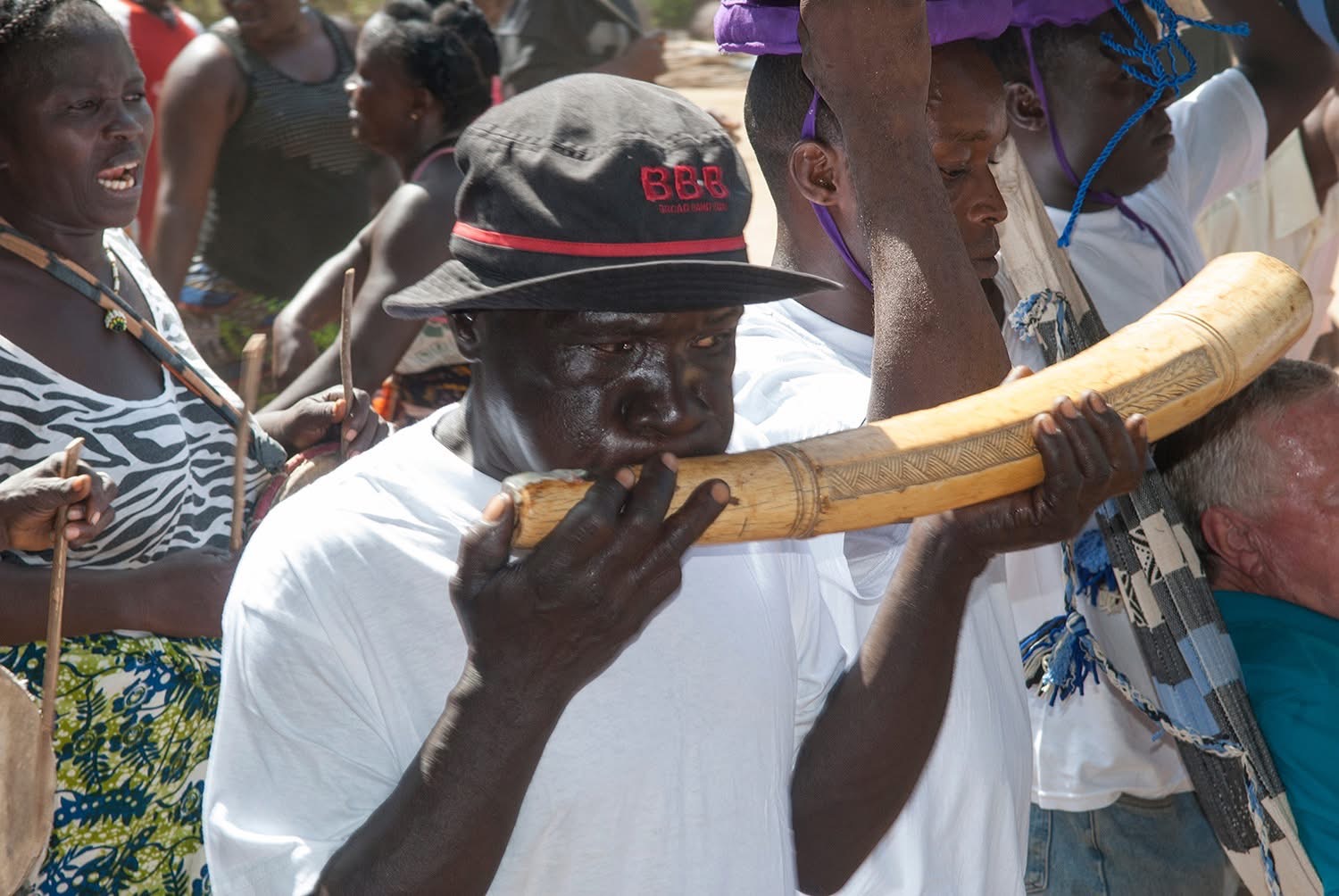
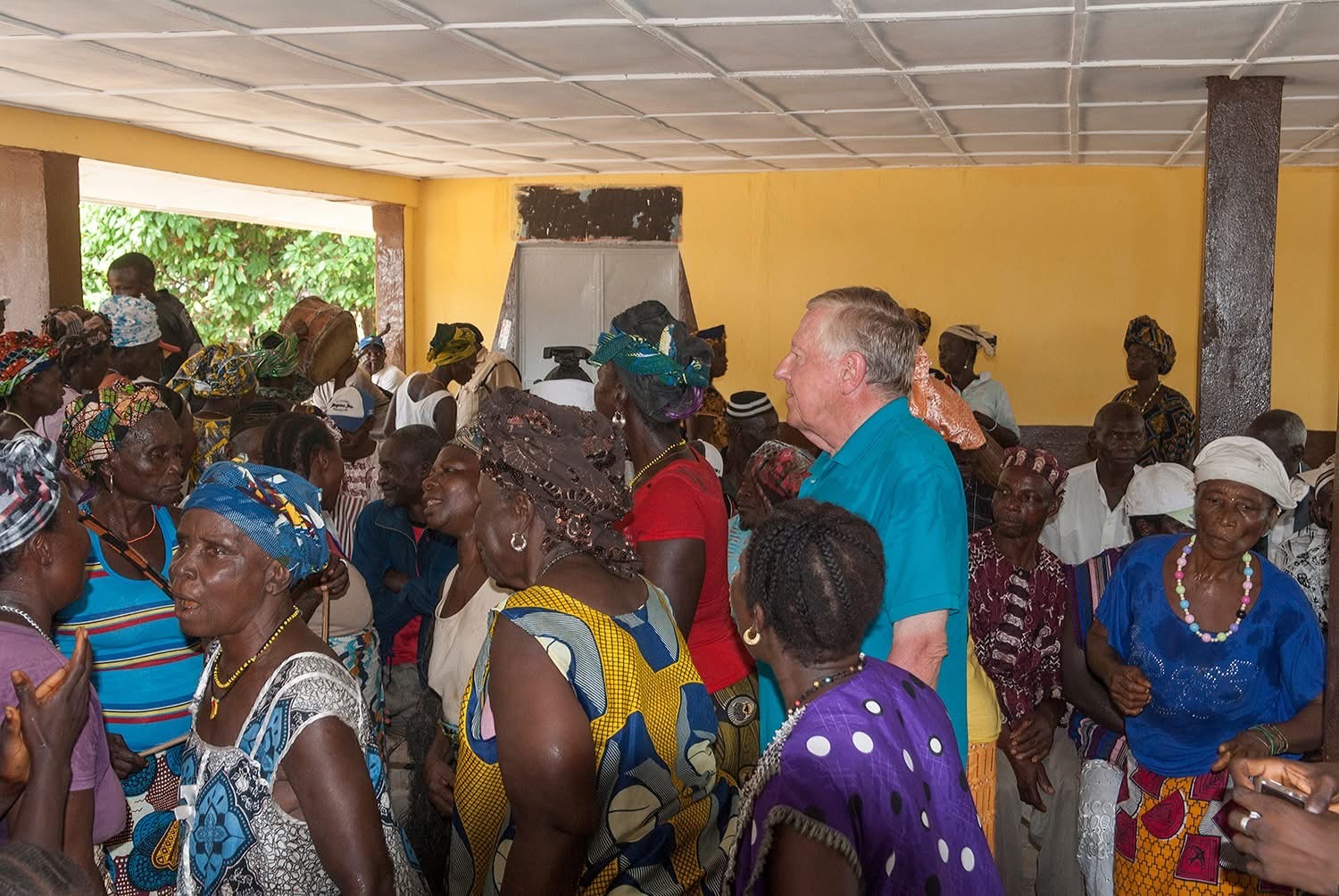
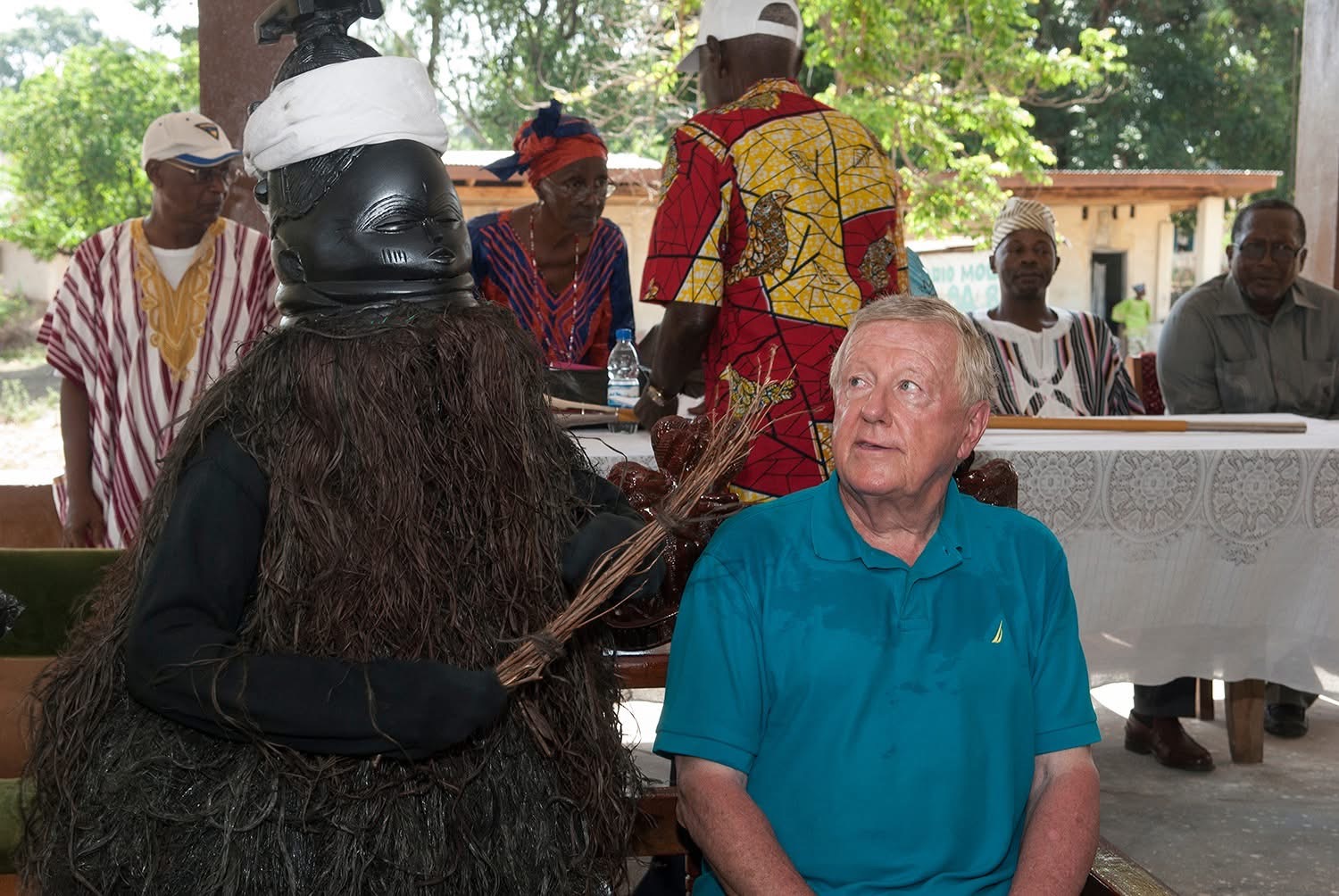
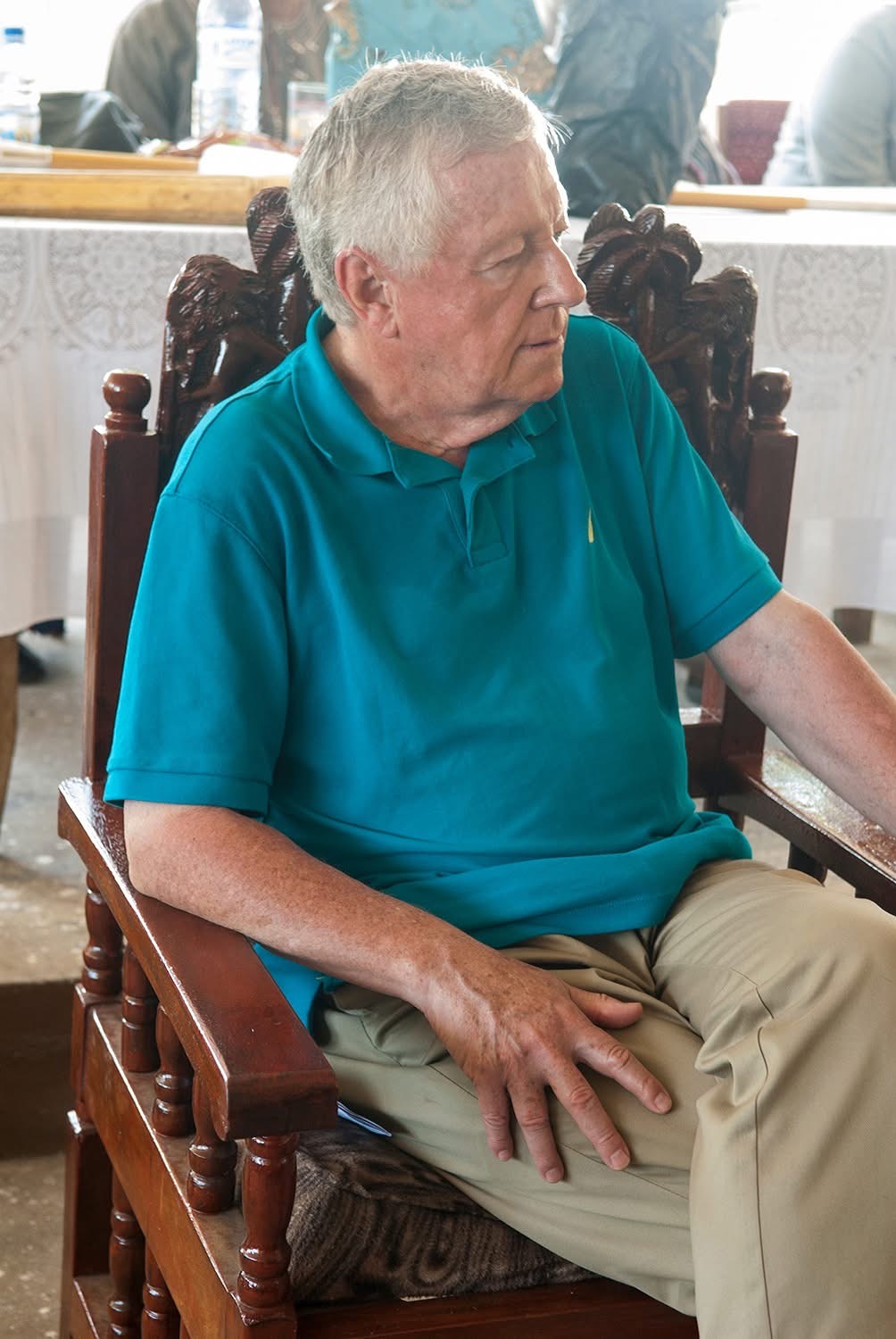
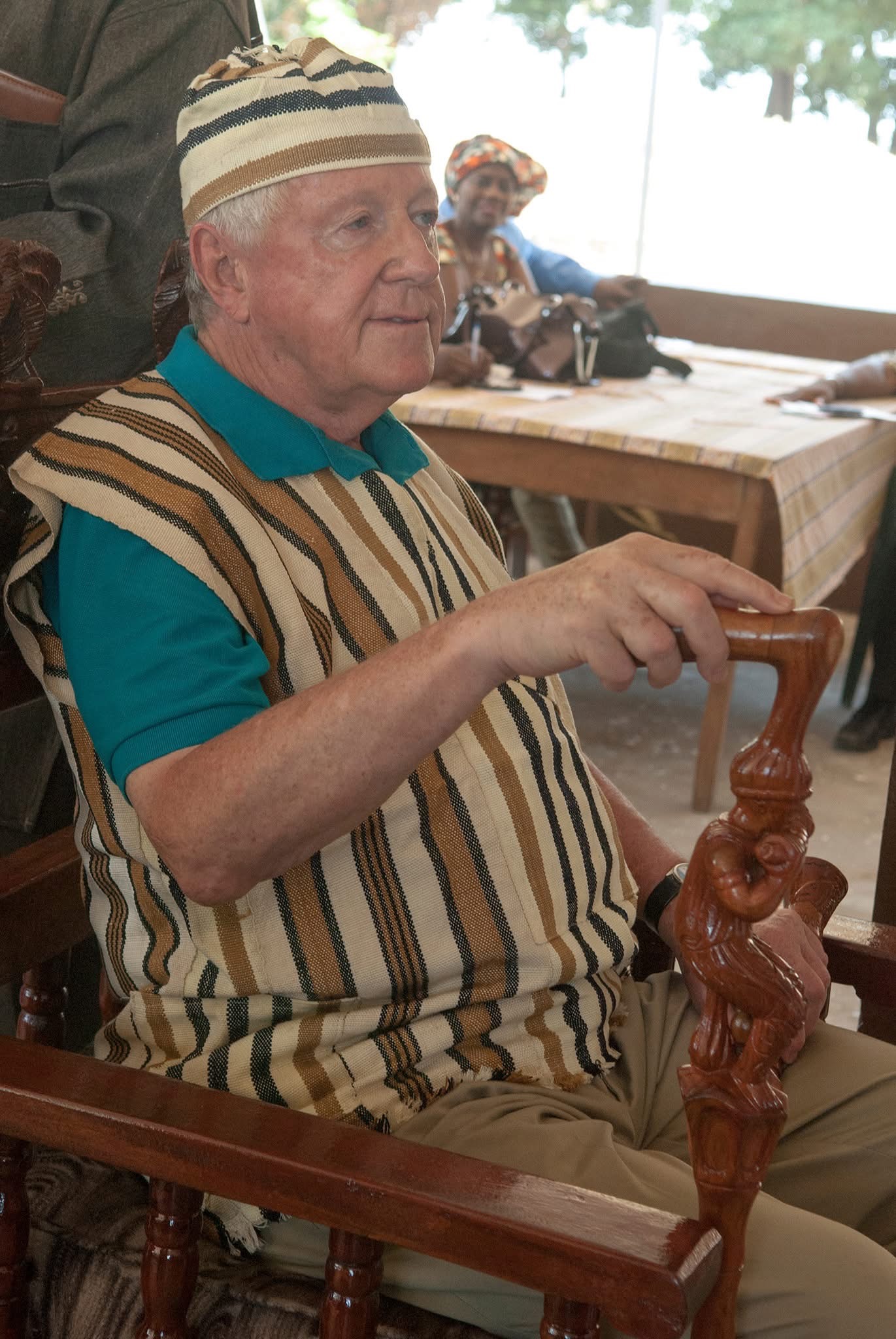
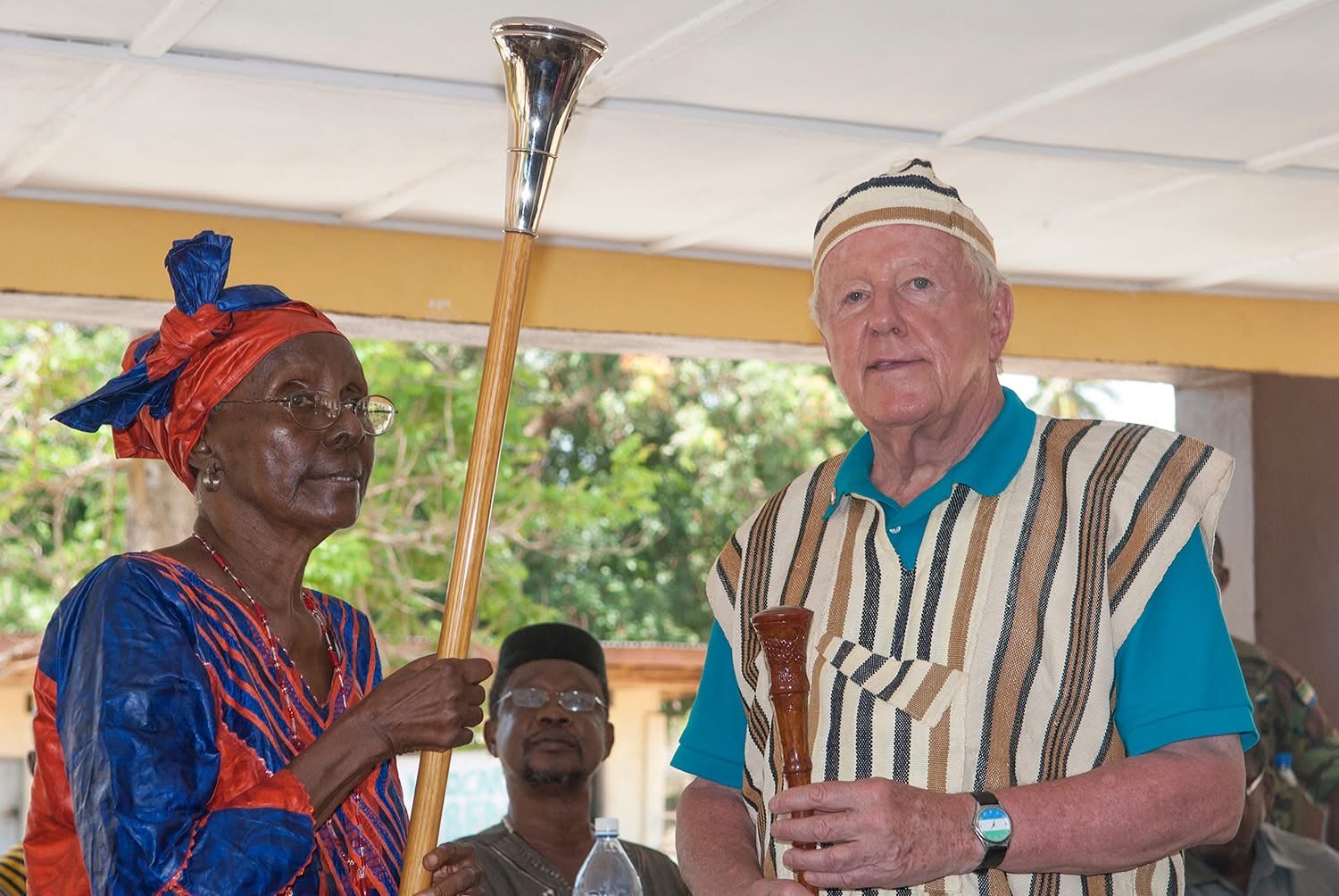
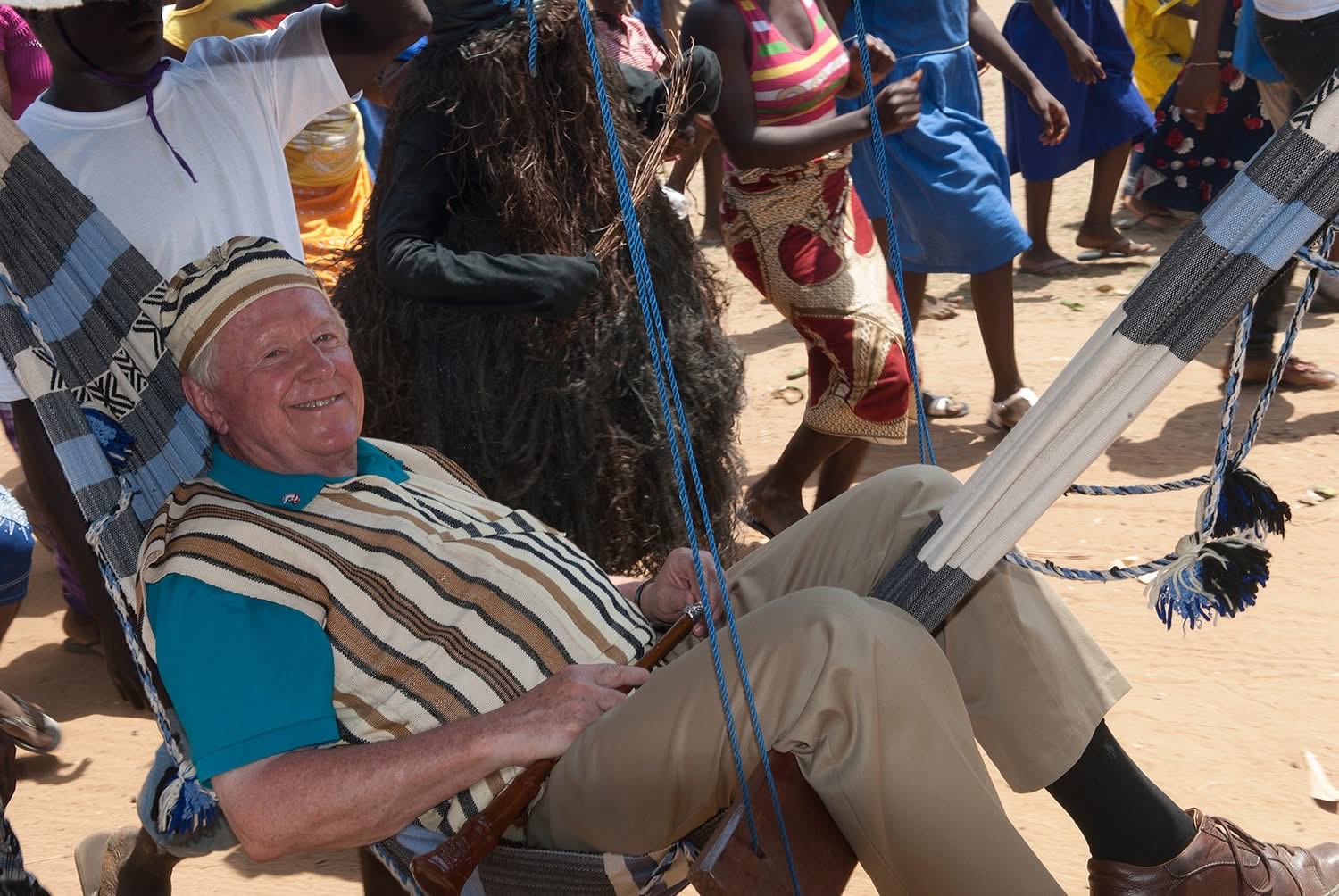
In 2013, Gary was made an honorary Paramount Chief at Shenge, Kagboro Chiefdom. My camera and I accompanied him by boat from Tombo, a wooden boat with an outboard motor. See attached photos.
In 2017 he was granted Sierra Leonean citizenship by President Koroma at State House.
Gary used to travel to Sierra Leone yearly until he had medical problems in Freetown and subsequently was not well enough to travel. During Covid he was compiling links to stories on Sierra Leone and sending them out by email to a long list. When for some time he was unable to continue, no one asked why, leading him to discontinue the effort. He continued to help fund charities in Sierra Leone as long as he was able. I will miss him. We will all miss him.

Leave a Reply