
*The Survival Paradox: When Competition Threatens the Species It Created*
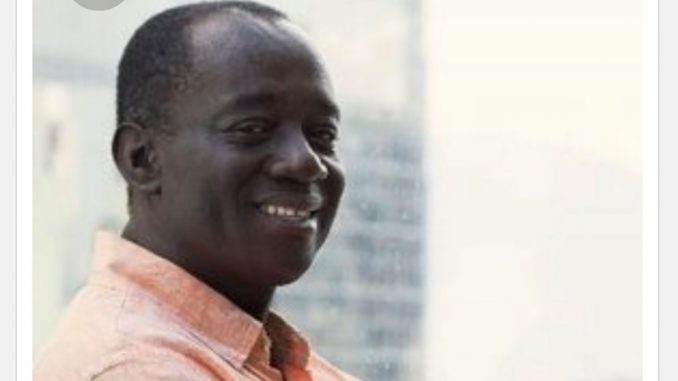
By Oumar Farouk Sesay
At the beginning of every human life lies a story of extraordinary improbability: millions of possibilities narrowing into a single existence. Out of countless potential beginnings, one path leads to a person who experiences the world, asks questions, dreams, struggles, and creates. The fact that any of us are here is a remarkable outcome of biology, chance, and an unbroken chain of events stretching across billions of years.
Yet the same competitive forces that helped shape life on Earth now raise a profound question: can a species born from competition be undone by its inability to cooperate?
Competition is deeply embedded in the human experience. We compete in classrooms, workplaces, economies, politics, and social structures. Competition can inspire innovation, encourage excellence, and push individuals and societies to achieve what might otherwise seem impossible. Many of humanity’s greatest accomplishments have emerged from the desire to solve problems, discover new frontiers, and surpass previous limits.
But competition becomes dangerous when winning becomes more important than the consequences of victory.
We often apply competitive thinking to challenges that demand cooperation. Nations compete for influence while facing shared threats such as climate change and resource pressures. Companies compete to be the first to develop transformative technologies, sometimes moving faster than society can evaluate the risks. The race to create increasingly powerful artificial intelligence illustrates this dilemma: the pursuit of technological advantage may encourage breakthroughs, but it also raises questions about whether speed and dominance should always come before caution and collective responsibility.
The problem is not competition itself. The problem is competition without boundaries, without reflection, and without an understanding that some races have no true winners.
Evolutionary biologist Richard Dawkins has written about the extraordinary chain of events and probabilities that made our existence possible. Each of us represents an outcome among nearly unimaginable possibilities. Countless potential lives never came into being. Countless paths that might have led to other humans ended before they began.
Given this rare opportunity to exist, why would we use our intelligence and creativity to damage the very systems that allow life to continue?
Human history shows that cooperation is not the opposite of competition; it is often what makes progress possible. Science advances through shared knowledge. Societies function through trust and collective effort. Even in nature, survival is not only a story of individual struggle but also one of interdependence and adaptation.
The challenge before humanity is not to eliminate competition but to develop the wisdom to recognize when cooperation is the greater necessity. A race can produce champions, but some races can also lead everyone toward the edge of a cliff.
Perhaps the next stage of human evolution will not be measured by how quickly we can defeat one another, but by how effectively we can work together. The greatest achievement of our species may not be winning the race—it may be realizing that we share the same destination.



Leave a Reply