
*South Africa’s Xenophobia: A Failed State of the Soul*
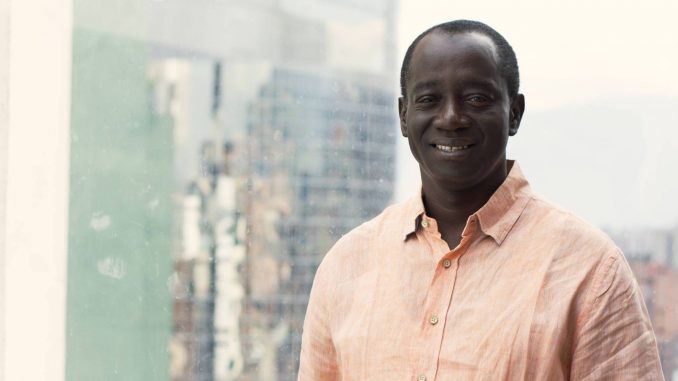
By Oumar Farouk Sesay
Many of you have likely seen the video—women stripped bare in the street, their bodies turned into public property, their pain turned into public entertainment. It is a violence so obscene it seems to knock the breath out of language itself. If you have not seen it, do not look for it. Some images do not inform; they contaminate. I have seen it on your behalf, and I carry it like a bruise under the skin: the shame, the trauma, the heartbreak—not only for the women in that moment, but for a continent that once rallied, sacrificed, and endured for South Africa’s liberation.

For many of us, South Africa was never merely a place on a map. It was a moral idea—an anthem of courage shaped by the sacrifices of Denis Brutus, Nelson Mandela, Steve Biko, and countless others whose names history did not bother to record. South Africa was the proving ground of Africa’s conscience.
And it was not only an idea. It was personal.
I remember my two schoolmates—James Muwamubi and Chakwamba—who came from faraway South Africa to study as part of Africa’s collective contribution to the anti-apartheid struggle in the 1970s. Across the continent, ordinary Africans opened their schools, homes, pockets, and hearts. They shared food they barely had. They made room where there was none. They did it because they understood something simple and holy: South Africa’s freedom was inseparable from Africa’s dignity.
Let us not pretend this solidarity was sentimental. It was costly. It was courageous. It was disciplined. It lived in campuses and churches, in unions and newspapers, in the quiet bravery of families who sheltered exiles and the loud bravery of crowds that refused to clap for injustice. The continent carried South Africa in its prayers and its protests, in its boycotts and its bruises, because we knew apartheid was not merely South Africa’s shame—it was an injury to Black humanity everywhere.
That is why scenes like this do not merely horrify. They break something.
Because the same South Africa whose vast corporate wealth remains concentrated in foreign interests and a narrow elite has watched its anger spill downward—not toward the architecture of exclusion, but toward the vulnerable; not toward the powerful, but toward the powerless. And so African immigrants—fellow Africans—are made into scapegoats. The rage of unemployment, inequality, crime, and despair is redirected into the easiest target: the stranger, the migrant, the poor.
This is how the poor are trained to fear the poor while the real machinery of dispossession hums untouched in the background. This is how suffering is managed: by teaching wounded people to strike one another rather than the system that wounds them. When solidarity is starved, when Africans are taught to see Africans as intruders, we become easier to govern with fear—and harder to mobilize with dignity.
What kind of political and social miseducation produces such a grotesque moral logic? How does a society born from the ashes of apartheid begin to manufacture fresh humiliations—new victims, new crowds, new spectacles—against those who once stood in unwavering solidarity with its liberation? These questions hurt. But refusing them only guarantees that the wound will fester.
And let us be clear: the tragedy is larger than a single assault captured on a phone. It is the tragedy of a continent bleeding from many cuts—poverty, failed leadership, historical trauma, and economic systems that keep rewarding division over unity. Xenophobia does not grow in clean air. It feeds on hopelessness. It is fertilized by manipulation. It is ignited by the lazy politics of blaming outsiders for failures that are structural, longstanding, and deeply entrenched.
But none of this—none of it—can excuse the barbarity of stripping women naked, beating them in public, and dehumanizing them before a crowd. A society loses something sacred when violence becomes a spectacle. When humiliation becomes a communal activity. When human beings are reduced to symbols onto which collective rage is projected.
Do not tell me we “did not know what to do.” We always know what to do when dignity is bleeding in the street. We know how to name evil. We know how to isolate it. We know how to punish it. We know how to protect those in danger. What we lack is not knowledge. What we lack is the will to move faster than the mob.
That video should have been Africa’s turning-point image—the kind of moment that makes nations sit up straight, that rattles cabinet rooms and state houses from Cape Town to Cairo, from Aso Rock to Kigali. The kind of moment that forces leaders to say: enough. And yet there is a silence—heavy, practiced, complacent—hanging over our institutions like a curtain.
So let us speak plainly, with urgency, and with the authority of shared pain. South Africa must treat this as gendered, xenophobic terror—not “community conflict”—and move with speed: protect survivors, arrest and prosecute perpetrators and instigators (including those who filmed and circulated the humiliation), and make it unmistakable that public stripping and mob violence will be met with the full force of the law. And Africa’s leaders—AU, regional bodies, and national governments—must stop whispering: condemn it clearly, coordinate cross-border protection and rapid response for those at risk, and invest in prevention so desperation is not endlessly weaponized against migrants and women.
Because make no mistake: some of the tormentors are not even content to harm; they must record. Young boys—boys—raising phones like trophies, framing nakedness and terror as content. Some claim they “do not know the history.” Perhaps. But they are old enough to know the womb. Old enough to know that every mother is a woman before she is an idea. Old enough to know that the body they mock is the body that birthed them, that fed them, that carried them through the passage from nothing to breath.
And let us not forget who the victims are—not abstractions, not statistics, not “foreigners” spoken about like weather. They are women with names. Women with mothers who would not sleep if they saw that clip. Women who have worked, crossed borders, carried children, sent money home, learned new streets, negotiated fear daily, and still tried to live. They are daughters. Sisters. Students. Traders. Workers. Believers. People. And in that moment, they were turned into a stage on which cruelty was performed for applause.
Africa once stood together for South Africa. We stood as if South Africa’s chains were on all our wrists. The question now is whether South Africa—and all of us—can recover that same spirit of shared humanity before hatred consumes the very ideals for which so many fought, bled, and died.
Because if we cannot protect the dignity of the most vulnerable among us—if we cannot defend a woman’s body from being turned into a public theatre of brutality—then we are not merely losing people.
We are losing the soul of the continent.


Leave a Reply