

**THE DEMOLITION OF THE KRIO OSE: IS IT A TITHE FOR A TITHE?**
Growing up in Freetown, I learned that there is a certain ethnic group known for holding grudges and being vindictive. They are said to carry their animosities from one generation to the next, waiting for the opportune moment to unleash their anger.

This ethnic group, predominantly residing in the Murray Town barracks, has lived there for about three generations. As a result, the barracks have become overcrowded, leading to adult children being asked to leave. Many of those evicted have moved next door and settled on land owned by the Sierra Leone Grammar School, which they call the “Krio School.” They constructed makeshift structures on this land and intimidated schoolchildren, disrupting their attendance.
There were numerous conflicts between the pupils and military officers, and at one point, the Sierra Leone Grammar School had to close for several weeks. The school authorities and members of the Old Boys Association rallied for justice in the high court. Although it was a lengthy journey, justice ultimately prevailed. A court order was issued for the demolition of the structures on the Sierra Leone Grammar School land, which resulted in the destruction of numerous buildings, including those built primarily by military officers whose children are currently in positions of authority in the government. Notably, General Tuluva and Captain Jalloh were just teenagers during the events of the 1990s.
The Krios sought a space to build a museum to showcase their culture and traditions and to educate young Krio children about their heritage. After exploring several options, the mayor of Freetown assisted them by granting a leasehold on land from the Sir Samuel Lewis estate in Murray Town. However, remnants of the Grammar School saga still linger, as individuals who joined the RSLAF, following in their fathers’ footsteps, continue to harbour grudges and claim ownership of the land. Despite attempts to resolve the issue through dialogue, they refused to cooperate or provide documentation to substantiate their claims.
It is alleged that, in the early hours of Friday, July 11, 2025, these individuals trespassed on the building site at Sir Samuel Lewis Road in Murray Town and demolished a structure valued at seven hundred million leones, also looting during the incident.
Why have the Krios become easy targets? Is it because they are law-abiding citizens who fear violence? We are increasingly marginalised from our villages along the peninsula, from Songo Colony to Kent in the south. They migrated to the peninsula and aggressively claimed our land, often inviting relatives and tribesmen in a ratio of 5:1. Many of these newcomers lack the historical and cultural knowledge of our villages and, despite their unfamiliarity, have attempted to assume leadership roles in our communities.
Currently, it seems that every other ethnic group in Sierra Leone walks all over us, knowing that the Krios are reluctant to fight back and become reclusive. (Nar for lef dem).When faced with crises, we often retreat into ourselves. The justice system, which we once trusted, has failed us, (The blindfolded woman holding the scales) leaving us feeling abandoned.
Now, let me discuss the Murray Town Barracks. Established in 1829, the barracks originally housed liberated enslaved Africans brought to Freetown by the British Royal Navy. They were part of an effort to integrate these individuals into the community. While the barracks were likely part of the British military infrastructure in Sierra Leone during World War II, specific details about their role are less clear.
At this point, where can we turn? We’ve been driven from our villages and towns, approaching the brink of extinction. All that the KDU/KDY needs to do is hire a qualified lawyer who understands land disputes and the treaties with local chiefs and the Sierra Leone Company, and take these perpetrators to court.
The 1991 Constitution of Sierra Leone, particularly Section 21, guarantees the protection of private property and outlines the legal procedures for the compulsory acquisition of land by the state.
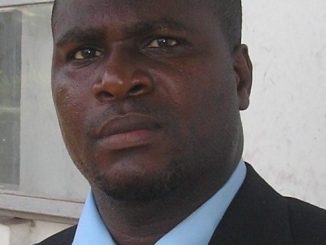
Aruna Foh – Heritage secretary KDU London


Leave a Reply