
*WHO IS AFRAID OF THE 1991 CONSTITUTION?*
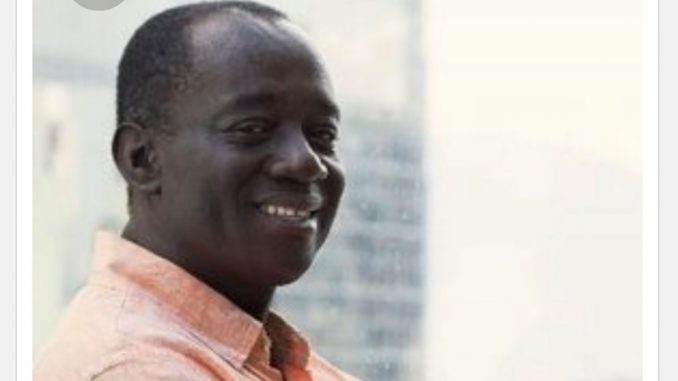
BY Oumar Farouk Sesay
A constitution is more than a collection of rules. It is a covenant between the state and its citizens—a restraint on power, a guarantee of political equality, and a framework for resolving national disagreements without violence.
That is why the Constitution of Sierra Leone (Amendment) Bill, 2025, deserves far more than routine parliamentary treatment.
Among its most consequential proposals is a change to the rules governing presidential elections. Under the current constitutional arrangement, a candidate must obtain at least 55 percent of the valid votes cast to be elected president in the first round. The proposed amendment would replace that requirement with a simple majority and introduce a geographic spread condition requiring a candidate to secure at least 20 percent of the votes in two-thirds of the country’s districts. The Bill also proposes broader electoral changes, including provisions related to district-block proportional representation.
The government presents these reforms as an effort to modernize Sierra Leone’s electoral system, strengthen national representation, improve institutional independence, and ensure that a winning presidential candidate enjoys support beyond a narrow geographic base. Official government materials describe the proposed model as one that combines a simple majority with nationwide electoral spread.
That explanation deserves to be heard. But it does not end the debate. It begins it.
The central question is not whether the Constitution may be amended. Of course it may. No serious constitutional democracy treats its founding law as incapable of reform. The real questions are more demanding: Why these particular amendments? Why now? What democratic defect are they intended to cure? Were they developed through a process broad enough to command national confidence?
Those questions matter because electoral formulas are never politically neutral in their effects. A change that seems modest in legislative language can profoundly reshape campaign strategy, regional representation, coalition-building, and the path to the presidency. A threshold is not merely a number. It influences whether candidates must build genuinely national alliances, how votes across the country are weighted, and whether electoral victory reflects both numerical support and geographical legitimacy.
For more than two decades, the 55 percent requirement has compelled presidential candidates to seek support beyond their strongest regional constituencies. It has not eliminated political division, nor has it produced flawless elections. No constitutional formula can do that. Yet before such a rule is discarded, Sierra Leoneans are entitled to a clear, evidence-based explanation of how it has failed—and how the proposed replacement would improve democratic legitimacy rather than merely rearrange partisan advantage.
Former Attorney-General Joseph Fitzgerald Kamara has urged citizens, parliamentarians, journalists, and civil-society organizations to scrutinize the Bill closely, warning that constitutional reform should rest on broad consultation and national consensus rather than speed or partisan dominance. The Lawyers’ Society of Sierra Leone has likewise expressed concern about piecemeal constitutional reform and has questioned the proposed requirement that a presidential candidate secure 20 percent of the vote in two-thirds of the districts. It argues that the provision may create practical and representational difficulties and may not align with earlier reform recommendations.
These objections should not be dismissed as ordinary political opposition. Constitutional legitimacy depends not only on whether the government can secure the votes required to pass an amendment, but also on whether the public believes the process was open, principled and inclusive.
The government maintains that the Bill draws on both the Justice Cowan Constitutional Review Report and the Tripartite Committee’s recommendations. The Attorney-General has stated that constitutionally relevant Tripartite recommendations were incorporated into the proposed amendments. However, opposition representatives have argued that significant recommendations were omitted and have called for broader stakeholder participation. Parliament itself has acknowledged the intensity of public interest and has promised continued consultation.
Slogans cannot resolve that disagreement. The government should publish a transparent, clause-by-clause account that clearly identifies which provisions stem from the Cowan review, which arise from the Tripartite recommendations, which originated elsewhere, and why each proposed change is necessary. Constitutional reform must be traceable. Citizens should not be asked to accept assurances when documentary clarity is possible.
The question of electoral geography also warrants scrutiny. Sierra Leone’s constitutional and statutory framework already recognizes district-block representation under specified circumstances. The 2001 constitutional amendment permitted district-block elections when constituencies had not been established, with parliamentary seats distributed according to parties’ proportional shares of district votes. The present debate must therefore distinguish between the existence of district-block representation as a constitutional mechanism and the wisdom of expanding, entrenching, or redesigning it for future elections.
Equally important is the relationship among districts, constituencies, and political power. Electoral boundaries and administrative districts can affect representation, campaign access, and the distribution of parliamentary seats. Strong safeguards against partisan boundary manipulation must therefore accompany any reform that gives greater constitutional weight to districts.
The concern should be stated precisely. It is not enough to speculate that a president may “carve out” districts at will. Rather, Parliament must examine whether the proposed electoral formula could create new incentives for governments to influence administrative boundaries, population counts, or seat allocations. It must then ensure that decisions affecting electoral geography are subject to objective criteria, independent administration, public consultation, transparent data, and meaningful judicial review.
This is especially important in a political environment where parties and civil-society groups have repeatedly raised concerns about unequal access to campaigns, intimidation, and institutional partisanship. Such allegations must always be documented and investigated rather than repeated as fact. Yet their persistence demonstrates why electoral reform must be designed not merely for trusted leaders but for institutions capable of restraining leaders who may not be.
That is the deeper purpose of constitutionalism. A constitution is not written for the convenience of the government of the day. It is written to endure across governments, ambitions, crises, and personalities. Its provisions must therefore be tested against the possibility of abuse, not merely against the assurances of that currently exercising power.
Sierra Leone’s political history offers ample warning against constitutional arrangements that concentrate power, weaken competition, or make national institutions appear subordinate to a ruling party. The country’s experience with one-party rule should make every generation cautious about reforms that could reduce pluralism or enable political authority to become self-protecting. Historical analogy must not be used carelessly; today’s Sierra Leone is not identical to the country of the 1960s or 1970s. But history need not rhyme exactly to offer a warning.
The most troubling aspect of the present debate is therefore not merely the proposed reduction from 55 percent to a simple majority. It is the possibility that a foundational national settlement may be altered without sufficiently demonstrating that the change reflects a genuine democratic necessity and a broad civic consensus.
The SLPP’s four presidential election victories under the current constitutional order—Ahmad Tejan Kabbah in 1996 and 2002, and Julius Maada Bio in 2018 and 2023—make the political rationale for changing the threshold especially deserving of explanation. These victories were not four consecutive terms of uninterrupted SLPP government, but they do show that the current framework has not prevented the party from attaining power. The burden therefore falls on proponents of change to show that the amendment serves the republic rather than the electoral calculations of any single party.
Parliament now has an obligation that outweighs party loyalty. Members are not merely being asked to approve or reject another government’s bill. They are being asked to decide the rules by which future governments will be elected, challenged, and legitimized.
That decision must be made openly. Every significant vote should be accurately recorded, and every amendment should be publicly explained. Parliamentary clerks, committee members, and presiding officers must discharge their responsibilities with scrupulous neutrality. Civil society, the media, professional associations, and citizens must be given a meaningful opportunity to scrutinize the proposals before they become entrenched constitutional law.
The Constitution is not sacred because it can never be changed. It is sacred because it belongs to the people and because the rules governing its amendment protect the people from the temporary interests of power.
A government confident in the democratic value of its proposals should welcome scrutiny, publish its evidence, answer its critics, and seek consensus beyond its parliamentary majority. It should not fear an extended national conversation. It should not fear independent legal analysis. And it should not fear the recommendations of processes to which the country has already devoted substantial time, resources, and hope.
The question remains: Who is afraid of the 1991 Constitution?
Perhaps an even more important question is this: Who benefits from changing it before the country reaches a durable consensus on what should replace it?
Sierra Leoneans deserve an answer before Parliament changes the rules that translate their sovereign will into political power.
Leave a Reply