
The Constitution Belongs to the People: A Call for National Responsibility in Sierra Leone
Sierra Leone faces another pivotal moment in its democratic journey. The ongoing debate over the amendments to the 1991 Constitution is not merely a disagreement between the ruling party and the opposition; it transcends partisan politics. It concerns the future of the Constitution for every Sierra Leonean—regardless of whether they are at home or abroad, young or old, wealthy or impoverished, politically affiliated or independent.
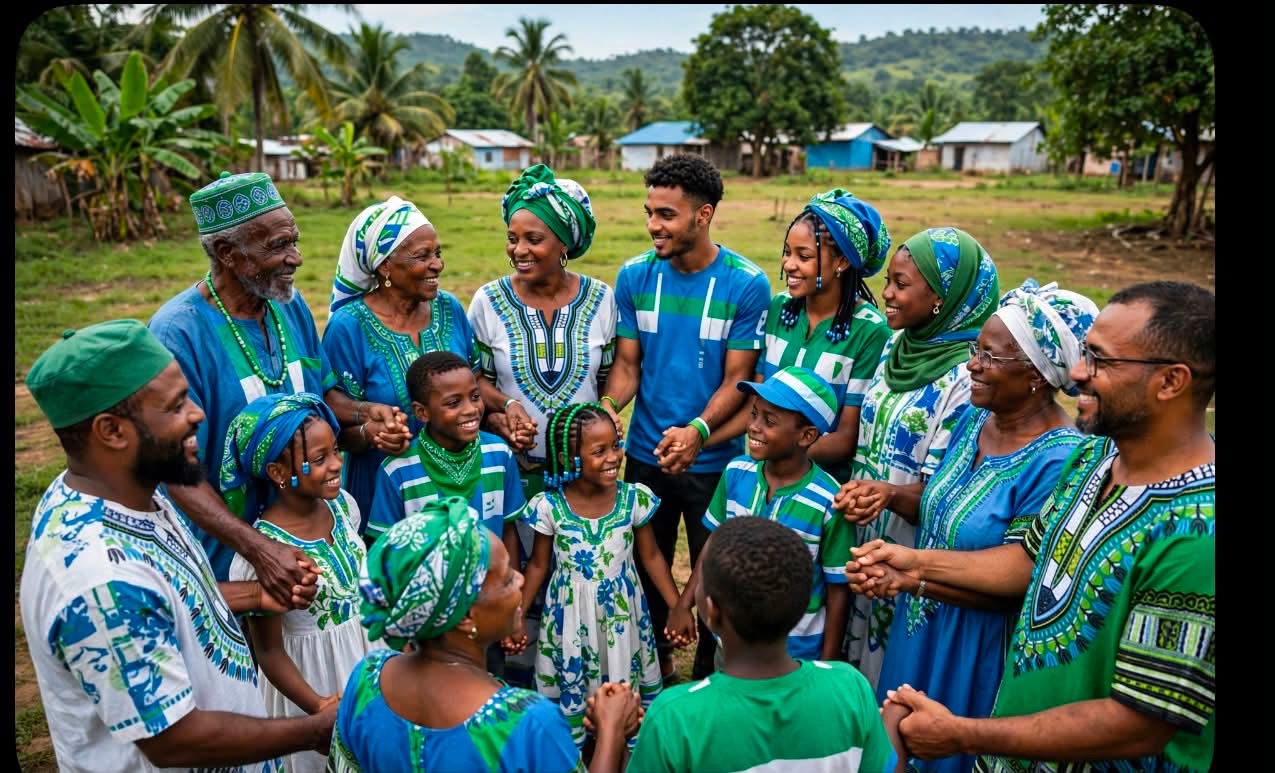
The Constitution is the supreme legal framework of our nation. It belongs to the people, not to a single political party, government, Parliament, or president.
As Sierra Leone considers potential changes to its constitutional order, every citizen should ask a fundamental question: Are we constructing a stronger democracy for future generations, or are we merely altering the rules to serve current political interests?
This necessitates an honest, peaceful, and inclusive national dialogue.
It Is Not Solely a Matter for Political Parties
While political parties have a constitutional role and Parliament is tasked with considering constitutional laws, Sierra Leone is not owned by political parties.
The Constitution safeguards citizens’ rights and establishes institutions intended to serve the entire nation. It also recognizes freedoms of association, including the right to participate in political parties, trade unions, and other social organizations (Parliament of Sierra Leone).
Therefore, constitutional reform should never be a matter solely discussed within political circles. The voices of ordinary citizens are essential.
The religious community matters.
Civil society matters.
Trade unions matter.
Teachers and university professors matter.
University students matter.
Journalists matter.
Lawyers and constitutional experts matter.
Women’s organizations matter.
Traditional leaders matter.
Young people matter.
The business community matters.
Moreover, institutions responsible for national security, such as the military and police, have a vital duty to protect the constitutional order and maintain peace.
The People Must Be Heard
There exists an important distinction between Parliament having the legal authority to amend certain laws and citizens possessing a genuine democratic interest in participating in the national discourse regarding those amendments.
Section 108 of the 1991 Constitution delineates the procedures for amendments. It states that most amendments require support from at least two-thirds of Members of Parliament during relevant votes. Certain entrenched provisions necessitate a referendum involving eligible voters (Parliament of Sierra Leone).
This means that constitutional amendments are not ordinary legislation.
They should not be hurried.
They should not be regarded as merely another political contest.
And they must never engender permanent division among Sierra Leoneans.
Recent reports indicate that Parliament’s consideration of proposed amendments has triggered controversy, including disagreements over procedures and voting thresholds. The Supreme Court has been called upon to interpret questions concerning parliamentary procedures. Such issues should be resolved through legal and constitutional institutions, not through street confrontations (The Sierra Leone Telegraph).
The Constitution Must Survive Beyond Current Governance.
Every government eventually leaves office.
Every president’s term concludes.
Every Member of Parliament will face an election. Political parties may rise and fall.
However, the Constitution endures.
Therefore, amendments should be evaluated not solely on “who benefits today?” but on whether they will strengthen Sierra Leone in the long term—ten, twenty, fifty, or one hundred years.
A provision that benefits one party now might be exploited against them in the future. Leaders of today will not hold power forever. The opposition today could govern tomorrow, and the current government may become opposition.
All political actors must exercise caution in enacting rules they would not want their opponents to deploy.
Learning from Past Mistakes
Sierra Leone has already paid an excessive price for political division, institutional weakness, violence, and lost trust.
The civil war lasted approximately eleven years, claiming many lives, displacing numerous citizens, and destroying homes, communities, and livelihoods.
We must ensure that political disagreements do not lead us back to that dark period.
Never again.
We should prevent constitutional disputes from degenerating into ethnic conflicts.
Party loyalty should not supersede national loyalty. Inflammatory rhetoric must not incite neighbors against each other.
Political leaders must avoid convincing citizens that fellow Sierra Leoneans are enemies due to political differences.
Supporters of APC are Sierra Leoneans.
Supporters of SLPP are Sierra Leoneans.
NPRC-era generations are Sierra Leoneans.
Independents are Sierra Leoneans.
Those without allegiance to major parties are Sierra Leoneans.
Above all, we are all Sierra Leoneans.
Our flag is one.
Our country is one.
Our Constitution is one.
Our future is one.
The Role of Religious Leaders
Religious leaders and groups, through the Inter-Religious Council, bear a special responsibility at this juncture. They must avoid becoming instruments of political parties. Instead, they should serve as voices of peace, justice, truth, restraint, and unity.
Mosques and churches should remind citizens that political disputes must never fracture national bonds. Religious leaders should advocate dialogue, uphold constitutionalism, and foster patience over confrontation.
The Role of Civil Society
Civil society organizations must act as vigilant guardians of democracy.
They should scrutinize proposed amendments, provide clear explanations, organize public debates, challenge misinformation, and demand transparency.
The central question should be:
“What does this change mean for the rights and future of the Sierra Leonean people?”
This standard should guide their actions.
The Responsibility of Legal Professionals
Lawyers and legal experts play an essential role. Questions regarding the Constitution should be addressed through legal channels, avoiding threats or violence.
Disputes over procedures must be resolved by courts and lawful bodies.
Experts may debate issues, but decisions must be law-abiding.
Parliament should respond lawfully.
Courts must determine legal validity.
The rule of law must supersede personalities.
The Role of the Media
The media holds a historic responsibility.
Journalists should inform rather than inflame.They must distinguish between facts, claims, allegations, and verified information. This is especially important given the circulation of misinformation regarding amendments. For example, recent fact-checks by Dubawa confirmed that claims Parliament had already amended the Constitution on July 28 were false; at that stage, the Bill was still in committee. Journalists should objectively report what has happened, what is being alleged, what has been verified, and what remains disputed.
The Voice of Students and Academic Institutions Young people must not remain passive observers. Students are tomorrow’s leaders—future lawyers, teachers, journalists, civil servants, politicians, judges, businesspeople, and decision-makers. Universities should hold seminars, debates, and forums. Students should be encouraged to ask difficult questions.
Professors should challenge assumptions.
Scholars should explain implications. Young Sierra Leoneans should imagine the democracy they aspire to. A constitution is not exclusively for lawyers; it is for future generations. The Security Forces—Military and Police—Must Defend, Not Participate in Politics Security forces have a particularly sensitive role. They must remain professional and impartial. Their duty is to defend citizens, institutions, the constitutional order, and national security not to become instruments of political conflict.
Disputes should be confined to Parliament, courts, elections, and lawful settings.
They must never resort to force.
We must never revisit a period where disputes were resolved through violence.
The security forces must uphold peace and stability. The International Community’s Role in Supporting Peace and Democracy
International partners have a responsibility.
Regional and global organizations should promote dialogue, respect for democracy, and peaceful dispute resolution.
They should not select Sierra Leone’s leaders but must uphold the integrity of its institutions. The message must be unequivocal: Sierra Leone’s future must be decided peacefully, constitutionally, and democratically by its own people.
Prioritizing Sierra Leone
This moment calls for political maturity.
Support amendments that are supported by evidence. Criticize flaws with evidence.
Seek legal clarity in procedural disputes.
Educate citizens when information is lacking. Negotiate when disagreements emerge.
Pause if necessary.
There is no constitutional emergency that justifies jeopardizing national peace.
No political victory is worth risking another war. No political office is worth the life of any Sierra Leonean.
No political party is more important than the nation.
A Call for Unity
I urge religious leaders, civil society, trade unions, students, academics, journalists, lawyers, traditional leaders, women’s groups, youth organizations, police, military, political parties, and international partners to handle this constitutional moment with wisdom, transparency, and peace.
Let Parliament fulfill its constitutional duties. Let courts interpret laws when necessary. Let the public be accurately informed. Let consultations be meaningful.
Let leaders prioritize national interests over partisan considerations.
And let every Sierra Leonean reject violence, intimidation, hatred, and extremism. Our Constitution should be a unifying force—rather than a source of division. Our democracy should flourish through disagreement—peacefully and productively. Our children should inherit a Sierra Leone that learns from the past, not repeats it.
We have already endured too much suffering.
Fathers.
Mothers.
Children.
Homes.
Communities.
Years of development.
Opportunities that cannot be regained.
Let us not sacrifice our peace again.
Never again to war.
Never again to political violence.
Never again to constitutional manipulation.
Never again to division.
Let us defend the Constitution through peace, dialogue, law, and democracy.
Remember that governments change, parties rise and fall, and presidents leave office yet Sierra Leone endures.
Ultimately, the Constitution must serve the people.
The people are the nation.
The Constitution is their shield.
Democracy is their voice.
Peace is their inheritance.
Let us protect all of it.
By Sam Jay

Leave a Reply