
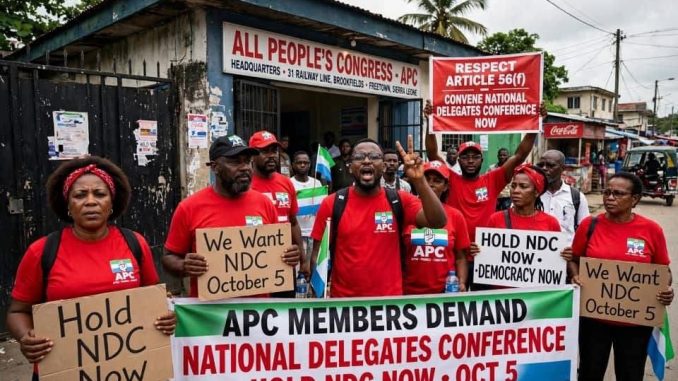
APC’s Missed Deadline: A Silent Threat to Sierra Leone’s Democracy
By Cornelius Oguntola Melvin Deveaux
It’s Monday, October 5th, 2026. I find myself deeply unsettled by a reality that feels like a storm gathering on the horizon, yet no one is looking up to see the darkening clouds. The silence around this issue is deafening: no one raises their voice; no one sounds a warning, not even a whisper of concern from those who should be most alert. It feels like standing alone in a crowded room, pointing to a crack in the foundation while everyone else carries on as if nothing is amiss.
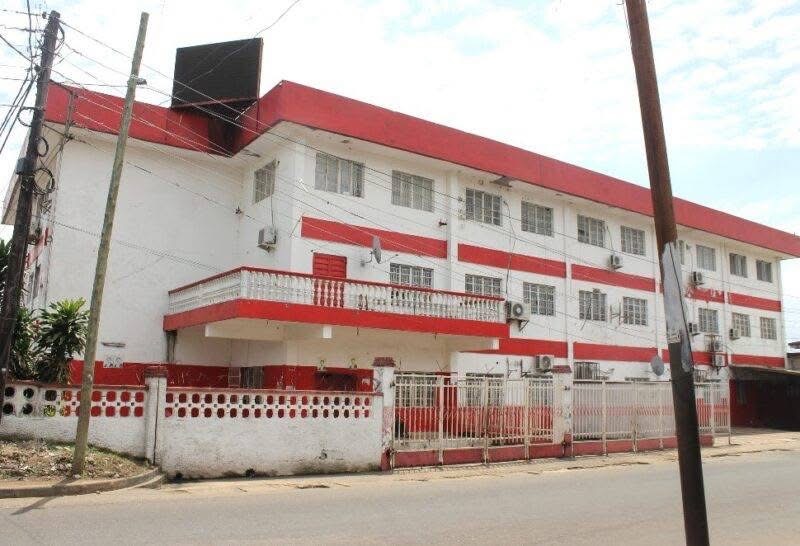
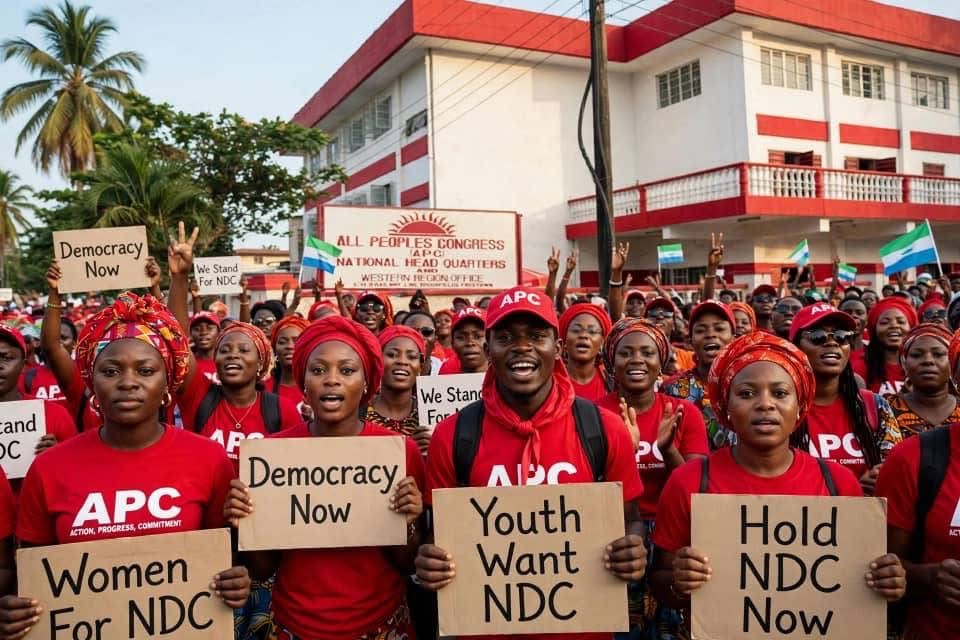
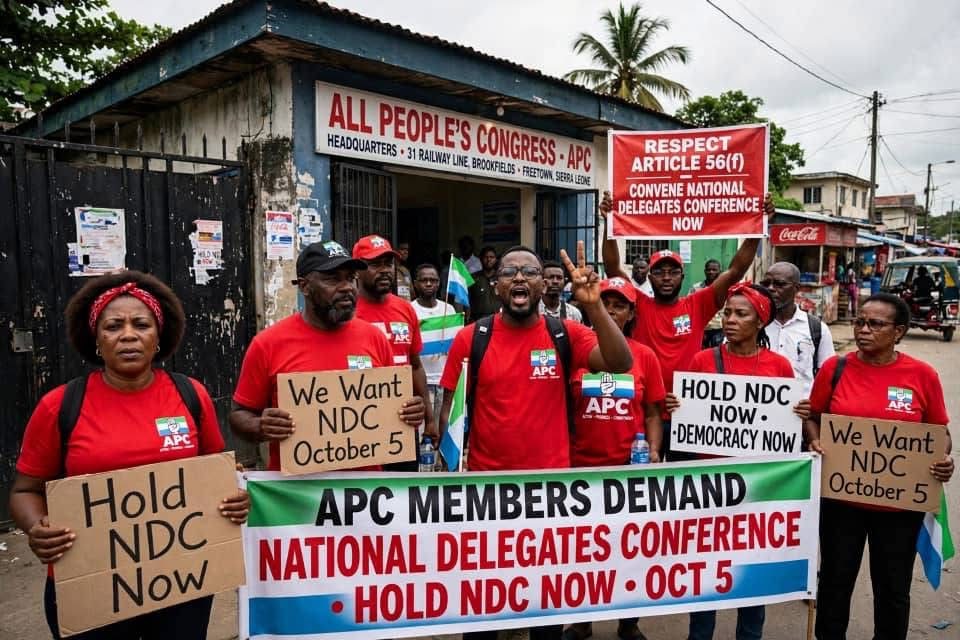
The constitution of the All People’s Congress (APC) speaks with distinctive clarity in Article 56(f): “Election of the Presidential Candidate shall be held at least two years before the anticipated date for the Presidential Election when the Party is not in governance and at least one year before the anticipated Presidential Election date where the Party is in governance.”
As the party stands in opposition, its constitution prescribes the election of a flagbearer no later than two years before the next presidential polls.
Following the constitutional fiveyear cycle after the last election on June 24, 2023, and with the Electoral Commission of Sierra Leone (ECSL) setting October 12, 2028, as the latest possible date for the polls, the APC must select its presidential candidate no later than October 12, 2026.
I am therefore worried about what few seem willing to acknowledge. In January 2026, the party formally announced its calendar for the National Delegates Conference (NDC) and declared Port Loko’s Bai Bureh Hall as the venue. The NDC was scheduled for August 9–12, 2026. It was meant to culminate in the election of the party’s 2028 flagbearer.
This roadmap was not arbitrary. The roadmap was crafted to uphold the party’s constitution, which stipulates that the presidential candidate must be elected at least two years before the national polls.
Yet the calendar is already under strain. Petitions and reruns have disrupted the rhythm of internal democracy, while ongoing court matters threaten to further entangle the party in litigation. Recalling the incidents leading to the 2023 loss, these delays, whether accidental or deliberate, risk creating the perception of an underlying intent to weaken the APC’s chances for 2028.
There is no doubt now, as of today, October 5th, 2026, that the NDC has not been held on schedule. It is further evident that the APC cannot elect its flagbearer two years before the next presidential election, as its own constitution requires. This failure places the party in a precarious position.
Whether by accident or design, the effect is unmistakable: the failure to elect a flagbearer on time constitutes a violation of the APC’s constitution. Any member or even external stakeholders could petition against the process and the nomination of the candidate, arguing that the candidate was not validly elected. This would cast a shadow of illegitimacy over the nomination, leaving the matter vulnerable to challenge before the courts or the party’s disciplinary bodies.
Whether such a petition would automatically disqualify the candidate is a matter for the ECSL and courts. Nonetheless, the consequences extend beyond legality. Internally, members may refuse to rally behind a candidate whose selection is tainted by constitutional breach, deepening divisions within the party. Legally, petitions could embroil the APC in disputes before the electoral commission or judiciary. Politically, rivals and the ruling party would seize upon the violation to question the APC’s credibility, portraying the party as incapable of adhering to its own rules.
This is not merely an internal party matter. It is a constitutional crisis that threatens Sierra Leone’s democratic integrity. The silence of the APC’s legal advisers, the inertia of its members and leaders, and the delays in its electoral calendar converge to create a predicament that jeopardizes both the party’s legitimacy and the fairness of the 2028 contest.
The APC must act with urgency to preserve not only the party’s credibility but also the democratic promise of Sierra Leone’s electoral process.
One possible response would be to call for an extension of the current tenure in order to align with the constitutional deadline. Yet such a move would be fraught with danger. At a time when ordinary Sierra Leoneans are enduring economic hardship and political fatigue, any attempt to prolong the tenure of the current regime would paint a deeply negative picture of the APC. It would appear tonedeaf to the suffering of the people and reminiscent of maneuvers that undermine democratic credibility.
When the Public Relations Officer of the ruling SLPP once hinted at delaying the national elections to 2030, the public reaction was swift and condemnatory. Citizens saw it as an attempt to manipulate the electoral calendar for partisan gain. If the APC were to pursue a similar extension, it would invite the same backlash, eroding trust and weakening its moral standing as an opposition party.
If a major opposition party falters in upholding its own rules, it sends a dangerous signal that constitutional safeguards are negotiable, that deadlines are elastic, and that accountability can be postponed. Such a precedent would weaken not only the APC but the very fabric of our democracy.
Faced with this dilemma, the APC may instead seek to disentangle itself from the twoyear deadline by amending its constitution before the NDC. Such an amendment would allow the party to reset its internal calendar without appearing to manipulate national timelines. While constitutional reform is itself a delicate process, it may be the only viable path to preserve legitimacy, avoid public outrage, and prepare responsibly for the 2028 elections.
The stakes are therefore national, not partisan. What the APC chooses to do now will echo far beyond its own membership. It will either reinforce Sierra Leone’s democratic resilience or deepen the cynicism that threatens to erode it.
Leave a Reply