I believe 2015 will be a very important year, especially for developing countries, with two major meetings coming up — the climate change negotiations in Paris, France and the UN’s 2030 Agenda for Sustainable Development to be launched in New York in the United States.
The United Nations Sustainable Development Goals (SDGs) agenda is significant to the global South because it envisages “a plan of action for people, planet and prosperity, while strengthening peace in larger freedom”.
Such an ambitious plan portends great hopes for most of the world’s population, especially the poor who live in the developing world, as it pledges to eradicate poverty in all its forms. This is sweet music to the ears, but how can it be tuned to the needs and expectations of the impoverished millions in Sub-Saharan Africa?
I am convinced that such platforms are necessary for countries seeking to successfully achieve the SDGs and lead their people to a world free of poverty.
Gilbert Nakweya
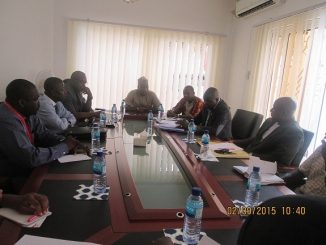
While attending Kenya’s 1st National Forum on Harnessing the Data Revolution on Sustainable Development, which is taking place this week (25-29 August 25), I have met data scientists and policymakers who are eager to use data to develop the country.
I am convinced that such platforms are necessary for countries seeking to successfully achieve the SDGs and lead their people to a world free of poverty.
Kenya has recognised the data revolution as a powerful force for economic transformation. The government, civil society and the private sector have localised the data revolution by creating data ecosystems in key sectors of the economy such as agriculture, health, transport and education.
The forum was organised by the government, the Kenya-based Partnership for African Social and Governance Research, the Kenya Association of Manufacturers and the Local Development Research Institute.
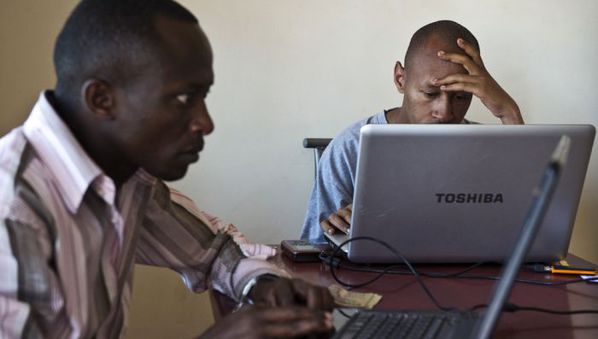
“We are now beginning to embrace data after making datasets available,” Victor Kyalo, CEO of Kenya’s Information and Communication Technology Authority, told me.
Kyalo says that lots of data are available in Africa, but are limited in use because of lack of accessibility, save for journalists and policymakers who are now making “data-driven decisions”.
There is a need to increase accessibility of data to the rural poor. Farmers in the rural areas should practise ‘precision agriculture’ by knowing when to plant so as to reduce on losses.
Korir Sing’oei, a legal advisor at the Office of the Deputy President of Kenya, says the country has more data producers and generates more data annually than before.
But how do we leverage these data? How do we ensure that the rural poor access data? Sing’oei advocates a multi-stakeholder approach to harness expertise in data content to address some of the challenges.
The forum’s ability to capture climate change, public finance management, information and communication technology and innovation as its cross-cutting themes is vital to harnessing data for sustainable development.
However, there is a need to create more awareness in Kenya on the potential of data revolution for sustainable development.
This article has been produced by SciDev.Net’s Sub-Saharan Africa desk. – See more at: http://www.scidev.net/sub-saharan-africa/data/scidev-net-at-large/harnessing-data-spur-sustainable-development.html#sthash.8mNz8uns.dpuf