
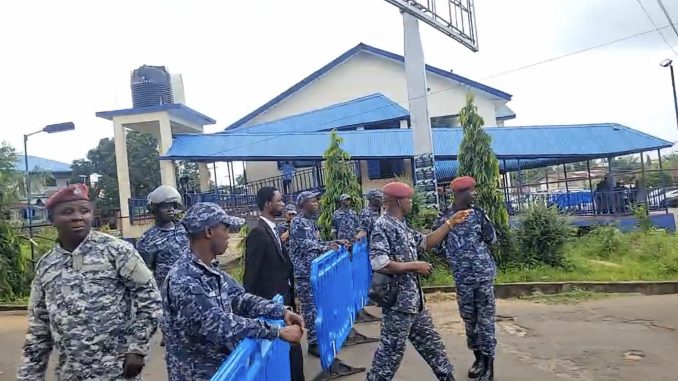
Lessons from the Sierra Leone Bar Association’s Postponed Elections: Why Bad Precedent Is a Dangerous Inheritance
By Claudius Willams-Tucker
The legal profession is meant to be the guardian of the rule of law. So when the Sierra Leone Bar Association, the SLBA, postponed its own elections, the moment became about more than just dates on a calendar. It became a test of credibility, procedure, and the example the Bar sets for the rest of the country.

While the reasons given for postponement may have been practical — logistics, funding, disputes over the voters’ register, or internal wrangling — the decision carries lessons that will echo far beyond the Bar’s own walls.
1. Process Is As Important As Outcome
Lawyers argue cases on procedure every day. If the Bar cannot follow its own constitution on elections, it weakens the moral authority it has when demanding that government, corporations, and citizens do the same.
Lesson: Institutions are judged not just by what they decide, but by how they decide it. Cutting corners “just this once” signals that rules are negotiable when inconvenient.
2. Postponement Creates a Vacuum That Politics Fills
Bar elections are supposed to be regular, competitive, and peaceful transfers of leadership. When they are delayed without clear, constitutionally grounded timelines, it opens space for speculation, factionalism, and accusations of manipulation. Members begin to question motives rather than debate policy.
Lesson :Uncertainty erodes trust. And once trust is lost inside a professional body, it’s hard to lead public conversations about democracy and accountability outside of it.
3. Bad Precedent Becomes The New Normal
This is the most dangerous part. The first time an election is postponed without strict adherence to the constitution, it sets a reference point. Next time there is a dispute over the voters’ register, or funding is short, or one faction feels it may lose, someone will say: “We postponed before, we can do it again.”
What starts as an exception hardens into practice. And in law, precedent matters. A Bar that tolerates procedural drift will struggle to argue against similar drift in Parliament, in local councils, or in national elections.
Lesson: Today’s convenience becomes tomorrow’s justification. Institutions must protect their procedures even when it is costly, because the cost of not doing so is much higher later.
5. Credibility With The Public And The Judiciary Is Fragile
The SLBA speaks on constitutional issues, judicial appointments, and access to justice. Its voice carries weight because it is seen as independent and principled. When the Bar’s own house appears disorderly, that voice gets quieter. Government and the public are less likely to listen.
Lesson: You cannot credibly demand transparency from others while appearing opaque yourself.
5. Young Lawyers Pay The Price
For young lawyers and law students, the Bar Association is where they learn professional culture. If they see elections postponed, disputes handled outside the constitution, and leadership transitions delayed, they learn that this is how institutions are run.
Lesson: Culture is taught by example. A bad precedent teaches the next generation to value power over process.
How To Repair And Protect The Future
1. Follow the Constitution Strictly:Any postponement must be tied to clear constitutional provisions, with timelines and oversight.
2. Transparent Communication: Explain the reasons publicly, with evidence. Silence breeds rumors.
3. Independent Electoral Committee: Shield the election process from executive interference within the Bar.
4. Document and Limit the Exception: If postponement is unavoidable, the Bar should pass a resolution stating why it will not be repeated, to prevent it becoming precedent.
5. Reaffirm the Role of the Bar: Use the moment to restate that the Bar’s legitimacy comes from the rule of law, not personalities.
Conclusion
The Sierra Leone Bar Association does not just represent lawyers. It represents an idea — that in a democracy, rules matter more than individuals.
Postponing elections may solve a short-term problem. But if done without care, it creates a long-term problem: a precedent that rules can be bent. And once that door is open, it is very hard to close.
The real lesson is this: institutions are not protected by their titles, but by their discipline. If the Bar wants to defend the constitution for Sierra Leone, it must first defend its own.

Leave a Reply