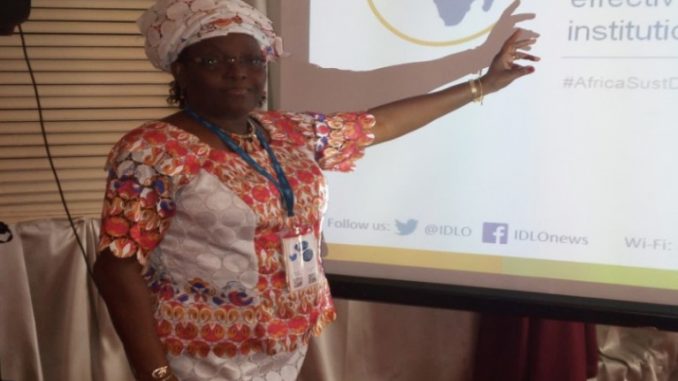
Statement By The Minister Of Political And Public Affairs-Hon Nanette Thomas In Tanzania-
Madam Director General,
Colleague Ministers of Government
Your Excellences, distinguished delegates,
Ladies and gentlemen,
I bring you greetings from the President of the Republic of Sierra Leone, His Excellency President Dr. Ernest Bai Koroma and wife, First Lady Mrs. Sia Nyama Koroma. Let me on behalf of my President, the government, the people of Sierra Leone and my humble self-thank you very much for inviting the Government of Sierra Leone to be a speaker at this great conference on “Achieving The 2030 And Agenda 2063; The Rule Of Law as a driver of Africa’s sustainable development’.
There could not have been a better time than now in holding this conference.
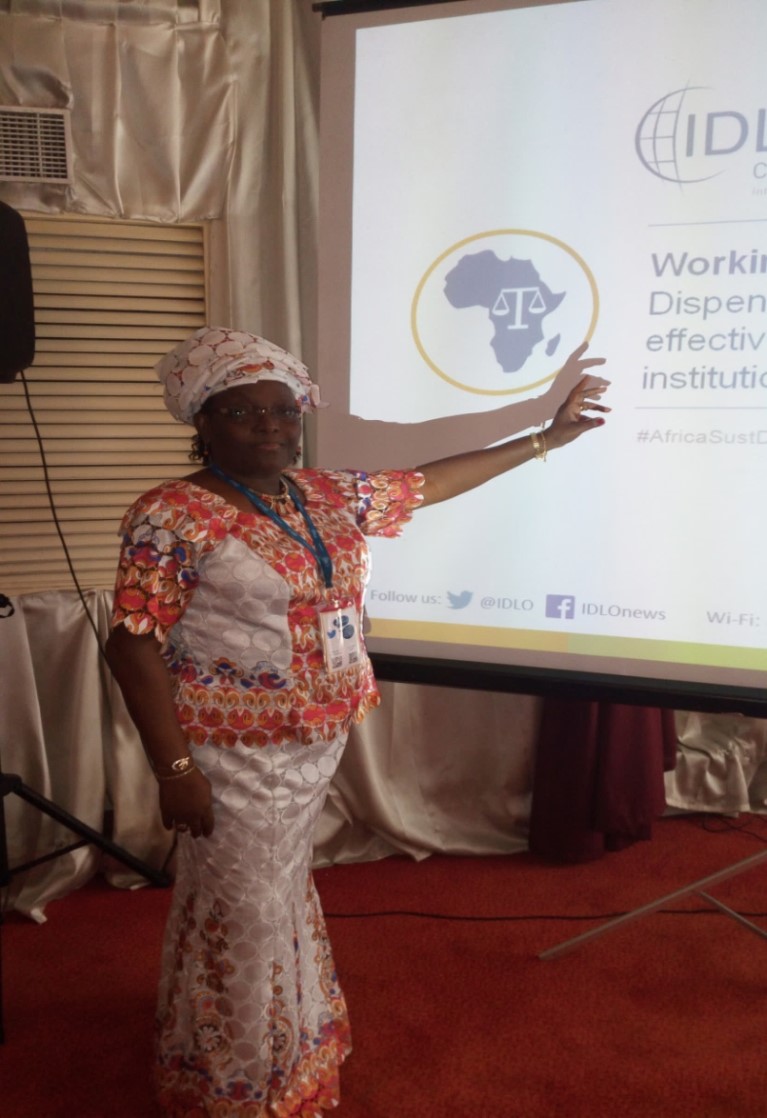
Madam Director General, distinguished ladies and gentlemen, my name is Nanette Thomas and I am the Minister of Political and Public Affairs, the first woman to hold this high office in the Republic of Sierra Leone. As Minister of Political and Public Affairs, I am honored yet humbled to receive the invitation from the International Developmental Law Organization (IDLO) to represent the Government and the people of the Republic of Sierra Leone on the theme “Rule of Law for Sustainable Development” Distinguished ladies and gentlemen, one may be tempted to ask, What is Rule of Law?
It is widely assumed that the rule of law is essential for economic growth. However, the rule of law is clearly a multidimensional concept, encompassing a variety of discrete components from security of person and property rights, to checks on government and control of corruption. The literature on the rule of law and economic growth has become one of the most dynamic areas of theoretical and empirical work in political science, economics, and law. More cross-national data exists now, purporting to measure the rule of law than we know what to do with. Yet even the very best work in the field has not been adequately attentive to the multidimensionality of the rule of law concept.
Respect for the rule of law is a basic requirement for creating the conditions that foster business development. It provides the security that protects individuals’ basic political and human rights. But the rule of law also provides entrepreneurs and small business owners the confidence they need to enter the formal economy and contribute to nationwide economic growth and development.
Distinguished ladies and gentlemen, what is Economic Growth? Sierra Leone is a rich country with a lot of potentials in the Fisheries industry, mining (Oil and gas), tourism and agricultural industry. Some of these riches – especially oil, gas and minerals – have driven rapid economic growth over the past decade in Sierra Leone and Africa at large. The ultimate measure of progress is the wellbeing of people – and Africa’s recent growth has not done as much as it should to reduce poverty and hunger, or improve health and education.
To sustain growth that improves the lives of all Africans, the continent needs an economic transformation that taps into Africa’s other riches: its fertile land, its extensive fisheries and forests, and the energy and ingenuity of its people. The Africa Progress Report 2014 describes what such a transformation would look like, and how Africa can get there.
Agriculture: Agriculture must be at the heart of transformation. Most Africans, including the vast majority of Africa’s poor, continue to live and work in rural areas, principally as smallholder farmers. In the absence of a flourishing agricultural sector, the majority of Africans will be cut adrift from the rising tide of prosperity. To achieve such a transformation, Africa will need to overcome three major obstacles: lack of access to formal financial services, the weakness of the continent’s infrastructure and the lack of funds for public investment. The Africa Progress Report of 2014 describes how African governments and their international partners can cooperate to remove those obstacles – and enable all Africans to benefit from their continent’s extraordinary wealth.
Health Is Wealth. Sierra Leone, a country of over 7 million people as was established by the just concluded National Population and housing census. As a nation, we have experienced an 11-year civil war that ended in 2002 leaving over 50,000 people dead. At a time when the country is rebuilding its economy, in 2012 it was recalled that Sierra Leone has as one of the fastest growing economies in the world mainly on iron ore exports.
Unfortunately, Sierra Leone entered another war by the name of Ebola.
As a result, it lowered the country’s growth prospect making a difficult healthcare situation worse. Transforming a healthcare system weakened by an 11-year war and burdened with an Ebola outbreak, the economy was shattered. The government of Sierra Leone under the dynamic leadership of His Excellency the President of the Republic of Sierra Leone, Dr. Ernest Bai Koroma and its development partners are gradually rebuilding the economy and the Government of Sierra Leone with the help of its development partners are on top of situation.
This deadly disease took the lives of many of our compatriots and halted promising development strides that were firmly on course in the implementation of H.E. the President’s Agenda for Prosperity. Madam Director General with your permission Madam
Health Services, so that service delivery can be improved. The goal of the overall package is to ensure the provision of minimal essential quality care for all, and it includes services that have the greatest impact on major health problems, especially maternal and child health. In addition, the Free Health Care Initiative for pregnant women, lactating mothers and children under five years was launched by the President in April 2010. The objective is to provide a package of fully subsidized services free of charge at the point of delivery. It was expected that within a year of implementing the Free Health Care Initiative, access to health services will increase to 65%. And I stand here to inform the world that the free health care to pregnant women and lactating mothers has increased to about 80%. The government continues with its educational awareness sensitization program on safe delivery. Gone are the days when mothers would have to die during child birth
Furthermore, the government has rehabilitated and constructed Health care infrastructure and provided equipment and supplies. Programmers to control childhood diseases and illnesses such as the Expanded Programme on Immunization have been strengthened and expanded nationwide, even though Sierra Leone’s extremely high Maternal Mortality Rate and Infant Mortality Rate have dropped considerably over the years.But at the same time more needs to be done to attain minimum standard of healthcare provision. Access to recognized health facilities remains abysmal, with only half of the population visiting health facilities once a year. The health care system must be improve on its sensitization and educational awareness program
Challenges In Engendering The Health Sector: Although significant progress has been made since the end of the war, especially at the policy level and in the reduction of Maternal Mortality Rate and Infant Mortality Rate, the health sector still has a considerable number of challenges to overcome in order to meet the needs of the population. Among these are reductions of fertility levels and of inequalities in access to health care services between rich and poor households, low contraceptive usage, user fees in health facilities, lack of equipment’s, and supplies and
the poorly trained and unmotivated staff.
Building On A Decade Of Growth: Rapid economic growth in SubSaharan Africa over the past decade is worth celebrating. The Economic Growth has averaged 5 per cent a year or more, driven by domestic demand, foreign investment, strong commodity prices and improved economic governance. The ultimate measure of progress, however, is the wellbeing of people and Africa’s current growth has not done nearly as much as it should to reduce poverty, hunger and child mortality, or to
Improve education.
Poverty Is Deeper In Africa Than Elsewhere: it takes more growth to lift the average poor person above the poverty threshold. High levels of initial inequality weaken the power of growth to reduce poverty. And much of Africa’s growth has been concentrated in sectors such as mining and petroleum that has little effect on rural areas, where the majority of Africa’s poor live.
Inclusive growth in agriculture holds the key to changing this picture, along with economic diversification, the spread of manufacturing and new technologies, and the development of a skilled workforce is the only way out. Welldesigned social welfare programmes can protect vulnerable households from shocks, support health and education, and contribute directly to growth.
CONCLUSION: I will conclude by saying that the Government of Sierra Leone is gratefull to the entire staff of the International Development Law Organization and the Government of Tanzania for extending the invitation to us.
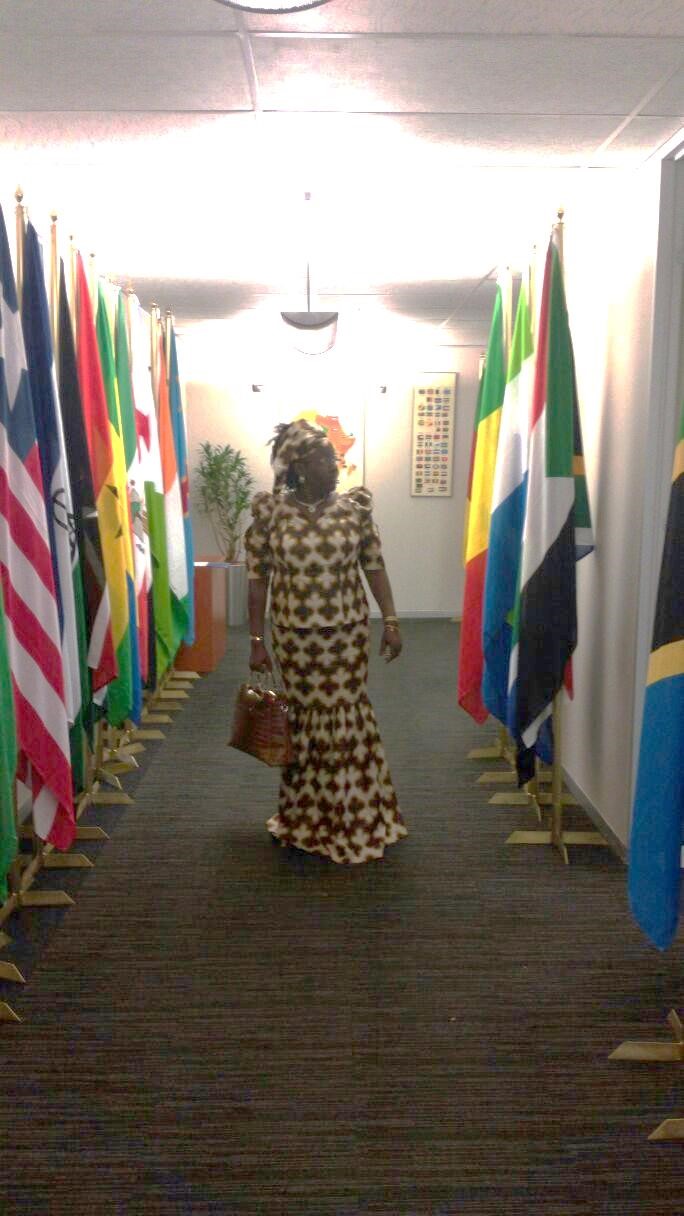
The Honorable Minister Of Political and Public Affairs – Madam Nanette Thomas is Walking Tall and Pride In Tanzania-South