
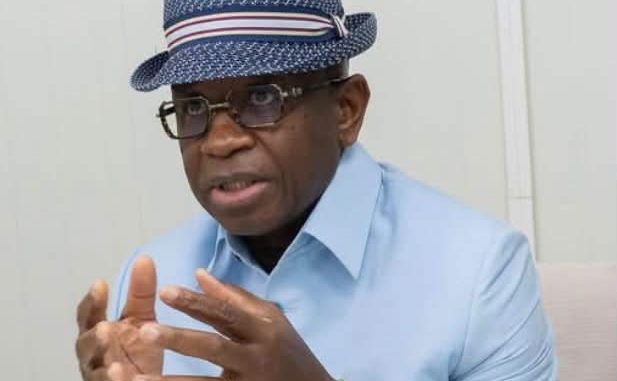
THE FAILURE OF PRINCIPLES: WHY PRESIDENT JULIUS MAADA BIO’S LEADERSHIP DESERVES SERIOUS JUDGMENT
A Nation Cannot Rise When Its Leadership Fails the Test of Principle
By Sorie Ibrahim Koroma, ABA
Accredited Business Accountant/Advisor
Introduction: Leadership Is a Test of Character, Not a Title
What makes a good leader?
Is it the ability to win an election, occupy the State House, command the security forces, or deliver powerful speeches before international audiences? Or is genuine leadership measured by integrity, consistency, accountability, respect for human dignity, and the courage to uphold principles when doing so becomes politically inconvenient?
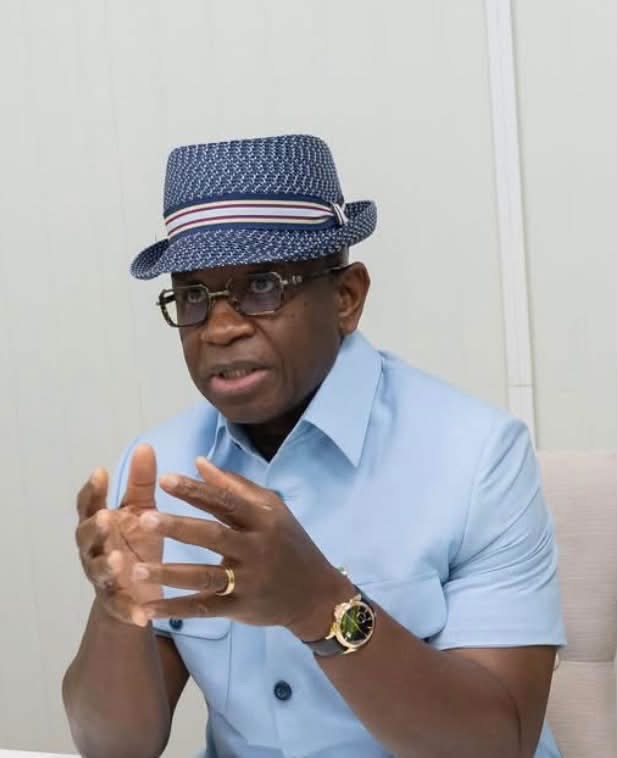
For Sierra Leone, these are not merely academic questions. They go to the heart of our national struggle for responsible government, economic development, and a better future for generations yet unborn.
President Julius Maada Bio must be judged not simply by his political promises, academic credentials, international engagements, or ability to remain in power. He must be judged by the principles he professes, the decisions his administration makes, the institutions it strengthens or weakens, and the conditions in which ordinary Sierra Leoneans find themselves.
A leader who compromises the principles necessary for national progress cannot expect the nation to prosper merely because he occupies the highest office in the land.
This is the fundamental question facing Sierra Leone: Has President Bio demonstrated the quality of principled leadership that the country desperately needs?
The answer must be determined through a serious examination of his political history, his administration’s record, and the consequences of his government’s decisions.
1. From Military Intervention to Democratic Leadership: The Burden of History
Julius Maada Bio’s political history is inseparable from Sierra Leone’s military interventions of the 1990s.
In April 1992, a group of young military officers overthrew President Joseph Saidu Momoh’s government. Bio was associated with the National Provisional Ruling Council (NPRC), the military government that emerged from that coup.
In January 1996, Bio assumed leadership of the NPRC following the removal of Captain Valentine Strasser. Later that year, he handed power to an elected civilian government following the 1996 elections.
That transition was an important moment in Sierra Leone’s return to electoral politics. It must be acknowledged alongside the controversies and consequences of military rule.
However, the larger historical question remains: What lessons did the political and military leadership of that period learn about the dangers of concentrating power outside established democratic institutions?
Military intervention may be justified by its proponents through claims of corruption, poor governance, national insecurity, or the failure of civilian leadership. Yet the act of overthrowing a government does not automatically establish the moral authority, competence, or integrity of those who replace it.
Indeed, the very grievances used to justify intervention become standards against which the intervening leadership should subsequently be judged.
You cannot condemn a nation’s failures as a justification for taking power and then expect history to excuse comparable or more serious failures under your own administration.
That is the test of consistency.
2. The Contradiction Between Political Promises and Government Performance
When political leaders campaign for power, they offer hope. They promise a departure from the failures of the past, an improvement in living standards, stronger institutions, greater accountability, and a government that serves the public rather than itself.
President Bio came to office in 2018 promising a new direction for Sierra Leone, with Free Quality School Education as a central policy commitment. His administration subsequently implemented that programme, which has helped expand access to education. That achievement deserves recognition.
But responsible political analysis must go beyond celebrating individual programmes.
The more important question is whether the administration has delivered broad, sustainable improvements in the lives of Sierra Leoneans.
Have employment opportunities expanded sufficiently to give young people a realistic prospect of a productive future? Have the costs of living become manageable for ordinary households? Have public institutions earned greater confidence? Have public resources translated into the quality of healthcare, education, infrastructure, and economic opportunity that citizens deserve?
These questions cannot be answered through campaign slogans or government publicity. They require independently verifiable evidence.
Where the government falls short, citizens have every right to demand explanations, corrective action, and accountability.
A responsible leader does not treat criticism as an enemy. A responsible leader recognises criticism as an essential part of democratic government.
The problem arises when political loyalty becomes more important than national performance, when public relations take precedence over measurable results, and when explanations for failure become substitutes for solutions.
A nation cannot eat promises, educate its children with speeches alone, or build prosperity through political loyalty. Leadership must ultimately produce measurable improvements in people’s lives.
3. Principles Matter Most When the Country Is Under Pressure
The true character of leadership is revealed during the most difficult moments.
It is easy to speak about democracy when the opposition is weak. It is easy to praise accountability when scrutiny is directed at political opponents. It is easy to promise justice when one’s own interests are not threatened.
The real test comes when the government faces allegations of misconduct, public anger, institutional disputes, economic hardship, or demands for accountability.
Will the president insist on transparent investigations even when members of his own political establishment are implicated?
Will he defend the independence of public institutions when their decisions become inconvenient to his government?
Will he protect citizens’ constitutional rights even when the exercise of those rights produces uncomfortable criticism?
Will he accept credible evidence of government failure and correct it, or will he allow political considerations to determine how problems are addressed?
These are the questions that separate principled leadership from the mere exercise of power.
The president does not personally have to commit every wrongdoing that occurs during his administration to bear political responsibility for how the government responds. His responsibility lies in ensuring that allegations are investigated fairly, institutions are permitted to perform their lawful functions, and accountability is not determined by political affiliation.
A leader’s integrity is demonstrated not by claiming to be blameless, but by establishing systems that expose wrongdoing, correct mistakes, and hold everyone to the same standard.
Principles that disappear when they become inconvenient are not principles. They are political instruments.
4. The Youth Crisis: A Test of National Leadership
One of the most urgent challenges facing Sierra Leone is the growing concern over substance abuse among young people, including the devastating effects associated with Kush.
This crisis demands more than public condemnation after another death, another family tragedy, or another community loses hope.
It requires coordinated action involving public health institutions, law enforcement, border control, education authorities, local councils, community leaders, and families.
The government must demonstrate that it can investigate drug trafficking networks, strengthen prevention and treatment services, support rehabilitation, and hold responsible individuals accountable through lawful processes.
Where allegations identify particular individuals as major traffickers, those allegations must be investigated through credible evidence and due process rather than treated as established facts merely because they circulate publicly.
The government’s responsibility is nevertheless unmistakable: protect the public, enforce the law impartially, and confront the crisis with urgency.
A country cannot afford to lose a significant part of its productive generation to addiction, despair, unemployment, and social exclusion.
The question is not whether the president can personally solve every aspect of the crisis. No leader can do that alone.
The question is whether the government has demonstrated the urgency, coordination, transparency, and sustained commitment that the scale of the problem demands.
When a national emergency persists, citizens are entitled to examine the government’s response and ask whether its priorities are aligned with the survival and advancement of the people.
5. Economic Hardship and the Responsibility to Govern
Sierra Leone is richly endowed with natural resources, including diamonds, gold, iron ore, and agricultural land. Yet resource wealth alone does not guarantee prosperity.
The decisive factors are how resources are managed, how public revenue is collected and spent, whether institutions prevent corruption, and whether national wealth generates productive employment and essential services.
President Bio’s administration must therefore be judged against the economic realities experienced by ordinary citizens.
Families want food they can afford. Young people want jobs. Farmers want reliable markets, equipment, electricity, and transport. Businesses want predictable policies and access to finance. Patients want functioning hospitals. Parents want schools that deliver meaningful educational outcomes.
These are not extravagant demands. They are reasonable expectations of government.
Where inflation, fiscal pressures, limited employment, or inadequate public services undermine living standards, the government must explain its response with credible information and measurable targets.
It must also distinguish between challenges inherited from previous administrations, external economic pressures, and problems arising from its own policy decisions.
Historical circumstances matter, but they cannot become a permanent excuse for disappointing outcomes.
Every administration inherits a country with problems. The purpose of electing a new government is to secure better solutions.
Natural resources are a national inheritance, not a substitute for competent leadership. Their value must be measured by what they contribute to the lives of the people.
6. Democracy Must Be Stronger Than the President
Sierra Leone’s democratic future depends on more than elections. It depends on institutions capable of operating independently, protecting constitutional rights, and holding those in power accountable.
The presidency is powerful, but it is not above the Constitution. Government authority is entrusted to public officials for the benefit of the nation; it is not a personal possession.
A principled president should welcome credible scrutiny of elections, public expenditure, government decisions, and the conduct of public officials.
Where disputes arise, they should be resolved through lawful, transparent, and credible processes.
Where allegations of abuse are raised, they should receive impartial examination.
Where institutions make decisions that are inconvenient to the government, those institutions must still be permitted to operate within the law.
This is how democratic legitimacy is strengthened.
The issue is not whether a president should be criticised. Every democratic leader must be open to criticism.
The issue is whether the institutions of the state can function effectively when the president or the ruling party is under scrutiny.
If a country depends entirely on the goodwill of one individual, its institutions remain vulnerable. If its institutions are stronger than any individual, the country has a more durable foundation for democracy.
Sierra Leone needs the latter.
7. The Difference Between Being Educated and Being a Good Leader
Leadership is not an academic competition.
A person can possess impressive educational qualifications and still fail to govern effectively. Another person with fewer academic credentials may demonstrate sound judgment, practical competence, integrity, and a deep understanding of the people’s needs.
Academic achievement can be valuable. It can equip a leader with analytical skills, technical knowledge, and an appreciation of complex issues. But it cannot guarantee moral courage or administrative competence.
Equally, limited formal education does not automatically make someone a better leader.
The appropriate test is what a leader does with the authority entrusted to them.
Can the leader assemble competent people, set clear priorities, manage public resources responsibly, establish measurable objectives, and demand results?
Can the leader acknowledge mistakes, correct failed policies, and put the national interest ahead of personal or partisan advantage?
Can the leader protect citizens’ rights even when doing so carries a political cost?
These are the qualities that matter.
Sierra Leone does not need to choose between education and practical competence. It needs leadership that combines knowledge, integrity, sound judgment, accountability, and the ability to deliver.
Degrees may demonstrate what someone has studied. Leadership demonstrates what someone can accomplish with power and responsibility.
8. The Historical Question President Bio Cannot Escape
President Bio’s military background does not, by itself, determine whether he can be a good democratic leader. Nor should his past be used as a substitute for examining the evidence of his presidency.
However, that history makes consistency, constitutional responsibility, and respect for democratic institutions especially important subjects of public scrutiny.
A leader who has participated in the transition from military government to electoral politics should understand the value of peaceful political competition and the dangers of undermining legitimate institutions.
The significance of history lies not in punishing someone indefinitely for the past, but in determining whether the lessons of the past have been applied to the present.
Has Sierra Leone’s democratic system become more resilient? Are institutions better equipped to hold the powerful accountable? Are citizens more confident that public authority is exercised fairly? Is government performance sufficiently transparent for citizens to judge it on evidence rather than political allegiance?
These questions should be answered through the public record, not through personal attacks or assumptions about a leader’s intentions.
If the evidence demonstrates progress, that progress should be acknowledged. If it demonstrates serious failures, those failures should be confronted honestly.
No president should be exempt from that standard.
Conclusion: Sierra Leone Needs Leaders Who Put Principles Before Power
The central problem in Sierra Leonean politics is not simply the identity of the person occupying the presidency. It is the recurring danger of allowing political loyalty, personal ambition, and the pursuit of power to overshadow the principles that make government legitimate.
A nation cannot build a durable democracy if constitutional standards are treated as optional.
It cannot achieve sustainable development if political promises repeatedly outrun practical results.
It cannot protect its young people if urgent social crises receive less attention than political survival.
And it cannot realise the full value of its natural resources if public accountability and competent economic management remain secondary considerations.
President Julius Maada Bio deserves neither automatic condemnation nor automatic praise. He deserves rigorous judgment based on his record, the evidence, and the standards expected of every democratic leader.
Nevertheless, the political argument against his leadership becomes compelling wherever credible evidence establishes a persistent gap between the principles his government professes and the outcomes it delivers.
The presidency is not a reward for political victory. It is a solemn responsibility to serve the nation.
The people of Sierra Leone should demand leaders who defend constitutional government when it is inconvenient, confront national crises with urgency, manage public resources transparently, and accept responsibility when policies fail.
They should demand a government in which accountability applies to the powerful as well as the powerless, and in which the national interest comes before party interests.
Sierra Leone does not need leaders who merely explain why the country is failing. It needs leaders who demonstrate, through measurable results and unwavering principles, how the country can succeed.
History will not ultimately judge a president by the speeches he delivered, the titles he held, or the promises he made.
It will judge him by the institutions he strengthened, the people whose lives improved, the rights he protected, the resources he safeguarded, and the future he left behind.
That is the standard of decent leadership.
And that is the standard every president of Sierra Leone must meet.


Leave a Reply