
Corruption disproportionately affects the poor and young
Issued by Transparency International Secretariat
The tenth edition of Global Corruption Barometer (GCB) – Africa, released on African Anti-Corruption Day by Transparency International in partnership with Afrobarometer, reveals that more than half of all citizens surveyed in 35 African countries think corruption is getting worse in their country. Fifty-nine per cent of people think their government is doing badly at tackling corruption.
The largest and most detailed survey of citizens’ views on bribery and other forms of corruption in Africa, the survey asked 47,000 citizens in 35 countries about their perceptions of corruption and direct experiences of bribery.
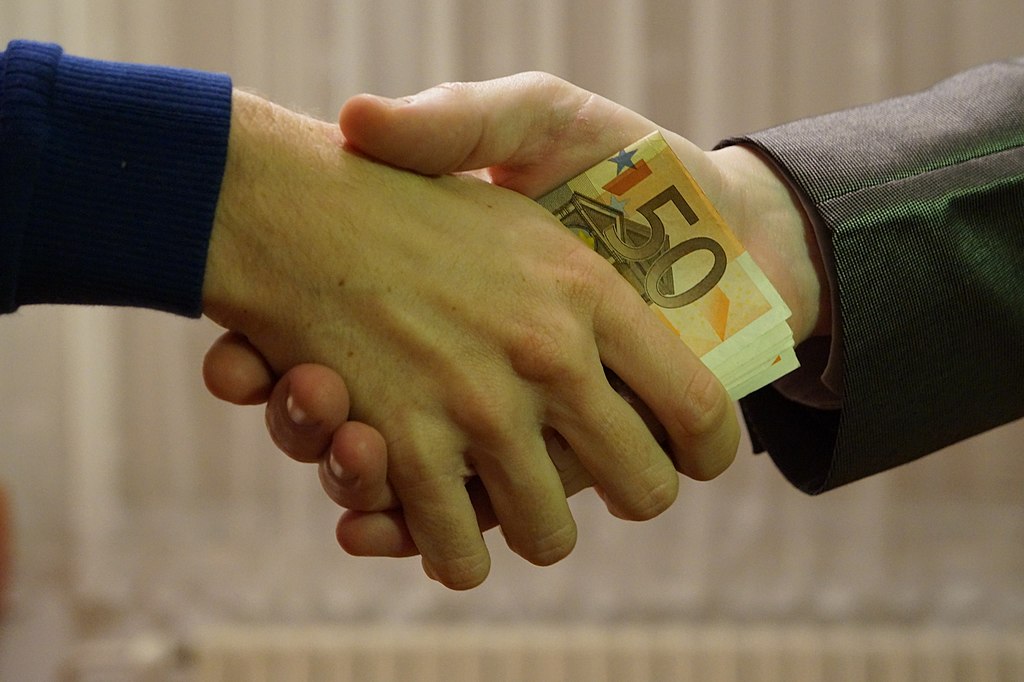
The results show more than 1 in 4 people who accessed public services, such as health care and education, paid a bribe in the previous year. This is equivalent to approximately 130 million people.
The report also highlights that corruption disproportionately affects the most vulnerable, with the poorest paying bribes twice as often as the richest. Young people pay more bribes than those over 55 years old.
“Corruption is hindering Africa’s economic, political and social development. It is a major barrier to economic growth, good governance and basic freedoms, like freedom of speech or citizens’ right to hold governments to account,” said Patricia Moreira, Managing Director of Transparency International. “While governments have a long way to go in regaining citizens’ trust and reducing corruption, these things don’t exist in a vacuum. Foreign bribery and money laundering divert critical resources away from public services, and ordinary citizens suffer most.”
The police is considered the most corrupt institution, with 47 per cent of people believing that most or all police are corrupt. Many citizens also think government officials and parliamentarians are highly corrupt, at 39 per cent and 36 per cent respectively.
As in the previous edition of the GCB for Africa, the police consistently earn the highest bribery rate across the continent. This may be one of the reasons that two-thirds of those surveyed fear retaliation for reporting corruption. On a positive note, more than half of citizens believe that ordinary people can make a difference in the fight against corruption.
“To reduce the heavy burden of corruption on ordinary people, African states that have not done so should ratify and effectively implement the African Union Convention to Prevent and Combat Corruption,” said Paul Banoba, Regional Advisor for East Africa at Transparency International. “Africans believe they can make a difference. Governments must allow them the space to do so.”
Transparency International urges governments to put anti-corruption commitments into practice and to:
- investigate, prosecute and sanction all reported cases of corruption in both the public and the private sector, with no exception;
- develop minimum standards and guidelines for ethical procurement and build strong procurement practice throughout the continent with training, monitoring and research;
- adopt open contracting practices, which make data and documentation clearer and easier to analyse and ensure transparency in hiring procedures;
- create mechanisms to collect citizens’ complaints and strengthen whistleblower protection to ensure that citizens can report instances of corruption without fear of reprisal;
- enable media and civil society to hold governments accountable;
- support political party funding transparency;
- allow cross border cooperation to combat corruption.
Authorities should also establish public registers that name the owners of shell companies and adopt and enforce laws that address stolen assets.
Additionally, business leaders and boards of companies, including multinational companies operating in Africa, should effectively and transparently implement the highest international anti-corruption and anti-money laundering standards.
ENDS
About the GCB
The Global Corruption Barometer (GCB) – Africa survey was implemented by Afrobarometer in 34 countries, as part of its Round 7 surveys, in collaboration with Transparency International. A separate survey for the Democratic Republic of Congo was commissioned by Transparency International and conducted by Omega Research.
The surveys were conducted face-to-face using computer-assisted personal interviewing with 47,105 adults aged 18+ living in 35 countries in Africa. The fieldwork was conducted between September 2016 and September 2018, and the surveys were sampled and weighted to be nationally representative. The overall results for Africa are equivalent to an average of the countries surveyed. For the full list of countries surveyed and information on the survey approach, please see here.
The total number of bribe payers was calculated based on the percentage of respondents in each of the 35 surveyed countries who had paid a bribe at least once to any of the five public services in the last 12 months, and was extrapolated using available UN population estimates of adults aged 18+.
About Afrobarometer
Afrobarometer directs a pan-African, non-partisan research network that conducts public attitude surveys on democracy, governance, economic conditions, and related issues in Africa. For more information, visit: www.afrobarometer.org.
For any press enquiries please contact
Jen Pollakusky / Michael Hornsby
T: +49 30 34 38 20 666
E: press@transparency.org