-
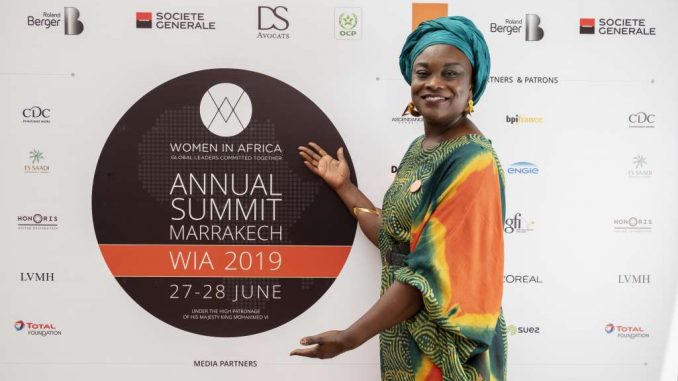
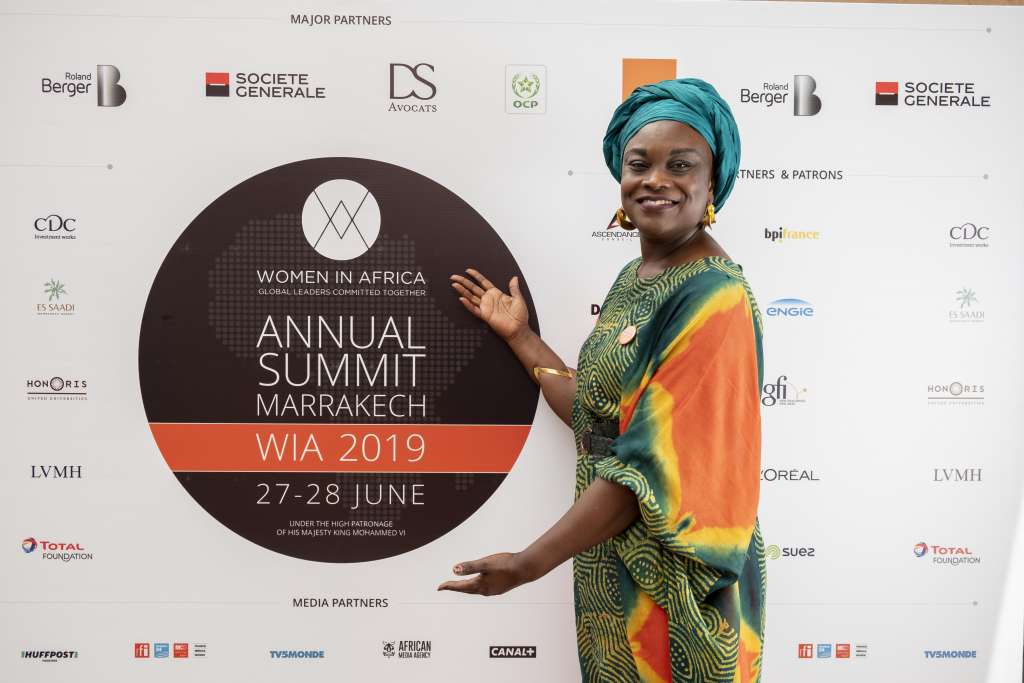
Marrakesh – At the 3rd Women in Africa Annual Summit held in
Marrakech June 27th and 28th, 2019, the delegates coming from more than 80 countries agreed
that African women need to take the leading role in defining how they want to develop business
with the rest of the world.
“Together we are and we will change the centuries’ old story of Africa through the magic of
women from all part of Africa, from Asia, the Middle East and America and from the few men
who have understood that we are changing Africa for the greater good of all of us,” said Women
in Africa President Hafsat Abiola.
The ‘greater good’ was symbolized by the exceptional presence of Alaa Salah, the 22-year-old
Sudanese student, now known throughout the world as the Lady Liberty of Sudan after she
spoke up in a demonstration demanding the installation of a democratic and civilian government
in her country. As she did last April, she reminded the audience the poem she read, standing
fearless on top of a car: “It is not the bullet that kills; What kills is the silence of people.”
The 550 women and men leaders, representing the economic, governmental, cultural and civil
society from more than 80 countries never kept silent during the Women In Africa third annual
summit and the parallel WIA54 program dedicated to laureate women entrepreneurs coming
from every African country but one. The Women in Africa annual conference welcomed for
the first-time official delegations from the United States, the Middle East and Asia. Together,
they worked on the theme: “How African Women Engage the World and Create a New
Paradigm.”
“If you get theright people together and get them engaged on subjects, great things happen,”
said the Kuwaiti Princess Intisar Al Sabah who attended the conference along with a
delegation from her home country. “From the opening speech, the whole subject was: ‘let us
collaborate for a better Africa and a better world.’ This set everyone’s mood to engage and
collaborate with one another.”
-
Three specific sessions addressed how Africa can revisit its business relationships with
America, Asia, and Europe.
“We have to stop thinking ‘charity’ when we talk about women of Africa,” said Aude de Thuin
founder of Women in Africa and of the Women’s Forum for the Economy & Society. “The
only message is, ‘women in the economy are at the same level as men,’” de Thuin added.
If Africa has done a lot of work in terms of empowering its population to be able to scale up
and create a wealthy continent, there remains a gap in how the rest of the world understands the
kind of development Africa is going through.
The presence of Africa and of African women in the media around the world appeared to be
one of the two key paths toward creating a new paradigm. As American television anchor and
lawyer Star Jones explained, it is urgent that Africa, and especially African women write their
own narrative. “In other words, you do not want to allow the news media to dictate how the
world sees you,” Jones said. “You write your own narrative and you tell the world who you
are.”
“Africa is capable of producing its own images and telling its own stories,” added Denise
Epoté, Regional Director for TV5 in Africa.
The other path to a new paradigm is to take the lead of professional investment prospection in
Asia, beyond India and China through a demanding process that includes transparency and
positive social impact.
Acknowledging the growing diversity of African-Asian economic exchange, delegates agreed
that Europeans need to revisit their own business relationships with African countries and
corporations to remain competitive.
The new African paradigm was also implemented at Women in Africa by the 53 women
entrepreneur laureates of WIA54 2019, an initiative launched by WIA Philanthropy Foundation
and aimed at high-potential African women entrepreneurs who are creating tomorrow’s Africa.
They all participated in a two-day series of training workshops to guide them on the
fundamentals of a startup at the crucial moments of its development.
“Africa is the only region in the world where more women than men choose an entrepreneurial
career, a reality that underscores the work of Women in Africa Philanthropy, which we are
proud to sponsor for the second consecutive year,” said Société Générale CEO Frédéric Oudéa
in closing of the summit. “Opening a field of possibilities to the feminine dynamic will have a
certain impact on the future of the African continent.”
“The 53 Women Entrepreneurs represent every country of Africa but Eritrea,” explained its
program manager Seynabou Thiam. “They were selected among 1,800 applicants, which
confirms the force of women entrepreneurship in Africa,” Thiam explained.
“These young women entrepreneurs represent the future of not only their countries but the
future of Africa and the world,” said WIA54 Godmother Ann Walker Marchant, founder of
The Walker Marchant Group in Washington D.C. and a former White House Special Assista
to President Bill Clinton. “They are innovative, creative and fierce. They are breaking glass
ceilings and changing the perception of business in Africa. These fresh faces are the future.”
Seven of the 53 WIA54 2019 were also honored and their projects distinguished on seven
different themes during a ceremony that started and concluded with a spontaneous enthusiastic
and emotional party:
• Ley Zoussi (Republic of Congo) in agriculture for Complete Farmer and her community
agriculture platform;
• Gladys Nelly Kimani (Kenya) on digital for Class Teacher Network and her application
that digitizes the school path;
• Fadzayi Chiwandire (South Africa) in education for DIV:A Initiative, her NGO that
teaches young girls how to code;
• Ehiaghe Aigiomawu (Nigeria) in fintech, for Vesicash and her instant escrow
technology;
• Corine Maurice Ouattara (Ivory Coast) in health, for her Mousso Health Pass, the
digital medical record on connected bracelets;
• Mariam Sherif (Egypt) in environment, for Reform Studio, her eco-friendly design
products;
• Grace Camara (Sierra Leone) for social innovation, with RemitFund, which transforms
the African diaspora funds’ transfers into social investments.
Roland Berger and Women In Africa published on this occasion their third study on African
Women Entrepreneurs. Although Africa has more women entrepreneurs than any of the other
continents (24% of women are entrepreneurs), African business women could make their
startup companies more sustainable and profitable if access to professional training, support,
telecommunications and banking structures were developed.
Other personalities such as Awa Ndiaye Seck (UN Women), Cathia Lawson Hall (Société
Générale), Viviane Onano (Leading Light Initiative), Swaady Martin (Yswara), Alyse
Nelson (President of Vital Voices), Rokia Traoré (singer-songwriter and cultural
entrepreneur), Aïssata Diakité (Zabaan Holding), Francine Ntoumi, Oby Ezekwesili
(#BringBackOurGirls) and Veronica Colondam (YCAB Foundation) participated in
conversations that spanned from financial inclusion, women in science, arts & culture, the
impact of climate change, development of women’s leadership, investing in the new generation
of young digital innovators, facilitating women’s access to finance and agriculture markets,
corruption and gender among others
Women in Africa also celebrated the African Man of the Year with the AMOYA 2019
AMOYA: African Man Of the Year Award
The AMOYA Award was presented this year to Younes El Mechrafi, Director General of the
Moroccan Games and Sport (MDJS) and Vice-President Africa of the World Federation
Federation for Company Sport.
“This award recognizes Younes El Mechrafi’s commitment to women’s sport through the
MDJS,” said de Thuin.
Indeed, the MDJS supports and sponsors initiatives for the inclusion of women in sport:

 Marrakesh – At the 3rd Women in Africa Annual Summit held inMarrakech June 27th and 28th, 2019, the delegates coming from more than 80 countries agreedthat African women need to take the leading role in defining how they want to develop businesswith the rest of the world.“Together we are and we will change the centuries’ old story of Africa through the magic ofwomen from all part of Africa, from Asia, the Middle East and America and from the few menwho have understood that we are changing Africa for the greater good of all of us,” said Womenin Africa President Hafsat Abiola.The ‘greater good’ was symbolized by the exceptional presence of Alaa Salah, the 22-year-oldSudanese student, now known throughout the world as the Lady Liberty of Sudan after shespoke up in a demonstration demanding the installation of a democratic and civilian governmentin her country. As she did last April, she reminded the audience the poem she read, standingfearless on top of a car: “It is not the bullet that kills; What kills is the silence of people.”The 550 women and men leaders, representing the economic, governmental, cultural and civilsociety from more than 80 countries never kept silent during the Women In Africa third annualsummit and the parallel WIA54 program dedicated to laureate women entrepreneurs comingfrom every African country but one. The Women in Africa annual conference welcomed forthe first-time official delegations from the United States, the Middle East and Asia. Together,they worked on the theme: “How African Women Engage the World and Create a NewParadigm.”“If you get theright people together and get them engaged on subjects, great things happen,”said the Kuwaiti Princess Intisar Al Sabah who attended the conference along with adelegation from her home country. “From the opening speech, the whole subject was: ‘let uscollaborate for a better Africa and a better world.’ This set everyone’s mood to engage andcollaborate with one another.”
 4• The association “Women, Achievements and Values”, chaired by Moroccan track andfield champion Nezha Bidouane, organizes women’s races to mobilize and raise awareness onthe importance of physical exercise.• The Aicha des Gazelles rally• Rabat Bike, for women’s cycling in Rabat• TIBU Women’s Camp, which offers intensive basketball courses• The Sahrawi women’s solidarity raid in DakhlaAfrican Agricultural Woman of the Year Award“Women play a major role in agricultural production and product processing, and their role isessential in the development of food security,” explained Abiola.In 2020, Women in Africa and Moroccan company OCP will present for the first time theAfrican Agricultural Woman of the Year Award to recognize in Africa and beyond a womanleader in agriculture for her good practices and innovative solutions.The work of Women in Africa has also been made possible thanks to an engaged network of34 Ambassadors, and 22 of them traveled to Marrakesh this year from faraway places such asDjibouti and Colombia. For the two days preceding the summit, OCP hosted this group ofcommitted senior women leaders at their Polytechnique University Mohammed VI of Benguérirfor a series of brainstorming meetings led by Roland Berger. WIA Ambassadors devised newactions and projects to reach out to women leaders throughout the African continent includingthe works of WIA Agriculture, WIA Education, WIA Mentoring and local debates on cultureand education, thus conceiving new directions for Women in Africa.Closing the conference with a conversation with Alaa Salah, Abiola invited the activist—whostudies architecture—to become the first young leader of Women in Africa, a program to belaunched in 2020 and told her that she has now a group of women leaders who will cheer forher to become a politician, and perhaps not in the distant future, President of Sudan. Thedelegates of Women in Africa actually did not wait: they jumped on the stage, and one after theother, they all gave Salah a hug.About WIA InitiativeOfficially launched in 2016, the Women in Africa Initiative (WIA) is the first international platformdedicated to the economic development and support of African women leaders who show the mostpotential. It comprises the WIA Club, which organizes meetings across the continent, the WIAInstitute (data/study) and the WIA Philanthropy Foundation, which is committed to assisting womenentrepreneurs. Its online media, WIA Mag, showcases and celebrates inspiring careers around thethemes of Women – Africa – Business. On April 12, 2018, WIA Initiative successfully held its firstWest Africa Regional Summit in Dakar, Senegal.www.wia-initiative.com – #WIASUMMIT – #WIAInitiative – #Womenempowerment –#WIAPhilanthropy#Projet54| #WIAPhilantropyPress Contact WIASophie Touchot+33 7 77 98 25 58sophie.touchot@havas.com