

When Weapons Cannot Save a State: Mali’s Warning for Sierra Leone and West Africa
By Oumarou Sanou
On 21 March 2026, a sanctioned Russian cargo ship, the Sabetta, docked at the Rusal-operated bauxite terminal in Conakry, Guinea, only a few hours from Sierra Leone’s northern frontier. Its cargo was not commercial: the vessel reportedly unloaded dozens of military vehicles, armoured Tigr jeeps, infantry fighting vehicles, mortar systems and a long column of logistics trucks, which were then moved overland toward Mali for the national army and Russia’s Africa Corps, the paramilitary successor to Wagner.
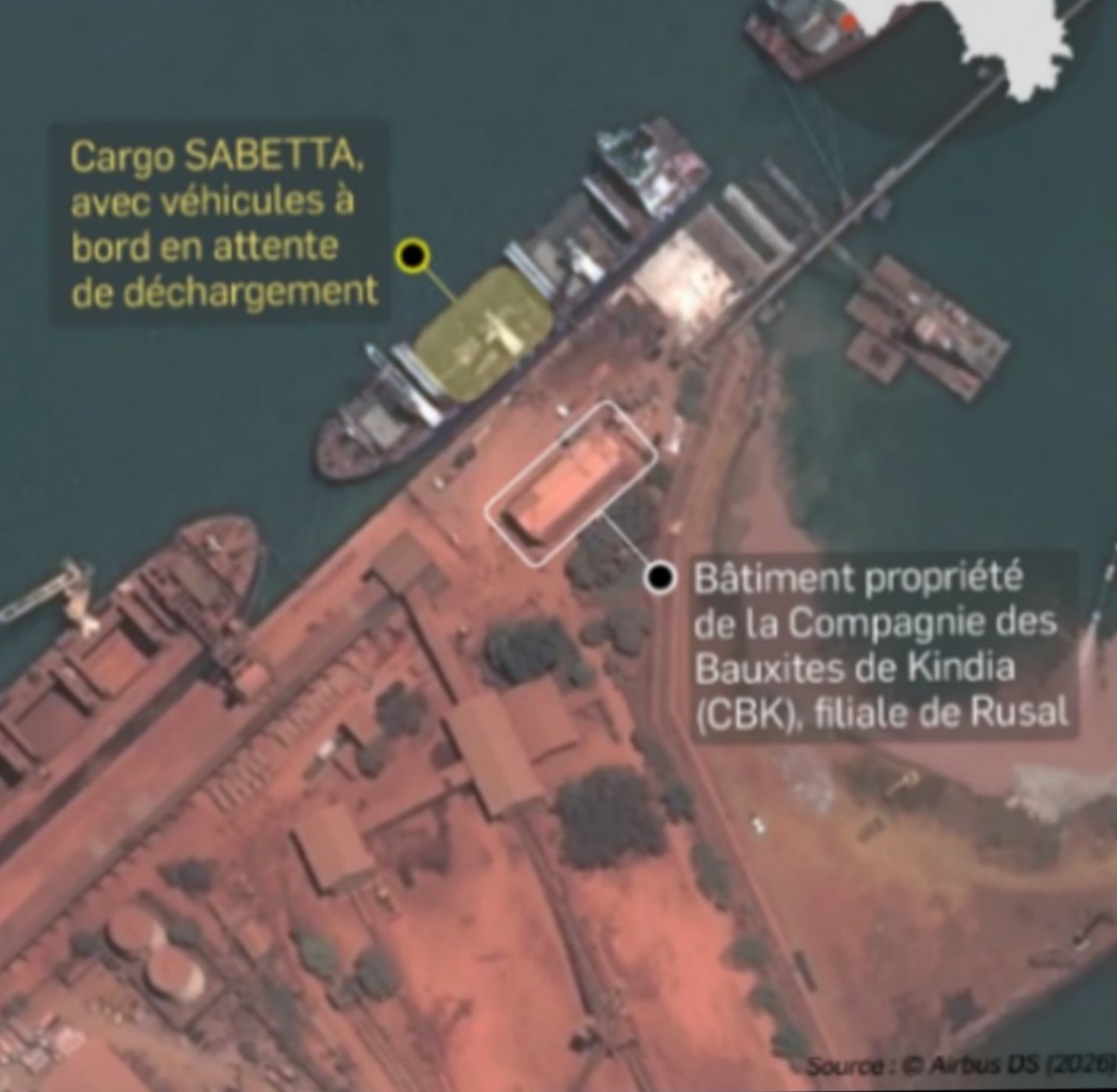


This was no routine consignment but an emergency resupply, rushed to a front already giving way. Through early 2026, Malian troops and their Russian partners had absorbed punishing losses in the north, and the shipment was meant to steady them. It did not.
Within weeks, events overtook the convoy. A coordinated offensive by the Azawad Liberation Front and the al-Qaeda affiliate JNIM tore across the country in late April. In Kati, near Bamako, a car bomb killed Defence Minister Sadio Camara, the architect of Mali’s pivot to Moscow. Kidal fell, and the storied garrison at Tessalit, near the Algerian border, was abandoned as Malian and Russian forces withdrew southward. The finer details may be revised, but the essential picture is not disputed: the war has entered its most dangerous phase since the junta took power.
The newly landed armour barely featured. Heavy vehicles built for conventional, mechanised warfare were poorly suited to a mobile insurgency of ambush and manoeuvre, and positions reinforced only weeks earlier folded within hours. The lesson, for anyone reading the map from the coast, is sobering: hardware cannot rescue a state that has lost the confidence of its own territory. Once legitimacy is gone, a shipload of weapons merely raises the price of the reckoning to come.
Beyond the battlefield lies a commercial logic. The choice of Conakry was no accident. The terminal is run by subsidiaries of Russian aluminium giant Rusal, founded by sanctioned oligarch Oleg Deripaska, which relies on Guinean bauxite for much of its global output. In return, Guinea has received Russian materiel of its own, reportedly attack helicopters. Minerals move one way and weapons the other, and the bargain is not hard to read.
The pattern is familiar. In the Central African Republic and Sudan, the Wagner Group traded security for mining concessions, a deal critics called “blood for gold.” Investigations describe Russian firms already on the ground doubling as the logistics arm for arms deliveries, cargo unloaded after dark and convoys sent toward the Malian border. Supporters cast these as sovereign commercial choices; critics see a mining and military apparatus along the Atlantic coast that enriches a narrow elite and has changed nothing on the battlefield. Either way, civilians pay the heaviest price, abused by state forces, foreign auxiliaries and armed groups alike.
For several years, Mali, Burkina Faso and Niger have built their security around a single wager: that trading Western partnerships for Russian ones would reverse the insurgency. The frustration behind it was understandable, since years of attacks and thin results had eroded faith in earlier interventions. Instead, the picture has only darkened across all three states.
This does not mean Russia alone bears responsibility. The insurgency predates Moscow’s role: weak governance, poverty, local grievances and a thin state presence prepared the ground long before Russian personnel arrived, and earlier Western strategies plainly failed to end the violence. No foreign partner, Russian, French, American or Chinese, can substitute for capable institutions and public trust. Weapons may help a government hold ground; they cannot manufacture legitimacy where citizens have stopped believing in the state.
That reality carries weight for Sierra Leone, far from the epicentre but poorly shielded from transnational threats. Violence once confined to the central Sahel has pushed toward the Gulf of Guinea, with northern Côte d’Ivoire, Benin, and Togo all recording extremist activity while Ghana and Guinea reinforce their borders. Sierra Leone’s proximity to Guinea, which has been under military rule since 2021 and guards a porous frontier, deserves attention.
The danger is unlikely to arrive as a conventional invasion. It is more likely to seep in through arms trafficking, illicit mining, extremist financing and the movement of armed actors across porous borders. The weakening of regional cooperation after the three states left ECOWAS compounds the risk, opening gaps in shared intelligence and border coordination when the region most needs them. These external pressures meet familiar domestic ones: high youth unemployment and the unhealed grievances of a generation that lived through the war of 1991 to 2002.
Yet Sierra Leone is not a bystander, and the right posture is neither alarm nor complacency. Freetown has chaired ECOWAS and helped keep West Africa on the United Nations Security Council agenda, and in March, its officials met Guinean and Liberian counterparts in Conakry to ease tensions along the Mano River. That diplomatic weight matters, but only if matched at home by stronger institutions, better border management, opportunity for the young, and support for collective regional response.
The story of the Sabetta is about far more than one cargo ship. It marks the limits of military hardware deployed without political stability, institutional strength and legitimacy. Emergency arms shipments will not solve the Sahel’s crisis, and for Sierra Leone, that is the most important lesson of all. Its greatest defence lies not in vessels at regional ports, but in accountable leadership, resilient institutions, regional solidarity and citizens who still believe their state serves them.
Oumarou Sanou is a social critic, Pan-African observer and researcher focusing on governance, security, and political transitions in the Sahel. He writes on geopolitics, regional stability, and African leadership dynamics. Contact: sanououmarou386@gmail.com
Editor-In-Chief| Global Sentinel
Tell | +2348035506268, +2349012395186
Email | senator.iroegbu@yahoo.co.uk, senrule@gmail.com
Twitter | https://twitter.com/
Facebook | web.facebook.com/Senrule
LinkedIn | https://www.linkedin.com/
Skype | live:senator.iroegbu
Website | http://www.globalsentinelng.
Leave a Reply