
( Culled from various internet media in 2017 )
Critical elections are being held in Rwanda and Kenya. In Rwanda, the incumbent Paul Kagame faced Frank Habineza, of the Democratic Green Party of Rwanda and independent candidate Philippe Mpanyimana.
In Kenya, Raila Odinga, representing an umbrella opposition party, the National Super Alliance, will challenge incumbent Uhuru Kenyatta of the Jubilee Party.
Some controversy already mars both polls. Victoire Ingabire, considered the strongest opposition leader in Rwanda, remains jailed for threatening state security. The Rwandan constitution was also recently amended to allow Kagame to run for a third term and to potentially rule until 2034.
In Kenya, there’s been considerable criticism of the Independent Electoral and Boundaries Commission, the body running the election. Issues have included the reliability of the technology being used and the alleged partiality of the commission’s former leadership. And the recent printing of 1.2 million extra ballot papers has raised suspicions of planned vote rigging. The torture and murder of Christopher Msando, the commission’s head of information and technology, has further increased concerns.
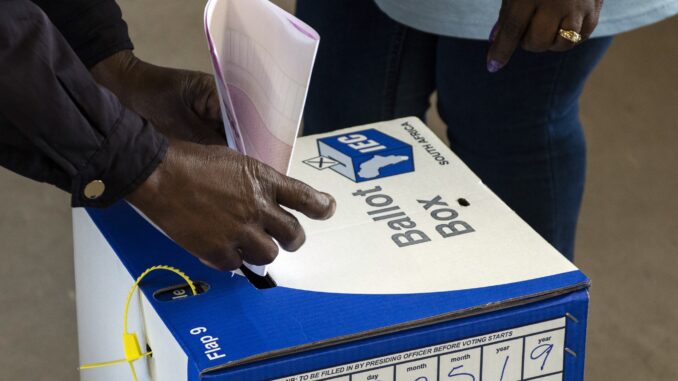
With their frequent irregularities, it’s easy to become cynical about elections in Africa. But we must fight our scepticism and indifference because elections continue to be an extremely important component of the continent’s growing democracy.
Elections and democracy
While elections alone are insufficient for democracy, they are nevertheless a prerequisite. This is because they promote political participation and competition needed for democracy. It’s the failure or absence of elections that largely defines dictatorships.
Other prerequisites for democracy include:
- checks on executive power,
- civilian control of the military,
- civil rights and due process, and
- an independent media and active civil society.
Since the early 1990s, elections in Africa have, on the whole, become increasingly free and fair. A number of factors have contributed to this. The effectiveness of electoral governance – institutions and regulatory norms – has been the most important. The legitimacy of elections depends on clear procedural rules.
Studies have found that the electoral management boards are the most significant indicators of the quality of electoral governance. In particular, whether a board is autonomous of government is crucial. Very few African countries inherited autonomous electoral management boards at independence. But, in line with global trends, their prevalence has been rising.
By 2002 more than half of African electoral management boards were fully autonomous, 29% were semi-autonomous, and only 20% weren’t autonomous.
International election observation has also contributed to elections becoming more free and fair. Their presence can reduce fraud and increase domestic confidence in the process. Inviting international observers to monitor an election has now become a necessary conditionfor an election to be considered internationally legitimate. Refusal to do so is almost akin to admitting electoral fraud.
Long-term observers begin work months ahead of an election. This is because free and fair elections depend a great deal on what happens before voting day. In fact, vote buying and political intimidation before polling day are more common than disputes over vote counting or polling procedures.
Free media and active citizens
A free media and active civil society continue to play an indispensable oversight role. This includes keeping institutions honest and keeping people informed. (Photo: President Koroma of Sierra Leone will be leaving office next year, after completing his mandatory two terms in office).
A study in Sierra Leone showed that election debates between parliamentary candidates were very effective. Recorded debates between local parliamentary candidates were shown in numerous villages.
An evaluation of their impact showed that watching the election debates substantially increased viewers’ political knowledge. It also made it more likely that they would vote along policy (rather than ethnic) lines. Electedpoliticians who had been involved in the debates also tended to invest more in their constituencies, and to visit them more often.
Civil society
Civil society has a particular role in promoting a peaceful electoral environment. Its role is particularly crucial where tensions are high. Non-partisan citizen observers and monitoring groups, such as the West Africa Election Observers Network, are increasingly involved in election monitoring. Some of the results have been impressive. For example, a coalition of observers in Ghana trained and deployed about 4000 people to cover the 2012 presidential and parliamentary elections.
Regional blocs have also been important in strengthening democracy by enforcing electoral outcomes. A good example was when the Economic Community of West African States stepped in after the Gambian president Yahya Jammeh (Photo) refused to leave office after losing the 2016 election. The regional body’s commitment to remove him by force if necessary was highly commendable.
Its influence can also be seen in the fact that 14 out of its 15 member states have presidents who have been in office for less than two terms. The Economic Community of West African States should serve as a model to other regional blocs.
Making Africans polls free and fair
A great deal of progress has been made on improving political participation across the continent. But genuine political competition in elections remains a challenge. More work is still needed to remove biases in favour of incumbents. Another area that needs work is lifting restrictions on access to state-controlled media by opposition parties.
And for democracy to be strengthened further a number of players have to take an active role. This includes governments, opposition parties, the media, citizens, civil society and the international community.
About the author
Sarah Logan is an Economist at the International Growth Centre, writing in theconversation.com

Leave a Reply