Well aware of the surveillance capabilities of major companies in the sector, Africa’s heads of state try to make their phones as secure as Fort Knox. Every leader is geared up and takes extra precautions to prevent the ever-looming risk of being tapped. We take a look at the phones used by Africa’s presidents and politicians’ practices.
In West Africa, some leaders have been won over by French technologies.
French presidents Jacques Chirac, Nicolas Sarkozy and François Hollande used a Teorem, an ultra-secure clamshell phone with physical buttons created by Thales. However, using it requires a certain amount of patience, and Sarkozy hated it for that reason.
Recently, the French company acquired Ercom and added another jewel to its collection: CryptoSmart technology, developed in partnership with Samsung, which protects communications and mobile data. Emmanuel Macron uses the system, a fact that Ercom’s marketing department has not let go unnoticed. The France’s President has a Samsung Galaxy S7 with a touch screen, equipped with a tamper-proof encryption key and a data protection chip. Orange Cyberdéfense is behind this black box-like system, whose data can be destroyed remotely if the phone is lost or stolen.
Other political figures prefer to use cheaper alternatives such as Hoox, a phone developed by the French company Bull and later acquired by Atos (priced at around €2,000 [$2,200]), Sectera Edge from US-based General Dynamics (priced at under €3,000), BlackPhone, designed by US-based Silent Circle (priced at around €550) and GranitePhone by Archos (priced at around €800).
From texts to Telegram
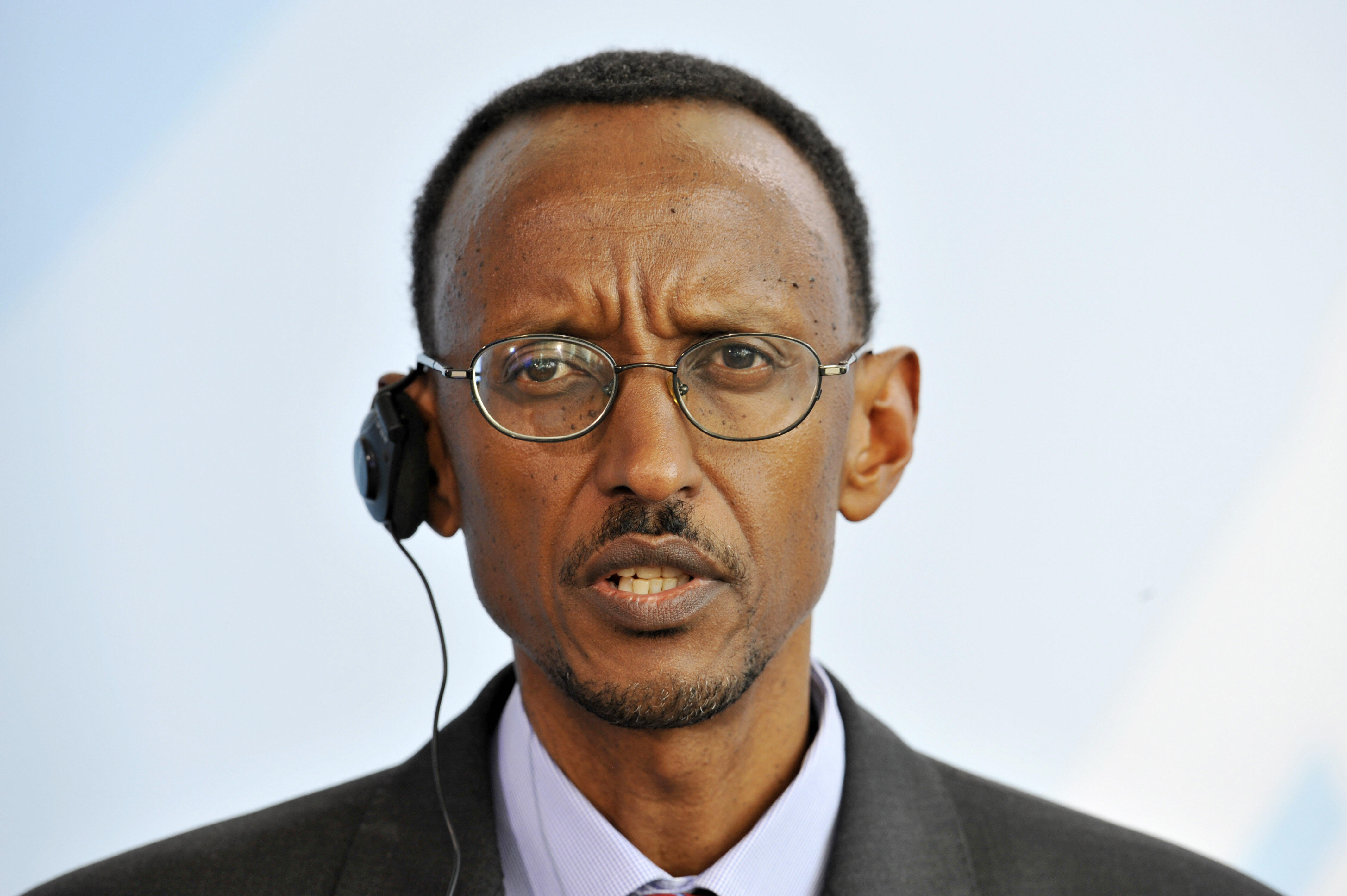
BlackBerry products have also been a big hit in Africa, with Rwanda’s President Paul Kagame and Senegal’s President Macky Sall reportedly loyal users of the brand, just like Togo’s Faure Gnassingbé, who was one of the first presidents in French-speaking Africa to communicate via text messaging some 15 years ago.
While Guinea’s Alpha Condé, who never leaves the house without his three or four phones, made the switch from classic text messaging to WhatsApp and eventually to Telegram without a hitch, other heads of state from the pre-independence generation have opted for more “radical” solutions.
Cameroon’s Paul Biya, the Republic of Congo’s Denis Sassou-Nguesso, Mali’s Ibrahim Boubacar Keïta and Djibouti’s Ismaïl Omar Guelleh can almost never be reached on their mobile phones, which they use very selectively.
Côte d’Ivoire’s Alassane Ouattara puts his complete trust in an old Nokia model while also keeping an additional phone by his side. One of his close allies and former counterparts, Sarkozy, did the same during his presidential campaigns. Or maybe it was his alias, Paul Bismuth. . .
Backdoors
Just like these heads of state, most of the continent’s political figures have had to switch from one technology to another to shield themselves against prying ears. Over the past few years, conversations starting with “Hello, can we talk?” and ending with “Yes, of course, but not on this line” have become extremely common in the African political scene.
Opposition members, thinking rightly or wrongly that their local phones are being tapped, have been using WhatsApp for a long time now. “It’s for security reasons,” said one of them.
However, an expert we consulted smiled as he told us that this sense of security is an “illusion. Most governments have acquired technologies that are able to circumvent the app’s security protocols (Facebook bought it in 2014). It’s more complicated than retrieving a traditional text message, but it’s doable. There are backdoor points of entry into the system.”
More cunning than the others, a (very) senior official in Central Africa divulged his secret to us: he has switched to Telegram.
Created by Russian developers and today based out of Berlin, the app built its reputation around strict data encryption. As a result, quite a few political figures prefer it over WhatsApp. “That’s bogus,” said our expert, amused. “Both apps have the notorious backdoors.”
The alternative: Signal
Nevertheless, the most knowledgeable experts, i.e., those familiar with the security sector and spy games of every sort, are increasingly using Signal. Brought into the spotlight by the famous American whistle-blower Edward Snowden, the app was developed by Open Whisper Systems, a company from San Francisco which is entirely funded by donations and supported by the Signal Foundation, a non-profit organisation.
As our expert put it rather vividly: “WhatsApp and Telegram are like locked cars on the side of the road, whereas Signal is like an armoured car inside of a tunnel. Hackers can still get in, but it’s going to cost them a lot.”
AFRICA REPORT